Mortgage Rates at 9-Month Highs Crush Refinancing, Locking Millions into Higher Lifetime Housing Costs
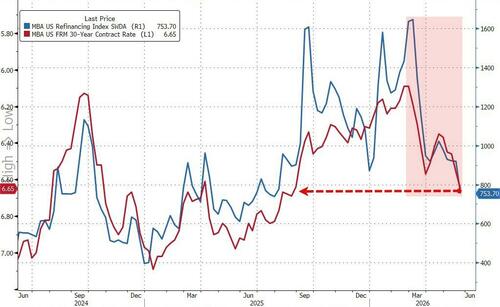
Refinancing has plummeted 18% as 30-year mortgage rates hit 6.65%, the highest in nine months, driven by Iran-related inflation fears and Treasury yield spikes. This locks millions of homeowners with sub-4% mortgages into higher effective costs, reducing flexibility, consumer spending, and mobility in a sticky-price environment under new Fed Chair Kevin Warsh.
As of late May 2026, U.S. mortgage refinancing activity has collapsed, dropping 18% week-over-week according to the Mortgage Bankers Association (MBA), with the 30-year fixed rate climbing to 6.65%—its highest level since August 2025. This surge, driven by renewed inflation fears tied to the Iran conflict that began in late February, has pushed the 10-year Treasury yield to a one-year high of 4.66%. Refinance applications fell across all categories: conventional loans down 14%, FHA by 18%, and VA loans by a sharp 34%. Refinancing now represents just 38% of all mortgage applications, the lowest share in nearly a year. Purchase applications also slipped 9%, though they remain above last year's levels, with average loan sizes hitting records at $473,600 as lower-balance borrowers sit out.[1][2]
The editorial lens here reveals more than a simple rate spike: these elevated rates directly raise the effective monthly costs for millions of homeowners over the next year and beyond. Most existing mortgages originated during the pandemic-era lows near 3%, creating a vast gap that discourages refinancing. Homeowners who might have trimmed payments or shortened terms are now stuck, effectively paying hundreds more per month in opportunity cost or facing higher rates upon moving or resetting adjustable loans. This 'rate lock-in' effect reduces household liquidity, curbs consumer spending elsewhere, and limits labor mobility as families hesitate to sell and buy at current rates.
Connections others miss include the geopolitical feedback loop: war-driven energy price spikes have revived inflation expectations, lifting long-term yields and mortgage rates in tandem. With Kevin Warsh sworn in as Federal Reserve Chairman on May 22, 2026, markets are pricing in a potential rate hike within the next year, making policy sensitive to both Middle East de-escalation and upcoming inflation prints. FHFA data showing single-family home prices up 0.1% in March (revised from a February drop) suggests prices remain sticky, compounding affordability issues rather than providing relief through appreciation. Forecasts for 2026 show rates likely averaging 6.1-6.4%, with limited relief expected absent clear disinflation.[3][4]
This dynamic risks a bifurcated housing market where recent buyers and those with high-rate loans face mounting pressure, while cash-rich buyers or investors gain advantage. For the average homeowner with a loan, the math is straightforward and punishing: locked rates mean sustained higher debt service, potentially delaying retirements, education funding, or other life milestones. Modest yield easing in recent days offers little comfort while the gap to existing portfolio rates remains wide. Until geopolitical clarity emerges and the Fed under Warsh signals a sustained path lower, this squeeze will continue to ripple through household balance sheets nationwide.
LIMINAL: Millions of everyday homeowners will absorb hundreds in extra monthly-equivalent costs through locked-in high rates, squeezing budgets, slowing moves and job changes, and widening the divide between legacy low-rate holders and everyone forced to navigate this new reality over the next 12-36 months.
Sources (4)
- [1]Mortgage Applications Decrease in Latest MBA Weekly Survey(https://www.mba.org/news-and-research/newsroom/news/2026/05/27/mortgage-applications-decrease-in-latest-mba-weekly-survey)
- [2]Mortgage Interest Rate Forecast For 2026(https://www.bankrate.com/mortgages/mortgage-rates-forecast/)
- [3]Kevin Warsh takes oath of office as chairman(https://www.federalreserve.gov/newsevents/pressreleases/other20260522a.htm)
- [4]Mortgage rates hit 2026 highs in blow to refi market(https://www.linkedin.com/news/story/mortgage-rates-hit-2026-highs-in-blow-to-refi-market-8528490/)