SLS Core Stage Rollout Signals Artemis III Progress But Exposes Systemic Delays in Sustainable Lunar Architecture
NASA's SLS core stage rollout for Artemis III marks real hardware progress toward lunar landing, yet the promotional social event obscures manufacturing delays, $4B-per-launch costs, and gaps in reusable lander tech required for sustained presence, as detailed in GAO reports and technical analyses.
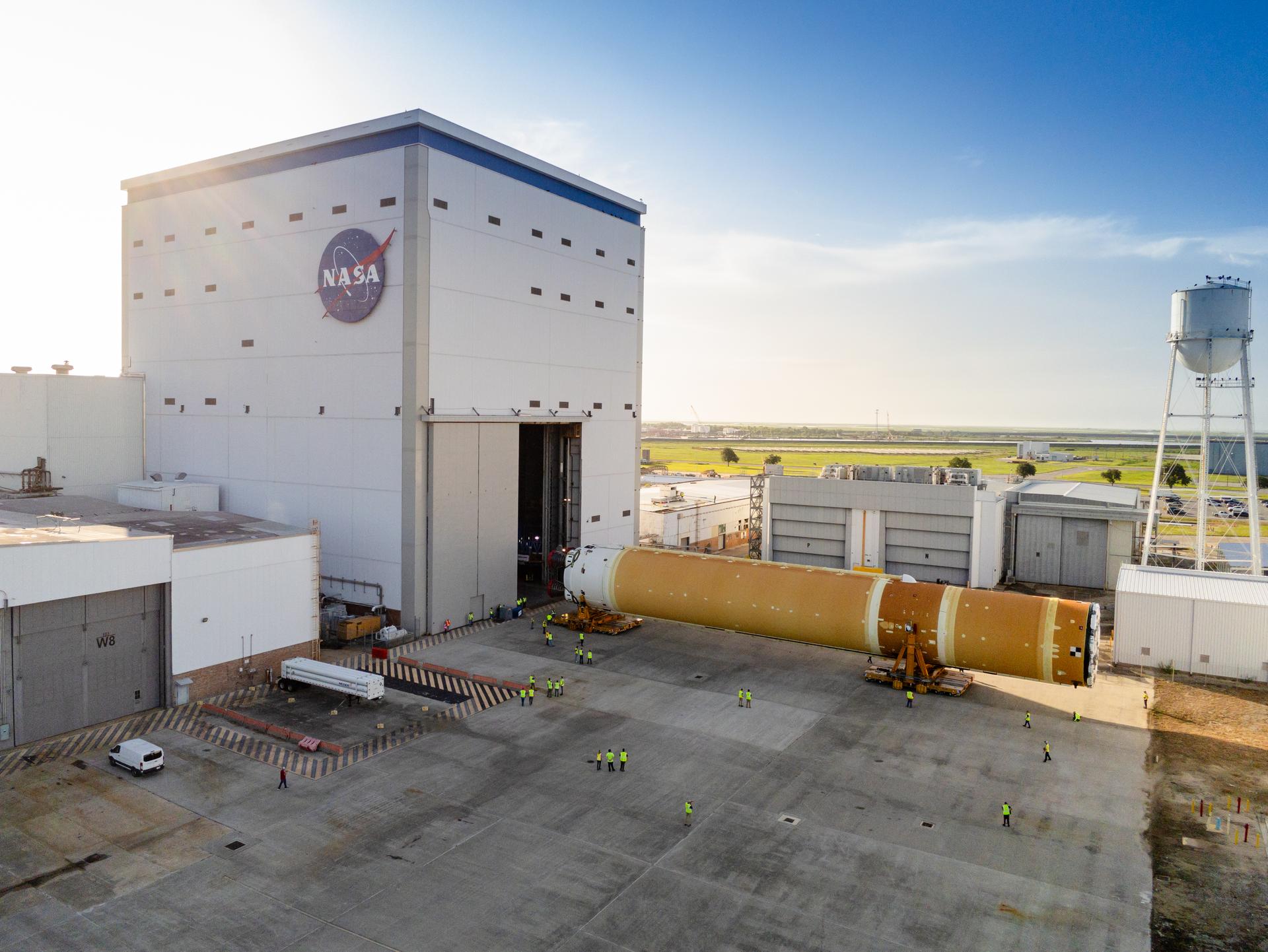
NASA’s invitation for 20 digital creators to witness the rollout of the third Space Launch System core stage at Michoud Assembly Facility is framed as an engaging social-media opportunity. Yet the event documents something far more substantive: the physical maturation of the most powerful rocket stage NASA has ever built, destined for Artemis III, the mission that will attempt the first crewed lunar landing since Apollo 17. This core stage, 212 feet tall and powered by four RS-25 engines, will deliver the initial 8.8 million pounds of thrust required to escape Earth’s gravity. Its movement from the factory to Kennedy Space Center represents the transition from fabrication to integration, a tangible marker on the long road toward sustained lunar presence.
The original NASA page focuses almost exclusively on registration logistics, citizenship requirements, and content-creation criteria. What it misses is the troubled manufacturing history behind the hardware. Boeing’s Michoud team encountered repeated friction-stir-welding defects and liquid-hydrogen tank issues that delayed Artemis I by more than two years. Similar problems have rippled through subsequent cores. A 2023 Government Accountability Office report (GAO-23-104825) found that NASA’s Artemis program had already consumed $93 billion by 2025 with cumulative schedule slips totaling 28 months across the first four missions. The current source makes no reference to these cost overruns or the fact that each SLS launch costs approximately $4.1 billion, rendering frequent flights incompatible with a sustainable lunar economy.
Context from related developments sharpens the picture. Artemis II, the uncrewed dress rehearsal now baseline for September 2025, must fly successfully before this core stage can be stacked. Meanwhile, the human landing system—SpaceX’s Starship HLS—has yet to demonstrate cryogenic propellant transfer in orbit, a capability identified in a 2024 NASA Engineering and Safety Center review as a high-risk technology gap. Peer-reviewed analyses in Acta Astronautica (2023) emphasize that sustained lunar presence will require reusable landers, in-situ resource utilization, and surface power systems far beyond what Artemis III currently manifests. The SLS rollout therefore symbolizes both progress and path dependency: NASA is advancing legacy shuttle-derived hardware while commercial partners race toward fully reusable architectures.
This pattern echoes earlier programs. The Space Shuttle itself was promoted as a low-cost, high-cadence vehicle yet became an expensive, low-flight-rate system. Today’s emphasis on influencer access suggests NASA understands public narrative matters, yet the agency still under-communicates schedule realism. By synthesizing the Michoud event page, GAO cost assessments, and technical literature on cryogenic fluid management, a clearer assessment emerges: the hardware is real and advancing, but the programmatic scaffolding for “sustained lunar presence” remains fragile. Artemis III will likely slip into 2027; the deeper question is whether the architecture chosen can evolve into an affordable, scalable lunar infrastructure before geopolitical competitors or funding fatigue intervene. The rollout is worth celebrating, yet it must be viewed as one visible gear in a much larger, slower-turning machine.
HELIX: The SLS core stage rollout proves NASA can manufacture heavy-lift hardware, but persistent delays and billions in per-launch costs show the current architecture is unlikely to support frequent, affordable missions needed for lasting lunar bases without faster integration of commercial reusable landers.
Sources (3)
- [1]Experience the Rollout of SLS Hardware for Artemis III(https://www.nasa.gov/general/experience-the-rollout-of-sls-hardware-for-artemis-iii/)
- [2]NASA Artemis Program: Moon to Mars(https://www.nasa.gov/humans-in-space/artemis/)
- [3]GAO-23-104825: NASA Artemis Programs Cost and Schedule Challenges(https://www.gao.gov/products/gao-23-104825)