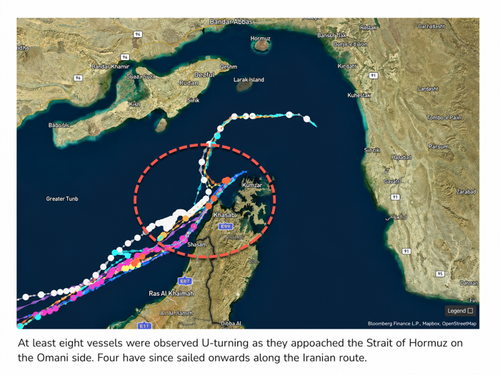
Hormuz Shipping Reroutes Expose Iran’s Tightening Grip on Chokepoint Amid Fragile Ceasefire
Bloomberg-cited incidents of Hormuz U-turns and Iran-approved reroutes illustrate ongoing Iranian leverage over shipping amid 2026 ceasefire tensions, with direct ties to energy export recoveries and systemic supply risks.
Recent ship-tracking data reveals at least eight vessels, including oil tankers and bulk carriers, abruptly reversing course near the Strait of Hormuz before resuming transits along routes hugging the Iranian coast—aligning with Tehran’s designated lanes. Bloomberg reports from late June 2026 document these U-turns as vessels initially followed paths closer to Oman, only to shift northward after Iranian VHF warnings and official statements demanding adherence to authorized corridors. This behavior underscores persistent friction despite an interim US-Iran ceasefire, with Iran positioning itself as the strait’s security guarantor and warning against foreign naval displays by the UK and France. Iranian Deputy Foreign Minister Kazem Gharibabadi emphasized on X that coastal states hold responsibility for Hormuz security, threatening accountability for adventurism. JPMorgan strategist Natasha Kaneva noted a rush to clear stranded cargoes, with Persian Gulf crude exports recovering to 19 million barrels per day—still 3 million below pre-conflict levels—while floating storage dropped sharply, signaling reconnecting logistics but highlighting vulnerabilities. Broader context from the 2026 Hormuz crisis shows traffic far below norms, with only Iran-linked vessels often permitted and reports of groundings or attacks on non-compliant routes. These dynamics reveal supply-chain fragility extending beyond headlines: reroutes increase transit times and costs, amplify risks of escalation in energy markets, and expose how control over this 21% of global oil trade chokepoint can cascade into global price volatility and trade delays not fully reflected in daily aggregates. Connections missed in initial coverage include parallels to earlier LNG tanker reversals and the establishment of Iran’s Persian Gulf Strait Authority enforcing tolls and permits, potentially reshaping long-term routing norms even under ceasefire conditions.
JPMorgan: Persistent route enforcement and residual traffic shortfalls signal prolonged logistical friction that could sustain elevated energy price volatility through Q3 2026 even as volumes recover.
Sources (5)
- [1]Ship Struck in Hormuz as Oil Supertankers Turn Back Again(https://www.bloomberg.com/news/articles/2026-06-25/ships-appear-to-u-turn-while-trying-to-exit-hormuz-by-oman-route)
- [2]Hormuz Escape Route Suggests Ships Navigate on Iran’s Terms(https://www.bloomberg.com/news/articles/2026-03-17/escape-route-through-strait-of-hormuz-now-involves-iran-detour)
- [3]Iran warns oil tankers to use approved routes in Strait of Hormuz or face a 'forceful response'(https://www.latimes.com/world-nation/story/2026-07-02/iran-warns-oil-tankers-to-use-approved-routes-in-strait-of-hormuz-or-face-forceful-response)
- [4]Only Iran-designated routes valid for Strait of Hormuz passage, IRGC says(https://www.iranintl.com/en/202606259614)
- [5]LNG Tankers Make U-Turns From Hormuz as Iran Keeps Strait Shut(https://www.bloomberg.com/news/articles/2026-04-18/lng-tankers-make-u-turns-from-hormuz-as-iran-keeps-strait-shut)