Bottled Lightning: Northwestern Plasma Reactor Unlocks Low-Energy Methane-to-Methanol Conversion with Broad Energy and Geopolitical Ripple Effects
Northwestern researchers achieved high-selectivity direct methane-to-methanol conversion using cold plasma bubbles and CuO catalyst at ambient conditions, producing valuable coproducts. This could enable distributed processing of stranded gas, reduce industrial CO2 emissions, and shift chemical production economics and geopolitics, though scaling hurdles persist.
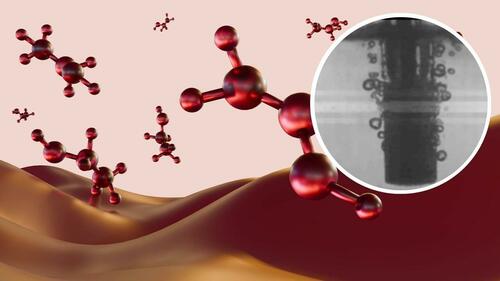
Northwestern University chemists have developed a plasma-driven 'bubble reactor' that converts methane directly into methanol in a single step at room temperature and ambient pressure, bypassing the energy-intensive steam reforming process that requires temperatures over 800°C and pressures 200-300 times atmospheric levels. Led by Assistant Professor Dayne Swearer, with Ph.D. candidate James Ho as first author, the team uses high-voltage electrical pulses to generate cold plasma—miniature lightning-like discharges—inside a porous glass tube coated with an earth-abundant copper oxide catalyst submerged in water. Methane gas flows through the tube, where plasma-activated species rapidly form methanol, which dissolves into the surrounding water for 'quenching' that halts further oxidation to CO2. Optimized with argon dilution, the process achieves 96.8% methanol selectivity in the liquid phase and approximately 57% overall yield, while also producing valuable byproducts like hydrogen, ethylene, and trace propane. This stands in stark contrast to conventional multi-step industrial methanol production, which globally emits millions of tons of CO2 annually. The study, published in the Journal of the American Chemical Society, highlights plasma as an underutilized tool in chemistry despite comprising over 99% of the observable universe. 'We're taking advantage of that chemistry to break methane’s bonds without heating the entire system to extreme temperatures,' Swearer explained. Ho added that cold plasmas enable activation at low bulk temperatures and normal pressure. Beyond lab curiosity, the implications extend to economic and geopolitical domains often overlooked in initial reporting. Traditional methanol synthesis is centralized in massive facilities tied to reliable natural gas supplies, reinforcing dependencies for gas-producing nations and importers alike. This electrified, modular approach could enable distributed, smaller-scale reactors deployed at stranded gas sites, leaky wellheads, or flare stacks—converting wasted methane (a potent greenhouse gas) into transportable liquid fuel or chemical feedstock on-site. Swearer noted this could replace flaring, which converts methane to CO2 but still contributes to climate impact, with productive use. Methanol already serves as a key building block for plastics, adhesives, paints, and solvents, and is gaining traction as a lower-emission marine fuel. Scaling this technology with renewable electricity could decarbonize parts of the chemical industry while producing hydrogen coproduct as a zero-carbon energy carrier. Geopolitically, it weakens the leverage of centralized fossil infrastructure and high-barrier industrial processes, potentially empowering remote or developing gas-rich regions with portable production. It aligns with broader plasma research trends, offering a pathway to smaller, cleaner chemical plants less vulnerable to energy price shocks. However, challenges remain: efficient product separation, overall energy balance of plasma generation, and scaling beyond benchtop. The team plans further optimization and recovery methods, supported by funding from the U.S. Department of Energy, Army Research Office, and Packard Foundation. While not yet commercially competitive with optimized mega-plants, this work reframes methane—not as a combustion fuel or flared waste—but as a versatile, activatable resource via ubiquitous plasma chemistry. It exemplifies how heterodox approaches to 'holy grail' catalysis problems can unlock overlooked efficiencies with cascading effects on energy security, emissions, and global industrial architecture.
Liminal Analyst: Lab-scale success in ambient methane activation could decentralize liquid fuel production from flared gas, eroding centralized petrochemical advantages and accelerating transitions in shipping and chemicals if plasma efficiency improves.
Sources (4)
- [1]Bottled Lightning Makes a Cleaner Fuel(https://news.northwestern.edu/stories/2026/4/bottled-lightning-makes-a-cleaner-fuel)
- [2]Scientists Are Using Lightning in a Bottle to Turn Methane Into Methanol(https://gizmodo.com/scientists-are-using-lightning-in-a-bottle-to-turn-methane-into-methanol-2000746416)
- [3]Direct Partial Oxidation of Methane to Methanol at Plasma-Catalyst-Liquid Interfaces(https://chemrxiv.org/doi/10.26434/chemrxiv-2025-46lcj)
- [4]US Chemists Turn Natural Gas Into Liquid Fuel Without High Heat And Pressures(https://interestingengineering.com/energy/chemists-turn-natural-gas-liquid-fuel)