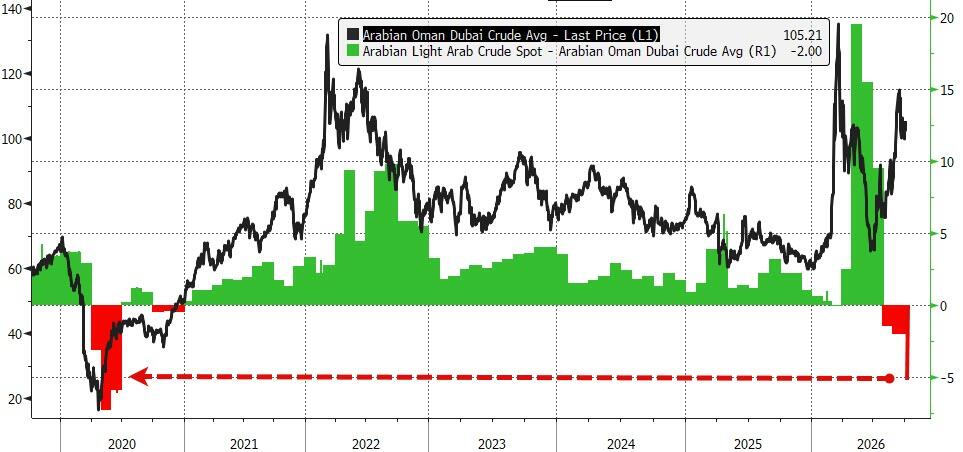
Aramco Signals Market Pressures with Asia Price Cuts and 'Scarily Thin' Oil Buffers Amid Hormuz Disruptions
Aramco's unexpected Asia price discounts and CEO Nasser's warning on depleted oil inventories reflect real logistical strains from Hormuz rerouting and conflict impacts, validated by Reuters, Bloomberg, and industry forums; thin buffers heighten risks of price volatility and supply squeezes.
Saudi Aramco has adjusted its November official selling prices (OSPs) in ways that underscore ongoing logistical and geopolitical strains on global oil flows. The company cut Arab Light crude prices to Asia by $3 per barrel to a $5 discount versus the Dubai/Oman benchmark—the widest since June 2020—while raising prices to northwest Europe by $3 per barrel. This move, confirmed across Reuters, Bloomberg, and OilPrice.com reporting on October 4-5, 2026, surprised traders expecting hikes and appears designed to offset record-high freight costs for shipments rerouted via ship-to-ship (STS) transfers in the Gulf of Oman.[1][2]
These adjustments coincide with elevated VLCC tanker rates reaching $1.2–1.3 million per day due to increased Hormuz transits and STS operations necessitated by pipeline disruptions and regional conflict risks. Freight now accounts for up to 27% of delivered costs versus 3% earlier in the year. Aramco and other Gulf producers are competing for Asian market share as Middle East exports recover toward 98% of pre-disruption levels, per JPMorgan estimates cited in Bloomberg and The National.[3]
At the Energy Intelligence Forum in London on October 5, Aramco CEO Amin Nasser highlighted the broader vulnerability: global oil inventories have fallen from ~10 billion barrels to under 6 billion, with most not practically available, describing the supply resilience cushion as 'scarily thin.' He noted nearly 3 billion barrels of gross supply lost since the conflict began—equivalent to half the normal Hormuz throughput—and warned that replenishing stocks while meeting rising demand could require at least 2 million barrels per day extra for two years. Emergency releases of strategic stocks provide temporary relief but do not address structural imbalances.[4][5]
Deeper connections emerge in energy security: reliance on vulnerable chokepoints like Hormuz amplifies systemic risks, driving diversification into pipelines, alternative routes, and overseas storage. The episode illustrates how freight volatility and inventory drawdowns can transmit geopolitical shocks directly into refined product prices and economic stability, particularly as consumption trends upward. Multiple mainstream outlets, including Financial Post, Irish Times, and Aramco's official remarks, corroborate these dynamics without contradiction.
[Energy Market Analyst]: Persistent thin buffers and Hormuz dependencies will sustain upward pressure on delivered crude costs and volatility through 2027, complicating central bank inflation targets and favoring producers with diversified export infrastructure.
Sources (5)
- [1]Saudi Arabia unexpectedly cuts November oil prices to Asia to 6-year lows(https://www.reuters.com/business/energy/saudi-arabia-unexpectedly-cuts-oil-prices-asia-2026-10-04/)
- [2]Saudis Slash Oil Prices to Asia in Battle for Market Share(https://www.bloomberg.com/news/articles/2026-10-05/saudis-cut-flagship-oil-price-to-asia-to-lowest-in-six-years)
- [3]Oil supply buffer is ‘scarily thin,’ Saudi Aramco CEO says(https://financialpost.com/commodities/energy/oil-gas/oil-supply-buffer-thin-saudi-aramco-ceo-says)
- [4]Remarks by Amin H. Nasser at the 2026 Energy Intelligence Forum in London(https://www.aramco.com/en/news-media/speeches/2026/remarks-by-amin-h-nasser-at-energy-intelligence-2026)
- [5]Saudi Aramco cuts Asia crude prices to six-year low amid recovery as oil flows rebound(https://www.thenationalnews.com/business/energy/2026/10/05/saudi-aramco-cuts-asia-crude-prices-to-six-year-low-amid-recovery-as-oil-flows-rebound/)