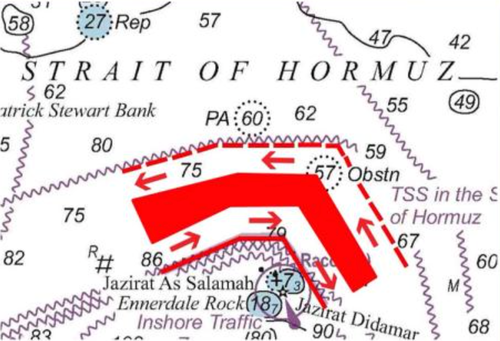
Dark Tanker Adaptations and Gulf Export Recovery Challenge Iran's Hormuz Leverage Amid Ongoing Conflict
Goldman Sachs data confirms Gulf oil exports at 15-16 mbpd via dark tankers and STS transfers, eroding Iran's Hormuz influence while capping crude price risks; corroboration across Bloomberg, OilPrice, and maritime trackers reveals adaptive strategies reshaping Middle East energy flows.
Recent analysis from Goldman Sachs highlights a significant rebound in Persian Gulf oil exports, reaching 15-16 million barrels per day (bpd) of crude and petroleum products—approximately two-thirds of pre-war levels—despite disruptions in the Strait of Hormuz. This marks a sharp increase from the March trough of 5-6 million bpd, though still 7-8 million bpd below February baselines. Goldman analysts Daan Struyven and colleagues attribute the recovery to heightened use of 'dark' tanker crossings (AIS transponders disabled) and ship-to-ship (STS) transfers, enabling Gulf producers like Kuwait, Qatar, and the UAE to bypass risks. Strait of Hormuz transits are estimated at 8-10 million bpd, aligning closely with U.S. official figures and trader surveys placing crude flows at 6-8 million bpd.[1][2]
These adaptations mirror tactics long employed by Iran's 'shadow fleet' but are now deployed by non-Iranian operators, with non-Iranian dark transits rising to over 50% in recent months per maritime analytics. This shift underscores eroding Iranian leverage over the chokepoint, as producers reroute via southern corridors near Oman and leverage STS in the Gulf of Oman. Bloomberg and OilPrice.com reporting corroborates trader data showing Qatar and Kuwait exports rebounding to ~70% of pre-war levels through these methods.[2]
Broader implications extend beyond crude: refined product markets face tighter conditions, with U.S. diesel crack spreads hitting record highs above $100/bbl. Goldman notes greater price upside potential for European natural gas and deferred oil products than for crude itself in prolonged disruption scenarios. Diplomatic signals, including Oman-Iran talks and U.S. policy signals under President Trump, have further tempered risk premiums, with Brent futures reflecting moderated upside even as shipping markets price in disruptions into 2027. Satellite and AIS data from firms like Kpler and Vortexa indicate 80% of recent Hormuz traffic operating dark, complicating tracking but sustaining flows estimated at 8-9 million bpd by U.S. DOE.[3]
Geopolitically, this adaptation challenges traditional chokepoint dynamics, potentially pressuring Iran's position while highlighting market resilience. Connections to wider energy security emerge in how these 'invisible' routes—protected or facilitated in some analyses—limit global price spikes but sustain vulnerabilities in refined products and LNG.
Goldman Sachs: Adaptive dark flows and China demand sensitivity will moderate crude price upside even in extended disruptions, with stronger impacts on European gas and refined products.
Sources (5)
- [1]Hormuz Oil Flows Recover to Two-Thirds of Pre-War Levels, Goldman Says(https://www.bloomberg.com/news/articles/2026-08-28/goldman-says-hormuz-oil-flows-at-two-thirds-of-pre-war-levels)
- [2]Gulf Oil Exports Rebound Despite Iran War(https://oilprice.com/Latest-Energy-News/World-News/Gulf-Oil-Exports-Rebound-Despite-Iran-War.html)
- [3]Persian Gulf oil exports rebound to two-thirds of pre-war levels(https://nypost.com/2026/08/28/business/persian-gulf-oil-exports-rebound-to-two-thirds-of-pre-war-levels-could-keep-oil-below-90-mark/)
- [4]Strait of Hormuz Goes Dark: How US-Backed Invisible Tanker Routes Keep Gulf Oil Flowing(https://gulfnews.com/world/mena/80-of-hormuz-traffic-goes-dark-and-keeps-oil-prices-in-check-1.500649281)
- [5]Dark Hormuz transits(https://www.vortexa.com/insights/dark-hormuz-transits)