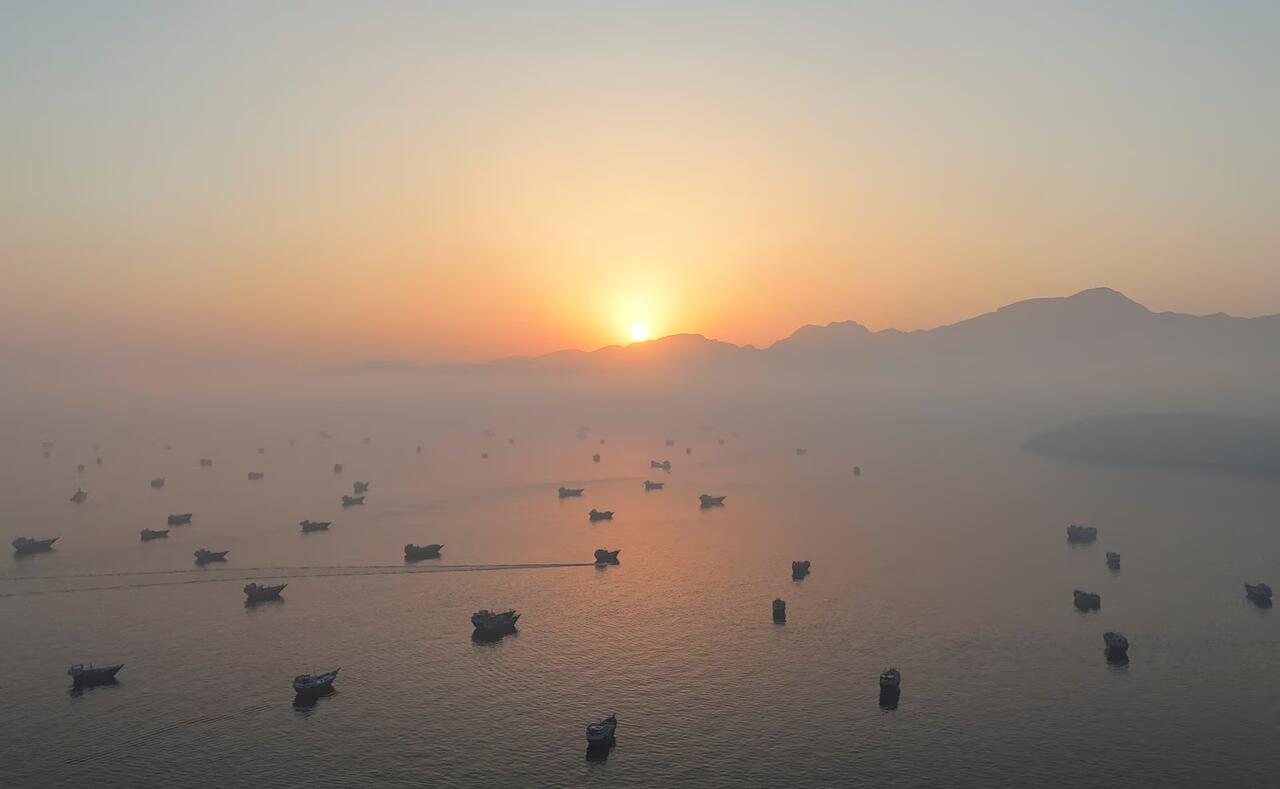
Iran says more Hormuz tankers hit mines as a third US carrier arrives and Bahrain reports drone alerts
Iranian forces say more tankers burned after hitting mines in Hormuz; Reuters could not verify that account, while UKMTO has logged projectile strikes and CENTCOM has called mine claims false. A third US carrier has arrived as Trump, per Reuters sources, weighs holding off new strikes, and Bahrain says it intercepted Iranian drones aimed at a US-linked base.
Documented: A US-Israel war with Iran that began in late February 2026 is still shaping traffic through the Strait of Hormuz, a route that before the war carried roughly a fifth of global oil and LNG. On and around 12–14 November 2026, Iranian state media and the Islamic Revolutionary Guard Corps Navy said multiple oil tankers caught fire after striking naval mines while using routes Tehran calls unauthorized and after switching off tracking systems. Reuters reported those statements and said it could not immediately verify the Iranian account. The same pattern has repeated for weeks: Iranian communiqués describe mine strikes; UK Maritime Trade Operations has, in several overlapping incidents, reported vessels hit by unknown projectiles, including engine-room fires, with crews accounted for and environmental impact often listed as unknown or none. US Central Command has repeatedly rejected the mine narrative as disinformation and has said primary shipping lanes were swept clear, while also saying some ships were hit by IRGC projectiles rather than mines. Claimed: Tehran treats the southern lane designated with Oman as illegal and says mines remain along that corridor; it presents the fires as self-inflicted violations, not attacks. Speculated, and not established by the reporting: that “several tankers ablaze” on a given morning equals a sustained physical closure of the strait, or that every fire video released by Iranian outlets matches a named, independently tracked hull.
Documented alongside the shipping claims: the USS Theodore Roosevelt entered the US Central Command area on or about 15–16 November 2026, according to US officials cited by the Associated Press, Stars and Stripes, and others, joining the USS George H.W. Bush and USS George Washington. That is the second period this year with three US carrier strike groups in the region. Reuters reported on 14 November, citing three people familiar with the matter, that President Trump told advisers he may hold off on renewed large-scale strikes if there are no new provocations from Iran or the Houthis, and that Saudi and Turkish leaders had urged restraint. Trump said on the record to Stephen A. Smith that he could “end it immediately” but was proceeding “a bit more civilly” at the request of nations he said he was trying to protect. Those two tracks—force buildup and public hesitation—are both sourced; they are not a single coherent policy on the page.
Documented on the Gulf side of the same weekend: the IRGC said six drones targeted a US air-defense radar at Bahrain’s Al-Riffa helicopter base, calling it a second phase of response to US actions. Bahrain’s interior ministry issued shelter alerts; Bahraini authorities said air defenses thwarted Iranian aerial attacks. CENTCOM had already denied an earlier IRGC claim of a successful radar strike, saying US forces shot down drones with no injuries or damage. Bahrain’s foreign ministry has held Iran responsible for the series of incidents. Claimed by the IRGC and not independently confirmed in the open reporting: that the drones hit the radar and that the strait is “closed.” Speculated in some commentary, and not a finding of the wire services: that drone launches at Bahrain plus mine claims amount to a coordinated plan to force an oil-price spike within months. What the record does show is a chokepoint under competing narratives—Iranian mine warnings, UKMTO projectile reports, and a US denial that mines are what is disabling ships—while three carriers sit in the theater and Gulf hosts absorb alerts.
The Strait of Hormuz still moves a large share of traded oil and gas, and documented attacks and alerts on tankers and on Bahrain—host to the US Fifth Fleet—are already disrupting how shippers use the waterway. Whether fires are mines, projectiles, or both remains disputed between Tehran, UKMTO, and CENTCOM, which is the difference between a closed route and a contested one.
Sources (7)
- [1]Four tankers struck by explosions in Strait of Hormuz, Iran says(https://www.reuters.com/world/middle-east/two-oil-tankers-disabled-by-explosions-strait-hormuz-irgc-says-2026-11-12/)
- [2]Iran's navy says three tankers on fire after hitting mines in Hormuz(https://www.al-monitor.com/originals/2026/11/irans-navy-says-three-tankers-fire-after-hitting-mines-hormuz)
- [3]Trump tells advisers he may hold off on Iran attacks barring new provocations, sources say(https://www.reuters.com/world/middle-east/trump-tells-advisers-he-may-hold-off-iran-attacks-barring-new-provocations-2026-11-14/)
- [4]Third American aircraft carrier arrives in the Middle East(https://www.bostonglobe.com/2026/11/16/nation/third-american-aircraft-arrives-middle-east/)
- [5]Roosevelt joins 2 other carriers in Mideast as pressure on Iran for peace deal rises(https://www.stripes.com/branches/navy/2026-11-16/roosevelt-middle-east-iran-attacks-bahrain-23481485.html)
- [6]Iran says it targets US radar in Bahrain. What do we know?(https://www.aljazeera.com/news/2026/11/15/iran-says-it-targets-us-radar-in-bahrain-what-do-we-know)
- [7]Iran Claims More Tankers Hit Mines in Hormuz, But Evidence Remains Elusive(https://gcaptain.com/iran-claims-more-tankers-hit-mines-in-hormuz-but-evidence-remains-elusive/)