Policy Crossroads Amid Geopolitical Fragility: Testing the Foundations of Record Highs and AI Valuations
Convergence of central bank meetings, macro data, megacap earnings, and fragile Iran ceasefire creates a high-stakes week that could validate or undermine AI-driven all-time highs. Analysis reveals tighter linkages between energy shocks and policy constraints than original coverage acknowledged.
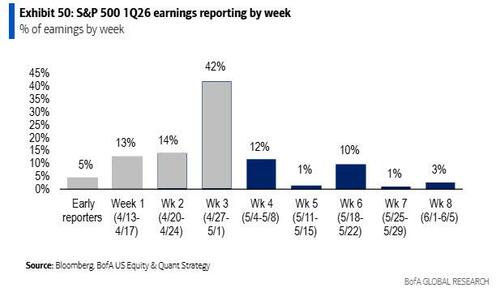
This week’s alignment of G7 central bank decisions, key U.S. economic releases including advance GDP and core PCE, and earnings from five of the Magnificent Seven constitutes a genuine inflection point for global markets. While the ZeroHedge preview accurately catalogs the calendar density—BOJ on Tuesday, Fed and Bank of Canada Wednesday, ECB and BOE Thursday, with Alphabet, Microsoft, Amazon, and Meta reporting Wednesday after close—it understates the feedback loops between unresolved Middle East conflict and monetary policy reaction functions.
Two months after initial strikes on Iran, the rolling ceasefire that began 8 April remains tenuous. Primary reporting from Axios on Iran’s latest proposal to reopen the Strait of Hormuz while deferring nuclear discussions reveals a critical gap the original coverage only glancingly addressed: Washington’s willingness to accept energy normalization without verifiable constraints on enrichment. Brent crude’s six-day advance to $106.61/bbl reflects persistent risk premia that complicate every central bank’s mandate.
Deutsche Bank’s Jim Reid correctly notes markets are pricing a better-than-50% chance of normalized strait traffic by end-June per Polymarket, yet this probabilistic lens misses the second-order effects on stagflation dynamics. Synthesis with the IMF’s April 2025 World Economic Outlook update and the BIS Quarterly Review (March 2025) shows commodity-driven price pressures historically force central banks into uncomfortable trade-offs. The Fed’s base case, per DB economists, defers meaningful guidance shifts until Chair Powell’s final June meeting; however, incoming PCE data could force earlier acknowledgment of energy pass-through into services inflation.
What the original source got wrong was framing the week primarily as an earnings and central-bank spectacle while treating the Iranian situation as parallel rather than causal. Kevin Warsh’s Fed nomination cleared a Senate hurdle after Senator Tillis lifted his hold following DOJ closure of the refurbishment probe—this matters because Warsh has historically advocated rules-based policy less tolerant of financial dominance. A Warsh-led Fed would likely view equity valuations, especially AI-related multiples exceeding 30x forward earnings, with greater skepticism than the current board.
Multiple perspectives emerge. Bullish analysts at firms like Goldman Sachs argue megacap earnings beats, particularly in cloud and AI capex, can validate current all-time highs if guidance remains robust. They cite Microsoft’s and Google’s prior quarters as evidence of durable demand. Conversely, macro voices referencing the 1970s stagflation parallels (see Federal Reserve archival transcripts from 1974-75) warn that simultaneous supply shocks and policy hesitation could trigger a de-rating. European perspectives, drawn from ECB Governing Council speeches archived on their primary site, suggest the ECB may sound more hawkish than expected given second-round inflation risks from energy, despite subdued Eurozone growth. The BOJ, facing yen weakness exacerbated by higher oil import costs, is expected to hold but may signal tolerance for further currency depreciation.
Primary documents matter: the BEA’s forthcoming Q1 GDP release, the Bureau of Economic Analysis PCE methodology paper, and the FOMC’s March 2025 statement (which still projected only two cuts for the year) provide cleaner signals than secondary commentary. Patterns from 2018-2019, when U.S.-Iran tensions last spiked alongside Fed tightening, show equity volatility transmitted rapidly to tech multiples.
The missing connection is transmission to AI valuations. Should PCE print above consensus and Powell retain restrictive language, any softening in capex guidance from the Magnificent Seven could crystallize doubts about the longevity of hyperscaler spending. Conversely, strong earnings paired with dovish central bank rhetoric could extend the rally, validating the ‘higher for longer but growth overrides’ narrative. This week therefore functions as a stress test for the post-2023 market regime. No single outcome is predetermined; the interplay of geopolitics, inflation data, and corporate results will likely produce a dispersion of outcomes across asset classes rather than a uniform directional move.
MERIDIAN: Even with ceasefire overtures, sustained oil above $100 and any hawkish tilt from the Fed or ECB could expose fragility in AI valuations; expect elevated volatility as markets test whether growth narrative withstands stagflationary pressures.
Sources (3)
- [1]Blockbuster Week Preview: Fed, ECB, BOJ On Deck, Earnings Avalanche, GDP, PCE(https://www.zerohedge.com/markets/blockbuster-week-preview-fed-ecb-boj-deck-earnings-avalanche-gdp-pce)
- [2]World Economic Outlook, April 2025(https://www.imf.org/en/Publications/WEO/Issues/2025/04/22/world-economic-outlook-april-2025)
- [3]BIS Quarterly Review, March 2025(https://www.bis.org/publ/qtrpdf/r_qt2503.htm)