Tropical Storm Isaias Threatens Gulf Energy Infrastructure Amid Record Hurricane Drought
Isaias poses risks to Gulf Coast energy assets following a record hurricane-free September, highlighting infrastructure vulnerabilities and the need for enhanced national preparedness.
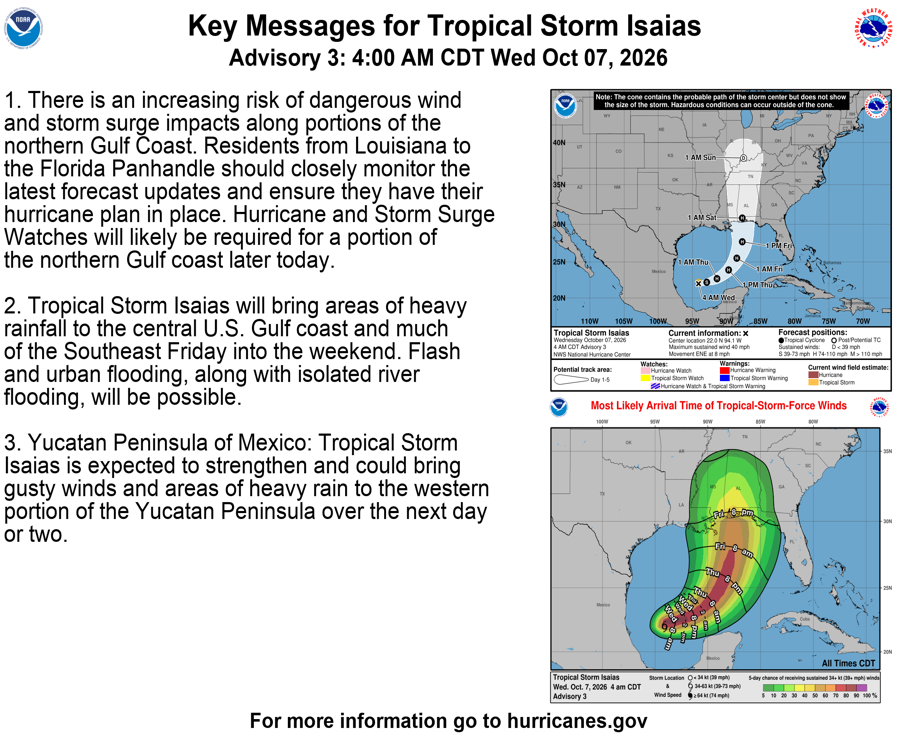
As of October 7, 2026, Tropical Storm Isaias is forecast to strengthen into the season's first Atlantic hurricane, with its projected path endangering critical offshore oil and gas platforms and major refineries along the northern U.S. Gulf Coast. The storm, currently positioned west of Mexico with winds around 40 mph, is expected to intensify and potentially impact Louisiana, Alabama, Mississippi, and the Florida Panhandle. Chevron is evacuating nonessential personnel from Gulf platforms, while Shell has begun removing staff from assets including Mars, Olympus, Ursa, Vito, Appomattox, and Stones. BP is similarly securing facilities. This comes after September 2026 concluded without a single hurricane in the Atlantic—the first such occurrence in 32 years—attributed to strong El Niño-driven wind shear suppressing development.[1][2]
The threat underscores vulnerabilities in U.S. energy infrastructure. The Gulf produces about 15% of U.S. crude oil, with offshore output recently around 2 million barrels per day. Refineries in the cone, such as Chevron's 356,000 bpd Pascagoula facility in Mississippi, Marathon's Garyville (617,000 bpd), ExxonMobil's Baton Rouge, and others operated by Shell, Valero, and PBF, face risks of shutdowns, flooding, or power disruptions. Historical precedents like Hurricanes Laura (2020) and Delta (2020) demonstrate how such events can idle over 80% of Gulf oil production and multiple refineries, leading to temporary supply constraints and price volatility.[3][4]
Beyond immediate economic impacts—disrupted fuel supplies, higher energy prices, and costs to restart operations—the scenario raises national security concerns. The concentration of refining capacity (over half of U.S. total along the Gulf) and offshore assets makes the region a single point of failure for energy security. Prolonged disruptions could affect military readiness, transportation, and broader supply chains, prompting renewed focus on resilience measures such as hardened infrastructure, diversified energy sources, and enhanced forecasting integration with federal agencies like BSEE and NOAA. Disaster preparedness discussions may intensify around evacuation protocols, backup power systems, and climate-adaptive strategies amid shifting ENSO patterns.
Energy Analyst: Disruptions from Isaias could temporarily reduce Gulf output by 10-20%, amplifying calls for diversified refining capacity and proactive federal resilience investments.
Sources (4)
- [1]Tropical Storm Isaias Threatens Gulf Oil and Refineries(https://energynewsbeat.co/big-oil-companies/tropical-storm-isaias-threatens-gulf-oil-and-refineries-with-diesel-already-near-a-record/)
- [2]Oil industry shuts platforms, rigs, refineries before storm(https://apnews.com/article/tx-state-wire-business-us-news-la-state-wire-72787f089c05033b71af521073c369e7)
- [3]Atlantic ends September without a hurricane for first time in 32 years(https://www.fox5ny.com/news/atlantic-ends-september-without-hurricane-first-time-32-years)
- [4]El Niño gives the Atlantic its first hurricane-free September in 30 years(https://www.cnn.com/2026/10/01/weather/el-nino-september-hurricane-season-climate)