Iran War Exposes Britain's Hollow Forces: A Harbinger of Western Overstretch Against Russia, China, and Iran
The Iran conflict reveals Britain's severely diminished military—half the Cold War size, with delayed deployments and aging fleets—mirroring dangerous Western overstretch against Russia, China, and Iran. Analysis exposes procurement failures, nuclear spending trade-offs, and eroded industrial capacity the original reporting underplayed, warning of increased adversary opportunism without urgent recapitalization.
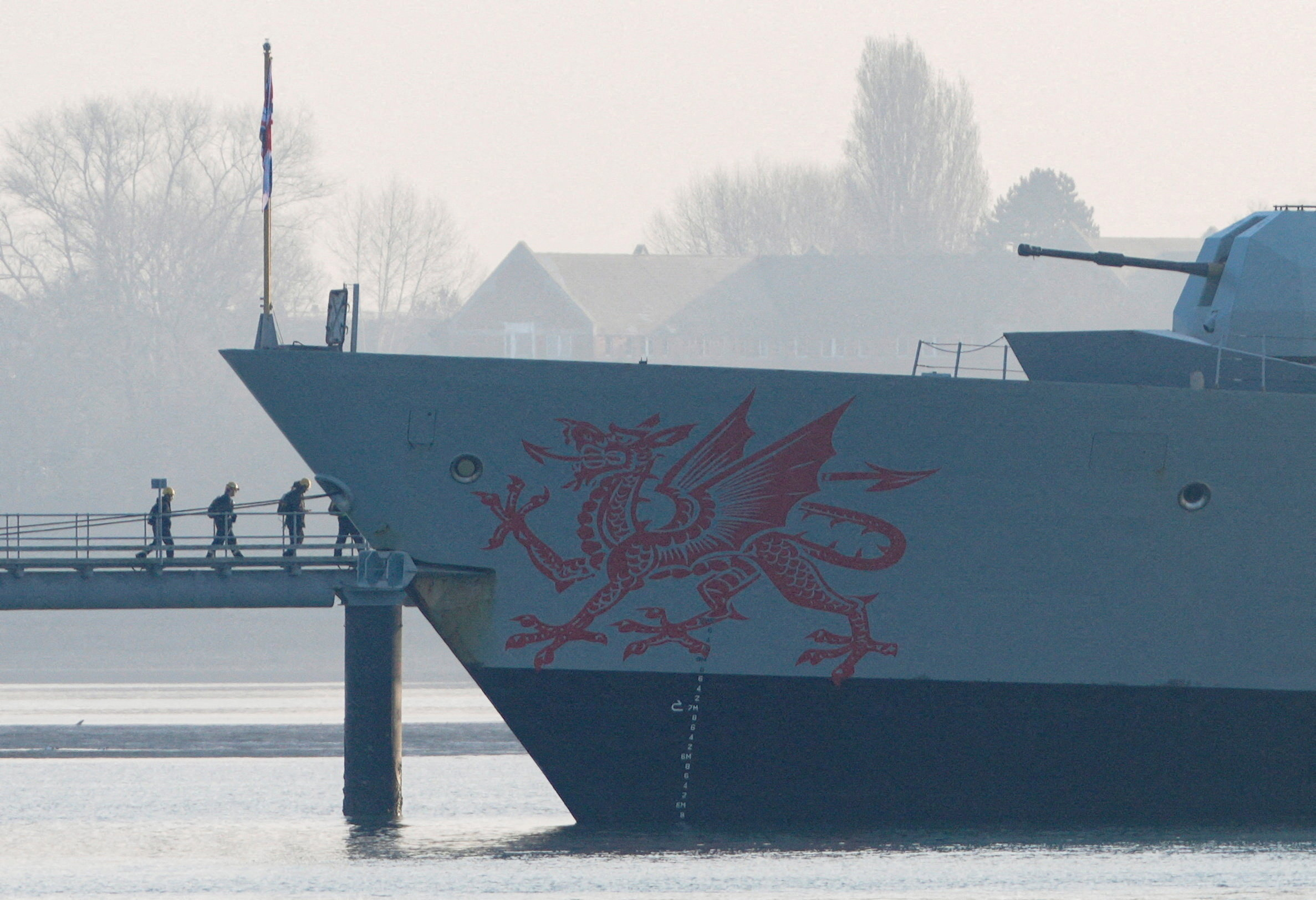
The March 2026 drone strike on a British base in Cyprus was more than a tactical incident—it served as a stark diagnostic of the United Kingdom's eroded military posture. While the original Defense News report accurately catalogs the Royal Navy's sluggish three-week delay in deploying HMS Dragon compared to rapid responses by France, Greece, and Italy, it underplays the deeper systemic atrophy and fails to connect this episode to the broader pattern of simultaneous multi-theater depletion across Western forces.
Britain's navy, once the world's largest at the outset of World War II, now fields just 38,000 personnel, two aircraft carriers frequently plagued by technical issues, and only 13 destroyers and frigates. This represents a collapse from 1991 levels. The report correctly notes the contrast with the 1990-91 Gulf War deployment of over 30 vessels, yet misses how post-Cold War 'peace dividend' policies, followed by two decades of counterinsurgency focus in Iraq and Afghanistan, hollowed out high-intensity capabilities. Procurement disasters—Type 45 destroyer engine failures in warm waters, Ajax armored vehicle scandals, and Type 26 frigate delays—have compounded readiness shortfalls that no amount of rhetorical commitment from Prime Minister Keir Starmer can immediately fix.
Synthesizing the Defense News dispatch with the 2025 IISS Military Balance and a February 2026 RUSI briefing on UK maritime posture reveals a consistent trend: European NATO members have chronically underinvested while depending on American power projection. The IISS data shows Britain's army at its smallest since the Napoleonic era, while RUSI highlights how the Trident nuclear deterrent consumes roughly 20% of the defense budget, crowding out conventional modernization. What the original coverage glossed over is the Trump administration's open contempt—President Trump's dismissal of UK carriers as 'toys' and Secretary Hegseth's mockery of the 'big, bad Royal Navy'—signaling eroding U.S. confidence in its closest ally at the precise moment Washington itself faces recruitment crises and munitions stockpile depletion from Ukraine aid.
This UK vulnerability fits a larger, under-reported pattern of Western force exhaustion. Russia's reconstitution of land forces despite heavy Ukraine losses, China's construction of the world's largest navy, and Iran's maturation of drone and missile swarms create concurrent threats that no single Western power can cover. Britain's recent North Atlantic submarine tracking operations against Russian vessels illustrate the zero-sum choices: commit to the Indo-Pacific via AUKUS to counter Beijing, reinforce NATO's eastern flank, or maintain presence in the Gulf. It cannot sustainably do all three. The RAF's roughly 150 fast jets pale against the nearly 700 available in 1991, forcing reliance on defensive posturing rather than the offensive coalition role seen in the first Gulf War.
Starmer's claim of the 'biggest sustained increase in military spending since the Cold War' (reaching 2.3% of GDP) rings hollow against historical 3.8% benchmarks and the reality of inflation-eroded budgets, legacy platform retirements outpacing new deliveries, and an atrophied defense industrial base. The original piece fails to explore how years of just-in-time procurement and outsourcing have left the UK unable to surge production as seen in current Ukraine demands.
The strategic implication is sobering: perceived weakness invites opportunism. Adversaries note not only Britain's limitations but parallel shortfalls in Germany (where only a fraction of Leopard tanks are operational), France (struggling with ammunition stocks), and even the U.S. (facing shipyard backlogs). Without a coordinated Western reset toward 3-4% GDP defense investment, renewed industrial mobilization, and hard choices on prioritization, the Iran conflict may be remembered as the moment the post-1945 order's military backbone visibly cracked. The hollowed-out British state is not an isolated story—it is the canary in a coal mine of alliance-wide depletion.
SENTINEL: Britain's exposed frailty in the eastern Mediterranean during the Iran crisis signals a closing window where peer adversaries may test depleted Western forces before recapitalization can occur; expect accelerated hybrid probing against UK and European interests through 2027 unless defense budgets surge beyond 3% GDP across the alliance.
Sources (3)
- [1]Iran war exposes weakened state of Britain’s armed forces(https://www.defensenews.com/global/europe/2026/04/16/iran-war-exposes-weakened-state-of-britains-armed-forces/)
- [2]The Military Balance 2025(https://www.iiss.org/publications/the-military-balance/)
- [3]Maritime Power and the UK: Choices for a New Strategic Era(https://rusi.org/publication/whitehall-reports/maritime-power-and-uk-choices-new-strategic-era)