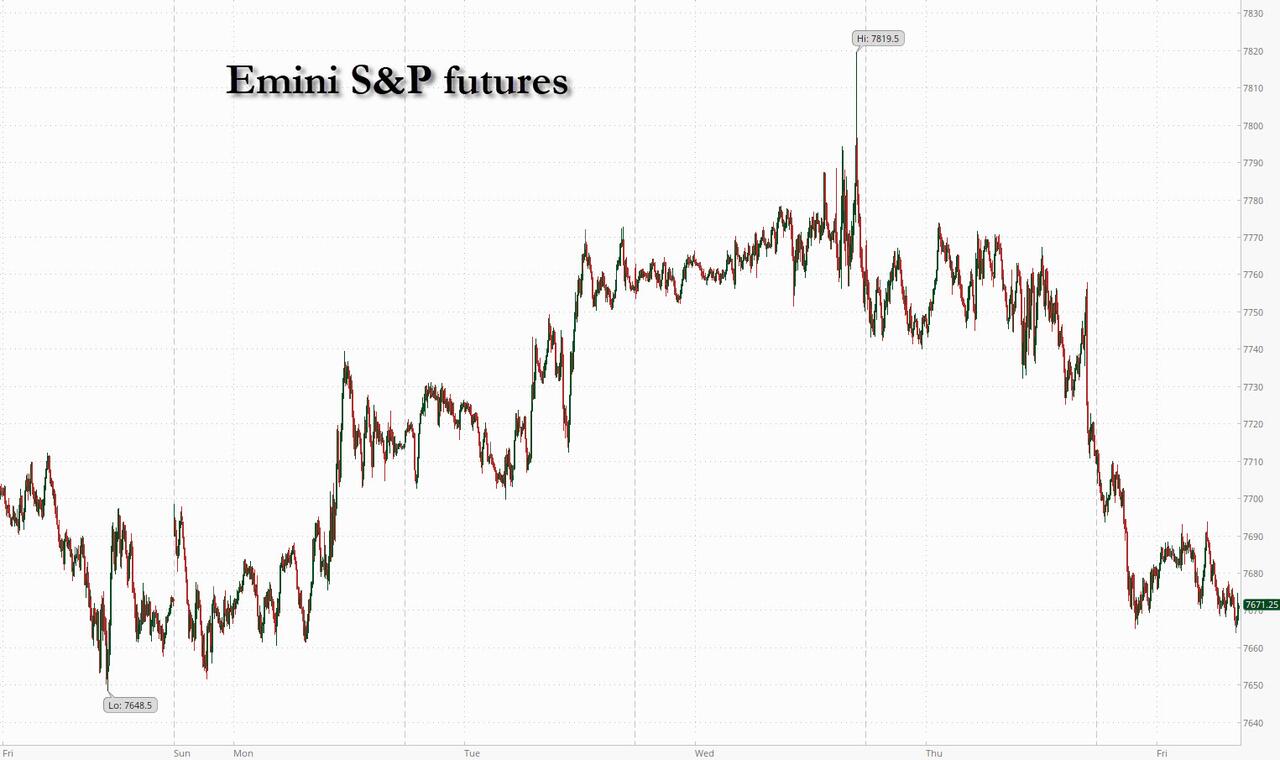
AI Spending Reckoning Hits Markets: Amazon and Intel Earnings Trigger Tech Selloff Amid Geopolitical Oil Surge
Tech earnings from Amazon and Intel exposed AI spending fatigue, driving Nasdaq futures down over 2% and wiping out significant market value, while oil rallied on Hormuz disruptions and Iran-related risks, illustrating the dual pressures of technological transition costs and geopolitical supply shocks on financial markets.
US equity futures slid sharply on October 30, 2026, with Nasdaq futures dropping more than 2% as disappointing earnings from Amazon and Intel amplified investor concerns over the sustainability of massive AI infrastructure investments. Amazon shares plunged around 7% in premarket trading after reporting underwhelming e-commerce growth—the slowest in three years—and reaffirming a $220 billion capital expenditure forecast for the year, even as trailing twelve-month free cash flow turned sharply negative at -$42.4 billion. Intel cratered 25-29%, on track for one of its worst days ever, after issuing weak Q4 revenue guidance of $15-16 billion versus analyst expectations near $17 billion, citing PC market softness that overshadowed data center and AI revenue growth of 78%. These results followed Alphabet's record plunge the prior day, contributing to over $1 trillion in Nasdaq-100 market cap erosion for the month and highlighting a rotation away from concentrated AI leaders toward broader or defensive names. Oil prices jumped concurrently, with Brent rising toward $117 and WTI near $103-104, fueled by reports of tanker incidents in the Strait of Hormuz—including Iranian claims of multiple vessels struck—and expectations of renewed US-Iran tensions post-midterms, underscoring how geopolitical risks can intersect with tech volatility to pressure risk assets. Broader implications include heightened scrutiny of whether AI capex will deliver proportional returns, potential margin compression for hyperscalers, and opportunities for non-AI sectors as equal-weighted indices outperform. Economic data releases like the Q3 employment cost index and Chicago PMI, alongside Fed speakers, added to the day's uncertainty.
[Market Analyst]: Persistent AI capex without clear ROI signals could extend the rotation out of mega-cap tech into value and defensives, while oil volatility adds a risk premium that may delay Fed easing and pressure growth-sensitive assets through year-end.
Sources (5)
- [1]Amazon, Intel shares fall after earnings amid AI spending concerns(https://www.cnbc.com/2026/10/30/amazon-intel-earnings-big-tech-ai-spending-concerns.html)
- [2]Intel on course for worst day ever, triggers global chip rout(https://www.reuters.com/business/intel-warning-sparks-chip-rout-pc-weakness-clouds-turnaround-2026-10-30/)
- [3]Nasdaq plummets 2% as Amazon, Intel and Reddit latest victims of AI fears(https://nypost.com/2026/10/30/business/nasdaq-plummets-2-as-amazon-intel-and-reddit-latest-victims-of-ai-fears/)
- [4]Oil set for fourth monthly gain as Hormuz tanker attack highlights supply risks from war(https://www.reuters.com/business/energy/oil-rises-supply-concerns-houthis-attack-saudi-arabia-2026-10-30/)
- [5]Iran claims four tankers hit mines in Hormuz as U.S. strike fears grow(https://www.cnbc.com/2026/10/30/iran-trump-hormuz-oil-middle-east-.html)