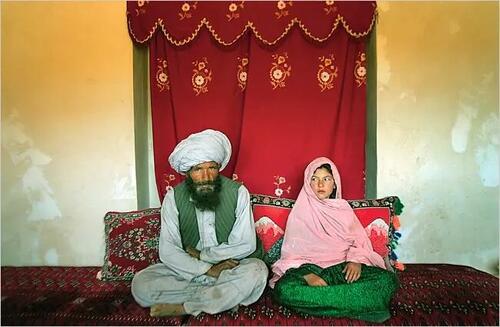
BBC's Economic Framing of Child Marriage in Afghanistan Masks Deep Cultural and Ideological Roots
Recent BBC reporting on Afghan families selling daughters frames child marriage as an economic survival tactic amid aid cuts and Taliban policies, but credible data shows it as a worsening cultural practice accelerated by the regime's strict gender ideology since 2021. This highlights media tendencies to prioritize economic narratives over ideological critique in certain non-Western societies.
A recent BBC investigation into Afghanistan's humanitarian crisis highlights desperate families in Ghor province selling their young daughters into marriage to survive extreme hunger, poverty, and aid cuts. While the report acknowledges Taliban restrictions on girls' education and employment as factors making daughters less economically viable, it places heavy emphasis on economic desperation, drought, and reduced foreign funding as the primary drivers, portraying fathers as facing 'impossible choices.' This narrative aligns with a broader pattern in mainstream coverage that attributes such practices primarily to temporary crises rather than longstanding cultural norms rooted in certain interpretations of Islamic tradition and strict Sharia enforcement under the Taliban.
Data from multiple organizations confirms child marriage has been prevalent in Afghanistan for decades but has surged since the Taliban's 2021 takeover. UN Women and UNICEF-linked assessments indicate the ban on secondary education for girls has driven a roughly 25% increase in child marriages, alongside rises in teenage pregnancies and maternal mortality risks. Reports document girls as young as five being sold, often to relatives, with practices justified through cultural traditions of bridal gifts and viewing females primarily through roles of marriage and domesticity.
Human Rights Watch and other monitors have long documented how child marriage correlates with higher risks of domestic violence, health complications from early pregnancy, and interrupted education. Pre-Taliban surveys showed over 50% of women aged 25-49 had married before 18; current estimates hover around 29% for girls before 18, with clear acceleration under policies prohibiting female work and schooling beyond primary levels. These bans stem directly from the Taliban's theocratic governance, which prioritizes gender segregation and limits female public participation—outcomes tied to the 2021 withdrawal that enabled their return to power.
Critics argue coverage like the BBC's diverts scrutiny from the ideological foundations, including historical precedents in Hadith literature that have been invoked across parts of the Islamic world to justify low marriage ages. Similar practices persist in varying degrees in Pakistan, Yemen, and elsewhere, often defended via economic or 'cultural necessity' arguments that would be universally condemned as exploitation in Western contexts. By focusing blame on lost USAID funding or Western policy shifts while softening the cultural elephant in the room, such reporting risks excusing systemic issues incompatible with universal human rights. This selective lens perpetuates a multicultural double standard: practices framed as barbaric when occurring elsewhere become sympathetic tragedies when tied to specific societies. Deeper analysis reveals connections to failed nation-building efforts, the durability of tribal-Islamic norms resistant to external reform, and the challenges of humanitarian aid that props up regimes without addressing root governance failures. Without confronting these ideological drivers, international responses remain superficial, leaving generations of Afghan girls vulnerable to institutionalized exploitation.
LIMINAL: Selective media framing that excuses culturally embedded practices like child marriage under economic pretexts reduces pressure on the Taliban, risks normalizing similar norms in diaspora communities, and undermines universal human rights standards.
Sources (5)
- [1]Afghanistan humanitarian crisis: Ghor's starving families(https://www.bbc.com/news/articles/c0q25dwj807o)
- [2]Taliban's Education Ban On Afghan Girls Fuels Spike In Child Marriages(https://www.rferl.org/a/afghanistan-taliban-education-ban-marriage/32989877.html)
- [3]Child marriage in Afghanistan(https://www.girlsnotbrides.org/learning-resources/child-marriage-atlas/regions-and-countries/afghanistan/)
- [4]Afghanistan: Child Marriage, Domestic Violence Harm Progress(https://www.hrw.org/news/2013/09/04/afghanistan-child-marriage-domestic-violence-harm-progress)
- [5]The Impact of Afghanistan's Policies on Early Child Marriage(https://pmc.ncbi.nlm.nih.gov/articles/PMC12583558/)