US Shale Output Surge Amid Geopolitical Oil Shock Exposes Supply Elasticity Limits on Price Rallies
Continental Resources' capex increase signals potential US shale supply response to prolonged high oil prices from US-Iran conflict, which could limit rally duration per EIA and IEA data, though original coverage missed productivity gains and regulatory constraints.
Continental Resources' announcement to increase its 2026 capital budget, as reported via Bloomberg, marks a notable shift in US shale behavior following the escalation of US-Iran tensions and disruptions at the Strait of Hormuz. While the ZeroHedge coverage frames this as the first clear signal that producers now view elevated prices as persistent rather than transitory, it understates the broader historical pattern of shale acting as a de facto swing supplier since the 2014-2016 price crash. Primary data from the US Energy Information Administration's Drilling Productivity Report (December 2025 release) shows that Bakken and Permian productivity per rig has continued to improve by approximately 8-12% year-over-year, allowing output growth with fewer new rigs than in prior cycles.
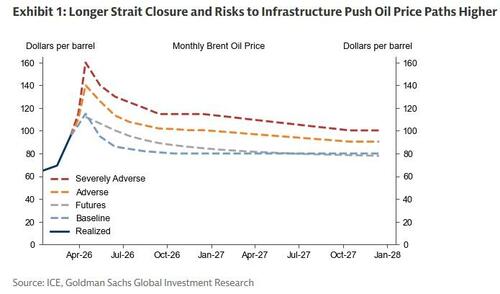
The original article correctly notes Continental's pre-conflict plan for a 20% capex reduction but misses the company's concurrent expansion into Argentina's Vaca Muerta formation, documented in its 2025 10-K filing with the SEC, which diversifies risk and provides additional leverage to global price signals. Goldman Sachs' March 2026 note raising 2026 Brent forecasts to $80/barrel cited similar supply-response risks, yet emphasized OPEC+ spare capacity data from the Joint Ministerial Monitoring Committee reports showing compliance rates above 110% in Q1 2026.
Multiple perspectives emerge on the implications. Industry analyses, including those from the American Petroleum Institute, view increased shale activity as reinforcing US energy security and providing economic tailwinds through industrial investment. Conversely, IEA monthly oil market reports highlight potential market saturation risks, noting that US tight oil could add 300,000-500,000 barrels per day within 9-12 months, potentially capping rallies but also depressing long-term investment if prices subsequently collapse. Environmental policy documents from the EPA's recent methane emissions rules add another layer, suggesting regulatory friction could slow the pace of any ramp-up.
What the initial coverage overlooked is the discipline learned post-2020: many producers have committed to shareholder returns over volume growth, as evidenced in earnings call transcripts from EOG Resources and Pioneer Natural Resources in late 2025. Continental's move, representing roughly 475,000 boe/d baseline, may not trigger an immediate industry-wide response if other operators prioritize balance sheets amid rising service costs. This pattern suggests supply responses could shorten the duration of geopolitical premia in oil prices, reshaping market dynamics by positioning US shale as a ceiling mechanism rather than a floor. Synthesis of EIA, IEA, and company SEC filings indicates that while short-term fuel prices may remain elevated for consumers, the medium-term trajectory points toward stabilization, albeit with heightened volatility tied to both military and regulatory developments.
MERIDIAN: US shale's rapid response to sustained high prices from Hormuz disruptions may prevent extended oil rallies by adding supply within months, but persistent regulatory and cost pressures could limit the scale compared to previous boom cycles.
Sources (3)
- [1]Major US Shale Producer To Boost Output, And It Suggests One Thing(https://www.zerohedge.com/energy/major-us-shale-producer-boost-output-and-it-suggest-one-thing)
- [2]EIA Drilling Productivity Report(https://www.eia.gov/petroleum/drilling/)
- [3]IEA Oil Market Report(https://www.iea.org/reports/oil-market-report)