South Korea's KOSPI Rollercoaster: AI-Driven Rally Unwinds, Devastating Retail Investors' Financial Security
Corroborated reports detail KOSPI's sharp 2026 correction driven by Samsung and SK Hynix, leveraged retail trading, and widespread investor losses impacting daily life, with WSJ humanizing the story amid regulatory responses.
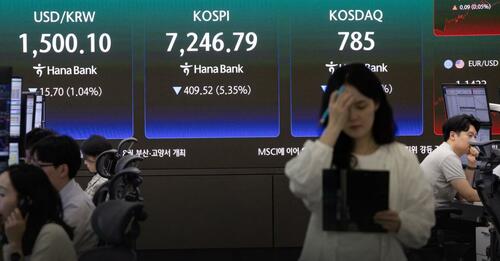
South Korea's benchmark KOSPI index, once the world's hottest market fueled by AI chip demand, experienced extreme volatility in mid-2026, plummeting nearly 40% from its June peak before partial rebounds. This turmoil, concentrated in Samsung Electronics and SK Hynix—which together dominate over half the index's market cap—has left hundreds of thousands of retail investors facing massive losses, forcing cuts to daily living expenses and straining personal finances. The Wall Street Journal detailed personal stories of hardship, including 30-year-old English teacher Yoon Jae-Yi losing $19,000 and resorting to skipping meals as a 'diet,' while sound engineer Yoon Kyung-min saw $7,200 of his severance evaporate in a week after quitting his job to invest.
Credible reporting from Reuters confirms the scale: the index dropped as much as 12.6% in one session in late July, triggering trading halts, with SK Hynix falling nearly 20% intraday on disappointing results relative to sky-high expectations despite record profits. Business Insider noted both chip giants falling out of the $1 trillion valuation club amid the rout, erasing trillions in market value overall. Multiple circuit breakers activated, including back-to-back in July, highlighting structural vulnerabilities amplified by single-stock 2x leveraged ETFs introduced earlier in 2026 and record margin debt.
Beyond the numbers, the human toll underscores broader risks of concentrated markets and retail leverage. Al Jazeera and BBC reports describe novice 'ants' investors—drawn by FOMO during the rally—now traumatized, with margin calls affecting an estimated 1.2 million accounts. Foreign outflows reached record levels, leaving locals holding the bag as the government tightened ETF rules. This episode reveals connections often overlooked: how AI hype intersected with Korea's unique market structure (two stocks driving 70%+ of gains) and leveraged products to create self-reinforcing sell-offs, evoking comparisons to past crises like 1997 or 2008 but in a modern, retail-driven context. The volatility has political ramifications, with blame directed at President Lee Jae Myung's administration for initially loosening regulations, while highlighting risks to everyday financial security in an era of speculative AI bets.
[Market Risk Analyst]: Concentrated AI bets via leverage can cascade into personal financial distress, amplifying short-term anxiety and potentially shifting investor behavior toward caution in volatile sectors.
Sources (6)
- [1]The World’s Craziest Stock Market Has Turned Into a Fright Ride(https://www.wsj.com/finance/stocks/stock-market-crash-south-korea-ai-ccb00cba)
- [2]South Korea $2 trillion stock rout breaks records as SK Hynix results disappoint(https://www.reuters.com/world/asia-pacific/south-korea-stock-rout-breaks-records-sk-hynix-earnings-disappoint-2026-07-29/)
- [3]South Korea's Stock Rout Knocks Samsung, SK Hynix Out of $1T Club(https://www.businessinsider.com/kospi-today-south-korean-stock-market-index-hynix-samsung-earnings-2026-7)
- [4]‘I lost $14,000 in a month’: Investors hit by Korean stock market's wild swings(https://www.bbc.co.uk/news/articles/c2k7zj4knwlo)
- [5]South Korea’s rookie investors lose small fortunes amid AI stocks frenzy(https://www.aljazeera.com/economy/2026/8/19/south-koreas-rookie-investors-lose-small-fortunes-amid-ai-stocks-frenzy)
- [6]From euphoria to despair, Korea reckons with stock mania's emotional toll(https://www.reuters.com/business/finance/euphoria-despair-korea-reckons-with-stock-manias-emotional-toll-2026-08-21/)