Beyond the Penny: Nickels Face Composition Overhaul Amid Rising Production Costs and Post-Penny Rounding Realities
Corroborated reports confirm the 2025 end of penny production and ongoing legislative efforts via the Common Cents Act to reform nickel composition amid costs exceeding face value, with real-world effects on cash transactions and vending systems.
The U.S. Mint struck its final circulating pennies on November 12, 2025, ending more than 230 years of production after costs reached nearly 3.7 cents per coin—over triple face value—prompting an estimated $56 million in annual savings.[1][2] Existing pennies remain legal tender, but shortages have led retailers to adopt rounding practices for cash transactions, often to the nearest nickel.[3]
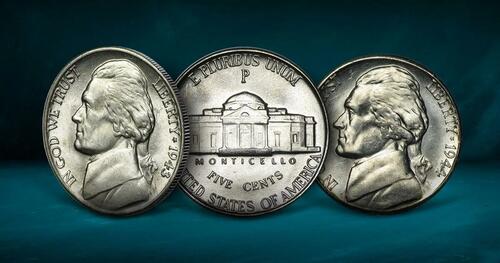
This shift has intensified scrutiny on the nickel, which cost the Mint 13.31 cents to produce and distribute in fiscal year 2025—more than 2.5 times its face value.[4] The bipartisan Common Cents Act (H.R. 3074 in the House and S. 1525 in the Senate) seeks to formalize the penny's end while authorizing the Treasury Secretary to test a new nickel composition: a zinc inner layer with a nickel outer plating. This change, mirroring the 1980s penny transition to copper-plated zinc, aims to cut costs while minimizing disruption to vending machines and coin-accepting devices.[5][4]
House passage occurred in July 2026; the Senate approved an amended version in August 2026, sending it back to the House.[6] The legislation requires any new composition to demonstrably reduce production expenses and have minimal adverse effects on existing machinery. Proponents argue it could sustain nickel minting for decades, much like the penny's reprieve, but persistent inflation and metal price volatility may accelerate further reforms or even nickel phase-out discussions.[7]
Deeper implications extend to daily commerce: rounding to the nearest nickel imposes small but cumulative costs on consumers, with estimates suggesting millions annually if extended further. Vending operators and small retailers face adaptation challenges, while broader monetary policy debates highlight how low-denomination coins reflect fiat currency erosion. Public opinion remains mixed, with surveys showing resistance to eliminating the nickel alongside the penny.[7] As the bills advance, the trajectory signals potential evolution in U.S. coinage toward higher-value denominations or digital alternatives.
Treasury: Nickel redesign could extend its viability by 20-40 years if zinc-core version succeeds in cost reduction and machine compatibility, but rising metal prices or accelerated cashless trends may force further denomination consolidation sooner.
Sources (6)
- [1]US Mint presses final pennies as production ends(https://apnews.com/article/us-mint-treasury-department-penny-end-production-86139df5644ef0885a9baf98e9677380)
- [2]US ends penny-making run after more than 230 years(https://www.bbc.co.uk/news/articles/cq8392vx8plo)
- [3]House bill seeks change to 5-cent composition(https://www.coinworld.com/news/us-coins/house-bill-seeks-change-to-5-cent-composition)
- [4]Text - H.R.3074 - 119th Congress: Common Cents Act(https://www.congress.gov/bill/119th-congress/house-bill/3074/text)
- [5]What Scrapping the Nickel Could Mean for Future of Cash(https://www.newsweek.com/what-scrapping-the-nickel-could-mean-for-future-of-cash-12331046)
- [6]US SB1525 | 2025-2026 | 119th Congress(https://legiscan.com/US/bill/SB1525/2025)