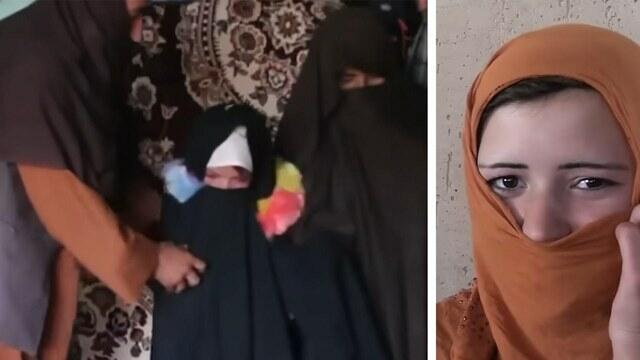
Baden-Württemberg Documents 358 Child Marriages Since 2012, Only Eight Annulled Amid Migrant Backgrounds
Official data from Baden-Württemberg confirms 358 child marriages since 2012, overwhelmingly linked to migrant communities, with authorities annulling only eight despite legal prohibitions, exposing enforcement shortfalls and human rights implications for minors.
A parliamentary inquiry by Alternative for Germany (AfD) lawmakers in Baden-Württemberg has revealed official records of 358 child marriages handled by the Tübingen regional authority since April 2012, with courts formally annulling just eight between 2018 and 2024. The data, released in early October 2026 in response to questions from state parliament members Nikolaos Boutakoglou and Emely Knorr, underscores limited legal interventions despite Germany's 2017 law raising the minimum marriage age to 18 and restricting recognition of foreign minor marriages.[1][2]
Specific annulled cases include the 2020 marriage of an 11-year-old Iraqi girl to a 17-year-old Iraqi boy and the 2018 annulment of a 14-year-old Afghan girl married to a 30-year-old Afghan man. Additional 2024 annulments involved a 16-year-old German girl with a 25-year-old Pakistani man and a 16-year-old Syrian girl with a 27-year-old Syrian man. The remaining approximately 350 cases were closed under 'other resolutions,' often due to a partner reaching adulthood, death, decisions against annulment, or remarriage abroad. Records note cases with girls as young as 12, including Afghan and Syrian brides paired with significantly older men, and at least nine instances where the bride was under 14.[3][4]
Demographics show a pronounced pattern: Syrian men accounted for 132 cases (nearly 40%), followed by nationals from Bulgaria, Turkey, Afghanistan, and Iraq. Child marriages between two German citizens represented only about 0.3% of the total. Most cases date from 2015 onward, coinciding with Germany's migration influx. The Tübingen authority processes only foreign-contracted marriages reported by registry offices; no national comprehensive statistics exist, leaving federal tracking reliant on partial registers like the Foreigners' Central Register.[5]
This issue connects to broader human rights concerns, including risks of forced marriage highlighted by groups like Terre des Femmes. State-funded counseling centers have reported dozens of minors at risk annually. Critics, including AfD figures and Alice Weidel, argue enforcement gaps reflect challenges in integrating practices from origin countries with progressive European standards on child autonomy and protection. The episode illustrates tensions between cultural relativism in migration contexts and universal child rights, prompting calls for earlier intervention, systematic data collection, and decisive annulment processes.[6]
[Human Rights Analyst]: Weak enforcement of child marriage bans in migrant-heavy regions signals deeper integration failures, likely fueling political polarization and demands for stricter border and cultural assimilation policies across Europe.
Sources (5)
- [1]Baden-Württemberg: AfD-Anfrage bringt Hunderte Kinderehen ans Licht – eine „Ehefrau“ war erst elf Jahre alt(https://www.welt.de/politik/deutschland/article6acc80bc96360f6d88a6087e/baden-wuerttemberg-afd-anfrage-bringt-hunderte-kinderehen-ans-licht-eine-ehefrau-war-erst-elf-jahre-alt.html)
- [2]AfD-Anfrage erfasst hunderte Kinderehen – ein Mädchen war erst elf(https://www.berliner-zeitung.de/article/kinderehen-baden-wuerttemberg-afd-anfrage-10490080)
- [3]Auch 11-Jährige verheiratet: Über 350 Kinderehen in Baden-Württemberg erfasst(https://de.euronews.com/2026/10/13/auch-11-jahrige-verheiratet-uber-350-kinderehen-in-baden-wurttemberg-erfasst)
- [4]Kinderehen in Baden-Württemberg: 358 bekannte Fälle, acht Aufhebungen(https://www.exxtra24.at/kinderehen-in-baden-wuerttemberg-358-bekannte-faelle-acht-aufhebungen/)
- [5]Acht Kinderehen in Baden-Württemberg aufgehoben(https://www.badische-zeitung.de/acht-kinderehen-in-baden-wuerttemberg-aufgehoben)