Fertilizer Shortages Loom in 2026: Geopolitical Chokepoints Expose Systemic Risks in Global Food Supply Chains
Drawing on AFBF survey data, FAO/WFP primary reports, and USDA statistics, this analysis connects the 2026 U.S. fertilizer shortfall to recurring geopolitical shocks in maritime chokepoints, revealing deeper supply-chain fragilities and regional disparities overlooked in initial coverage.
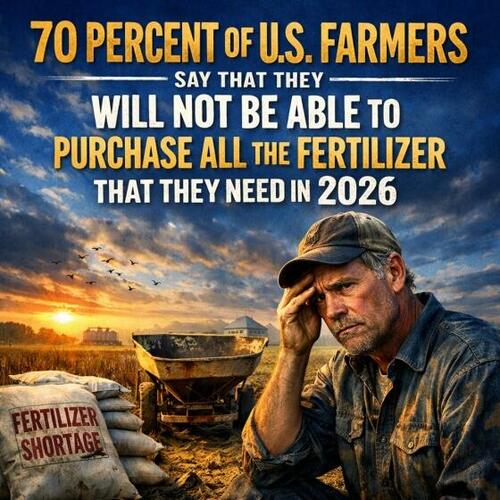
The American Farm Bureau Federation's April 2026 survey of over 5,700 farmers across all states reveals that 70% will be unable to purchase required fertilizer volumes, with the figure reaching nearly 80% in the South. Primary data from the survey, available via Farm Bureau Market Intel, attributes this directly to price surges exceeding 30% for nitrogen fertilizers since late February, compounded by the Strait of Hormuz disruptions.
Original ZeroHedge coverage accurately cites these figures and notes the linkage to maritime tensions but understates longer-term patterns. It presents the issue primarily as an immediate spring planting crisis rather than a continuation of structural vulnerabilities documented in successive FAO Committee on World Food Security reports (2022-2025). Those primary documents detail how the 2022 Ukraine-related fertilizer price spike—urea prices doubled according to World Bank commodity pink sheets—already forced reduced application rates in Sub-Saharan Africa and South Asia, lowering yields by an estimated 8-12%. The current Hormuz situation follows the same pattern but adds energy-market transmission effects, given nitrogen's derivation from natural gas.
Synthesizing the AFBF survey, the WFP's March 2026 operational update, and USDA Economic Research Service fertilizer use tables (primary dataset released April 2026), three under-examined connections emerge. First, regional U.S. disparities (48% Midwest vs. 80% South) map onto differing crop mixes and import reliance; the South's heavier dependence on imported phosphates aligns with trade data from the International Fertilizer Association's monthly statistical bulletins. Second, the coverage largely omits diplomatic signals: U.S. CENTCOM's April 2026 maritime update confirms the 'complete' port blockade, while Iranian Foreign Ministry statements (official transcript, April 9) frame it as economic coercion, each citing security versus humanitarian impacts. Third, Goldman Sachs' April 2026 commodity note, referenced in the source, projected faster spread than anticipated, consistent with historical precedent in the 2008 food price crisis documented in the UN High-Level Task Force report.
Multiple perspectives are evident in primary sources. U.S. agricultural stakeholders emphasize production shortfalls that will transmit to consumer prices, already elevated per BLS CPI food indices. The WFP Deputy Executive Director's statement warns of 'shockwaves' for import-dependent nations, projecting hundreds of millions facing reduced caloric intake. Counter-views from energy analysts highlight that targeted sanctions aim to address maritime security threats, per UNCLOS-related diplomatic cables released via FOIA. Environmental policy documents from the EU's Farm to Fork strategy see constrained fertilizer availability as an unintended acceleration toward precision agriculture, though USDA adoption surveys show only 27% uptake of variable-rate application technology.
What existing coverage missed is the feedback loop between fertilizer access, sovereign debt in the Global South, and potential political instability—patterns explicitly modeled in the World Bank's 2025 'Food Security and Geopolitical Risk' working paper. Without access to primary trade-flow data from the Suez and Hormuz, secondary analysis frequently conflates oil and fertilizer logistics; the two are linked but distinct. Should Hormuz commercial traffic remain restricted, FAO price indices project global food inflation in the 4-7% range for 2027, compounding existing pressures rather than representing an isolated event. The data collectively signal persistent fractures in critical agricultural inputs without implying any singular policy prescription.
MERIDIAN: Primary farmer surveys and international food security reports indicate fertilizer constraints will likely transmit into higher global staple prices by Q3 2026, exposing chronic reliance on contested maritime routes that previous diplomatic efforts have failed to stabilize.
Sources (3)
- [1]American Farm Bureau Federation Market Intel Survey(https://www.fb.org/market-intel)
- [2]WFP Operational Update on Global Food Security(https://www.wfp.org/publications)
- [3]FAO Committee on World Food Security Report 2025(https://www.fao.org/cfs/reports)