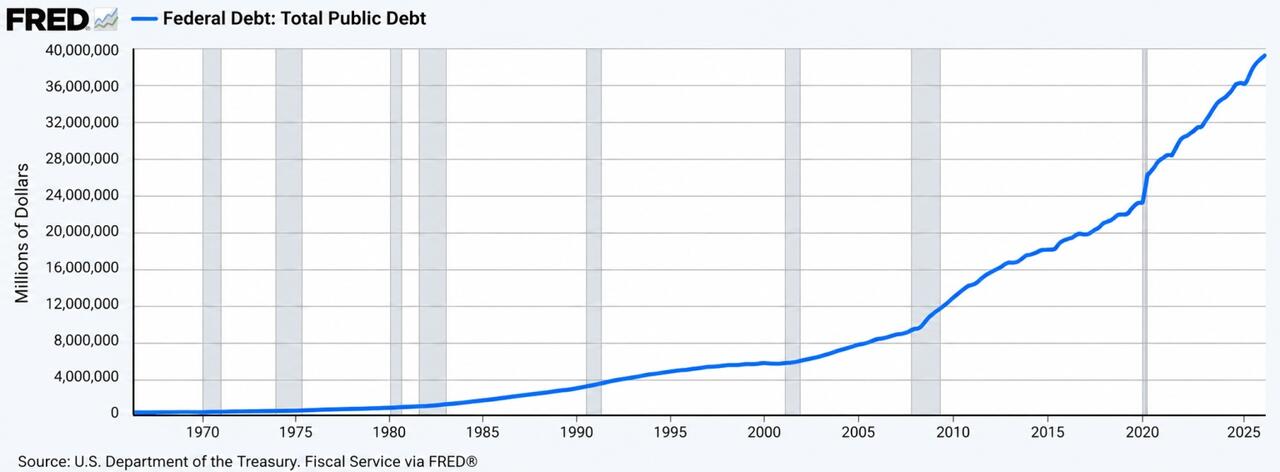
BRICS Currency Settlement Share Rises to 28 Percent as US Debt Hits 40 Trillion Dollars
US dollar dominance faces measurable erosion from coordinated BRICS settlement mechanisms amid record US debt levels. Primary data confirm the trend without corresponding US policy adaptation. The pattern aligns with repeated post-1971 reliance on reserve status to defer fiscal adjustment.
The shift follows expanded bilateral swap lines between China, Russia, India and Brazil after 2022 sanctions froze Russian reserves. Central bank data show non-USD reserves in these states rising 14 percentage points since 2021. US policy continued to rely on existing sanctions and Treasury market depth without new reserve-currency safeguards.
Competing incentives are straightforward. BRICS members reduce exposure to dollar payment rails and sanctions risk. The United States retains seigniorage and lower borrowing costs but faces higher rollover risk as foreign demand for Treasuries flattens. Primary records from the IMF COFER database and national central bank reports document the reserve shift; US Treasury quarterly refunding statements show no corresponding adjustment in issuance strategy.
Costs to the US include gradual erosion of the exorbitant privilege identified in 1965 French critiques. Gains remain concentrated in short-term financing capacity. No primary document from the Federal Reserve or Treasury outlines a contingency for reserve-status loss beyond existing stress tests.
Next indicators are visible in 2027 oil-contract settlement data and foreign official holdings of Treasuries. A sustained drop below 55 percent USD share in global reserves would mark the first structural break since the 1970s.
Treasury: Foreign official holdings of US Treasuries fall below 30 percent of total outstanding by end-2028.
Sources (2)
- [1]IMF Currency Composition of Official Foreign Exchange Reserves(https://data.imf.org/COFER)
- [2]US Treasury Quarterly Refunding Statement Q4 2026(https://home.treasury.gov/system/files/221/Q42026QRA.pdf)