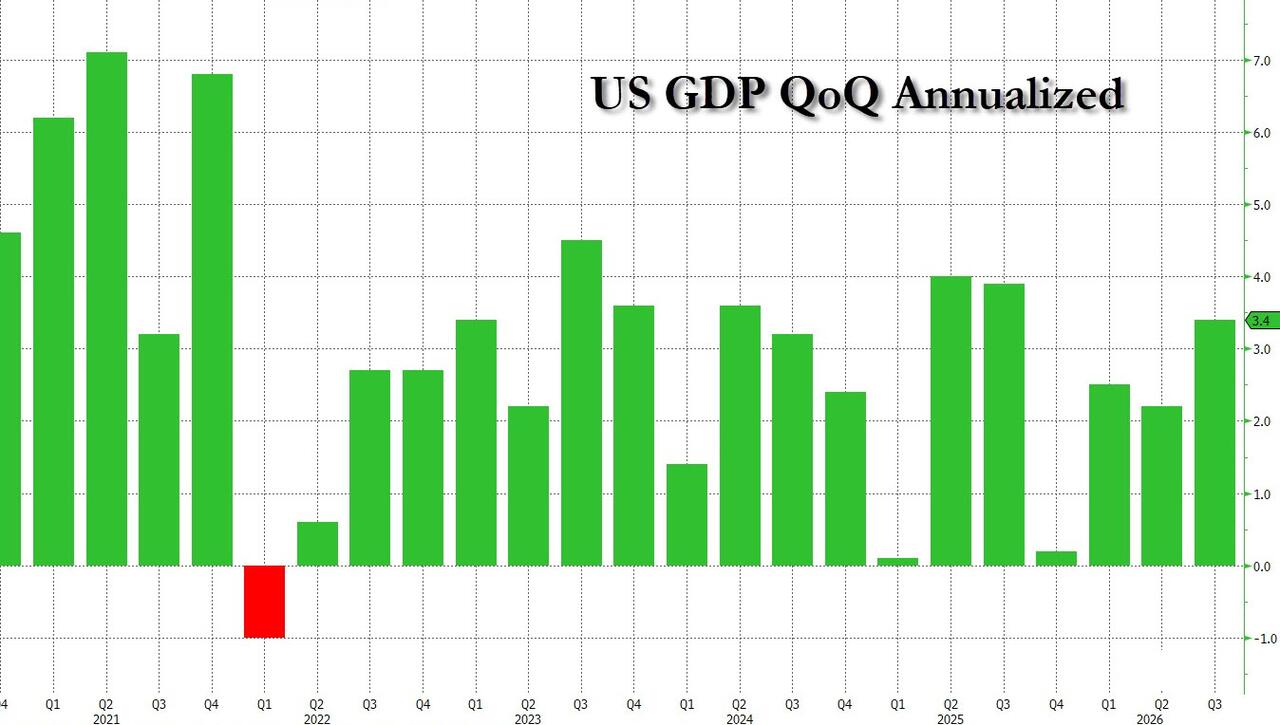
US GDP Surges 3.4% in Q3 2026 on AI-Driven Investment and Consumer Resilience
Official data confirms strong Q3 2026 GDP growth at 3.4%, fueled by AI capex and consumer spending, with corroboration from BEA and major outlets; deeper links to tech investment cycles and potential vulnerabilities.
The U.S. Bureau of Economic Analysis reported that real GDP grew at a 3.4% annualized rate in the third quarter of 2026, accelerating from 2.2% in Q2 and beating economist expectations of around 3.2%. This marks the fastest pace in a year, propelled by robust domestic demand. Consumer spending rose 3.8% for the second consecutive quarter, while real final sales to private domestic purchasers—a key gauge of private-sector activity—advanced 4.9%. Business investment stood out, with nonresidential fixed investment climbing 12.7% and equipment outlays contributing at levels not seen since 2011 outside pandemic effects. Multiple analyses attribute much of this to AI-related capital expenditures, including surging spending on information processing equipment (up sharply, with contributions like 0.86 percentage points to GDP growth), data center buildouts, and related hardware. Reuters and PYMNTS noted AI-driven capex as a core driver offsetting trade drags from higher imports. Government spending also added support, partly from Strategic Petroleum Reserve accounting. Inflation data released alongside showed September PCE rising 0.5% (core 0.3%), with quarterly PCE at 2.1%. Despite low consumer sentiment amid cost-of-living pressures, spending held firm, highlighting a disconnect between perceptions and actual outlays. Connections to broader trends include heavy corporate borrowing for AI infrastructure—potentially creating debt overhangs alongside stock valuations—and import surges in capital goods that tempered net exports. RBC Economics highlighted how AI momentum in structures and equipment is outpacing other sectors, while risks like uncertain long-term returns and tariff pressures loom. This data precedes key political events, underscoring AI's role in reshaping economic momentum beyond traditional cycles.
[Economist]: Sustained AI capex could support above-trend growth into 2027 but heightens risks from concentrated tech spending, corporate leverage, and import dependencies if ROI disappoints.
Sources (5)
- [1]GDP (Advance Estimate), 3rd Quarter 2026 | U.S. Bureau of Economic Analysis(https://www.bea.gov/news/2026/gdp-advance-estimate-3rd-quarter-2026)
- [2]US economic growth accelerates in third quarter | Reuters(https://www.reuters.com/world/us/us-economic-growth-accelerates-third-quarter-2026-10-29/)
- [3]AI Hardware Investment Drives 3.4% Growth in US Economy | PYMNTS(https://www.pymnts.com/economy/2026/ai-hardware-investment-drives-3-4percent-growth-in-us-economy/)
- [4]Full steam ahead: US GDP growth accelerates in Q3 | RBC Economics(https://www.rbc.com/en/economics/us-analysis/us-data-flashes/full-steam-ahead-us-gdp-growth-accelerates-in-q3/)
- [5]US GDP grew by 3.4 percent in third quarter amid AI investment boom | The Hill(https://thehill.com/policy/technology/6180673-us-gdp-growth-ai-investment/)