US Army's Drone and 3D Printing Tests in Philippines Signal Strategic Pivot Amid Indo-Pacific Tensions
The US Army’s testing of drones and 3D printing during Balikatan 2026 in the Philippines, involving over 17,000 troops, highlights a strategic pivot in the Indo-Pacific amid tensions with China. Beyond technical challenges, these innovations signal a focus on rapid, adaptable warfighting and deterrence, aligning with broader US defense priorities for distributed operations. Overlooked risks include technological reliability and potential Chinese counter-moves.
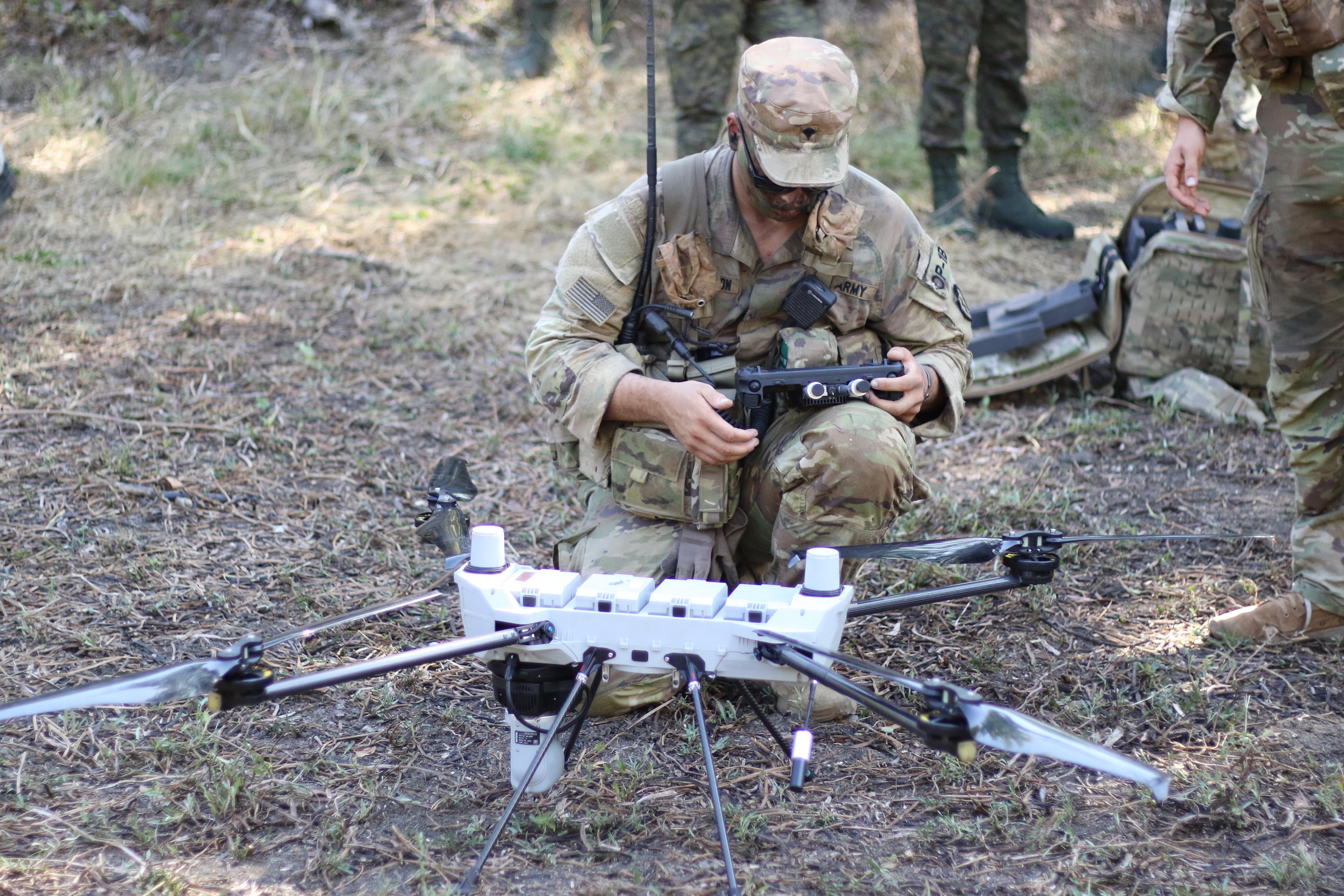
The US Army's recent testing of drones and 3D printing technology during the Balikatan 2026 exercise in the Philippines, as reported by Defense News, represents more than just a tactical experiment. Conducted at Fort Magsaysay with over 17,000 troops from seven countries, the exercise showcased innovations like the Kestrel FPV drone and the Forge expeditionary manufacturing unit. While the original coverage focused on operational challenges—such as drone overheating in tropical climates and sustainment issues—it missed the broader geopolitical context and strategic implications of these developments. This article delves deeper into how these tests reflect a calculated US military pivot in the Indo-Pacific, driven by escalating tensions with China and the need for rapid, adaptable warfighting capabilities in contested environments.
The Balikatan exercise, an annual joint drill between the US and the Philippines, has evolved from a bilateral training event into a multilateral platform signaling deterrence against Chinese assertiveness in the South China Sea. The integration of cutting-edge technologies like swarming drones and on-site 3D printing by the 25th Infantry Division’s Lightning Labs and Forge initiatives points to a US Army doctrine increasingly focused on 'Transformation in Contact'—real-time adaptation to battlefield needs. This is not just about hardware; it’s about reshaping logistics and sustainment for island-hopping campaigns in a region where traditional supply lines are vulnerable to disruption. The original reporting underplayed this angle, framing challenges like battery recharging as mere technical hurdles rather than symptoms of a deeper strategic problem: how to maintain operational tempo in a theater where China’s anti-access/area denial (A2/AD) capabilities are expanding.
Contextually, this push aligns with the US Department of Defense’s 2022 National Defense Strategy, which prioritizes countering China through distributed, networked forces. The testing of solar-powered microgrids and high-speed drone interceptors during Balikatan mirrors efforts seen in other Indo-Pacific exercises, such as RIMPAC, where autonomous systems are increasingly central to multi-domain operations. Moreover, the Philippines’ strategic position—near key maritime chokepoints and within striking distance of disputed South China Sea features—makes it a linchpin for US forward deployment. This was evident in the 2023 expansion of the Enhanced Defense Cooperation Agreement (EDCA), granting US access to additional Philippine bases, a development underreported in the primary source as a driver for such tech-focused exercises.
What the original coverage also missed is the dual-use potential of these technologies. 3D printing units like the Forge aren’t just about fixing broken bolts; they could enable rapid prototyping of weapon components or even medical supplies in austere environments, reducing dependence on trans-Pacific logistics. This capability is critical when considering China’s growing naval presence and potential to interdict US supply chains during a conflict. Additionally, the Kestrel drone’s swarming design hints at a shift toward low-cost, expendable systems—a direct response to China’s own advancements in unmanned warfare, as seen in their 2021 Zhuhai Airshow displays of similar technologies.
Drawing from related sources, such as a 2023 RAND Corporation report on US military innovation in the Indo-Pacific, the emphasis on expeditionary manufacturing and drones aligns with a broader Pentagon push to close technology gaps with near-peer adversaries. Similarly, a 2024 CSIS analysis of South China Sea dynamics underscores how joint exercises like Balikatan serve as both operational rehearsals and political signals to Beijing. Synthesizing these perspectives, it’s clear the US is not just testing tools but building a framework for sustained presence and rapid response in a region where conflict could erupt over Taiwan or maritime disputes.
The risk, unaddressed by Defense News, lies in over-reliance on nascent technologies. Drones faltering in jungle heat or dense terrain, as noted by Col. Adisa King, could undermine mission success if not paired with robust redundancy plans. More critically, the visibility of such tests may provoke China to accelerate its own counter-drone and cyber capabilities, potentially escalating the regional arms race. The US must balance innovation with discretion, ensuring these advancements don’t become targets before they’re fully operationalized.
Ultimately, Balikatan 2026 is a microcosm of a larger power shift. The US Army’s tech-driven transformation in the Philippines isn’t just about winning drills—it’s about preparing for a future where agility, not just firepower, defines dominance in the Indo-Pacific. As China watches, the stakes of these experiments extend far beyond Fort Magsaysay’s jungles.
SENTINEL: The US will likely accelerate deployment of expeditionary tech like drones and 3D printing across Indo-Pacific bases over the next 3-5 years, but reliability issues may delay full integration until robust sustainment solutions emerge.
Sources (3)
- [1]US Army Tests Fresh Drones, 3D Printers at ‘Balikatan’ Drill in the Philippines(https://www.defensenews.com/global/asia-pacific/2026/05/01/us-army-tests-fresh-drones-3d-printers-at-balikatan-drill-in-the-philippines/)
- [2]RAND Corporation: Military Innovation in the Indo-Pacific(https://www.rand.org/pubs/research_reports/RRA593-1.html)
- [3]CSIS: South China Sea in Focus(https://www.csis.org/analysis/south-china-sea-focus)