The AI Energy Subsidy Trap: How Amazon's Indiana Data Center Deal Reveals Ratepayers Funding Hyperscaler Growth
Amazon's Wheatfield, Indiana data center illustrates how AI-driven hyperscale projects require special payments to shield locals from energy cost spikes, exposing the broader national pattern of ratepayers subsidizing grid upgrades for tech giants amid rising bills and strained infrastructure.
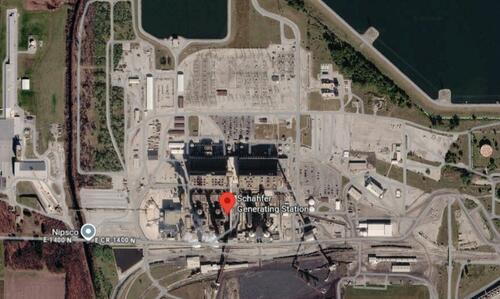
In the small town of Wheatfield, Indiana (population ~900), Amazon Web Services is planning a massive $7 billion data center campus spanning up to nine buildings on 304 acres adjacent to the NIPSCO Schahfer Generating Station. While the project promises to boost local tax revenue dramatically—from $1.2 million to over $420 million over 15 years—and create construction and permanent jobs, it comes with a notable caveat: AWS will pay $1.25 billion specifically to offset the energy cost impacts on local ratepayers. This payment, tied to an energy agreement with Northern Indiana Public Service Company (NIPSCO), is projected to deliver approximately $1 billion in cost savings to Indiana residents and businesses over 15 years, according to Amazon's official announcement. The campus will leverage natural air cooling for 98% of the year to limit water use and benefit from proximity to existing power infrastructure to minimize transmission costs.[1][2]
This arrangement in Jasper County is part of AWS's broader $15 billion commitment to Northern Indiana, adding 2.4 GW of capacity, alongside similar builds by Microsoft, Google, and others across the state. NIPSCO and its affiliate are investing around $7 billion in new gas-fired generation, battery storage, and transmission explicitly to serve these data centers—with much of the cost structure tied back to the hyperscaler. Yet the very need for a special $1.25 billion mitigation payment underscores a deeper, often hidden dynamic in the AI infrastructure boom: data centers' enormous and concentrated power demands frequently require grid upgrades, new generation, and infrastructure whose costs can be socialized across all ratepayers unless explicitly mitigated.[3]
Nationally, this pattern is accelerating. As AI training and inference drive hyperscale demand, utilities are requesting tens of billions in rate hikes. Studies show residential electricity prices rising sharply in data center-heavy regions—up to 267% in parts of Virginia over recent years—with infrastructure costs for new substations, transmission lines, and peaker plants often spread across the customer base rather than fully internalized by tech tenants. Harvard Law School research and analyses from Brookings Institution and the Environmental and Energy Study Institute highlight how special contracts, deferred costs, and opaque ratemaking allow Big Tech to externalize expenses. Even when companies like Amazon offer mitigation payments or pursue renewables, the baseline strain on local grids and the push for rapid fossil fuel backups (as seen with NIPSCO's gas expansion near former coal infrastructure) expose the gap between Silicon Valley's transformative AI narrative and tangible monthly utility bills for farmers, small businesses, and residents in rural America.[4][5][6]
The Wheatfield case is presented as a 'partnership' with eyes wide open, yet it fits a larger heterodox critique: AI's computational demands are creating de facto subsidies from the public to private hyperscalers. Consumer Reports and multiple investigations document households in data center corridors seeing bills surge while tax abatements and secretive deals further tilt the economics. In Indiana, the transition from coal to gas-to-AI infrastructure near polluted sites raises environmental justice questions that rarely make it into hype-driven press releases. While AWS commits billions and touts job numbers, the $1.25 billion figure itself acts as an admission that without direct intervention, ordinary ratepayers would bear more of the burden—revealing the extractive undertow beneath the 'innovation economy.' As more campuses proliferate, local officials and regulators increasingly face pressure to demand 'pay your own way' structures that prevent cross-subsidization, but momentum favors the compute rush over equitable energy accounting.
This disconnect—between abstract promises of AI utopia and concrete increases in electricity affordability crises—suggests the infrastructure boom may exacerbate inequality at the grid's edge before delivering widely shared gains.
Liminal: Tech's AI boom masks a quiet wealth transfer where small-town ratepayers subsidize hyperscalers' power hunger through infrastructure costs, with 'mitigation' payments like Amazon's $1.25B serving as temporary bandages that highlight—rather than solve—the systemic gap between compute hype and household utility pain.
Sources (6)
- [1]Amazon plans nine-building data center campus in Wheatfield, Indiana(https://www.datacenterdynamics.com/en/news/amazon-plans-nine-building-data-center-campus-in-wheatfield-indiana/)
- [2]Amazon to invest $15 billion in Indiana for new data centers(https://www.aboutamazon.com/news/company-news/amazon-15-billion-indiana-data-centers)
- [3]Confronting and addressing rising energy bills linked to data centers(https://www.brookings.edu/articles/confronting-and-addressing-rising-energy-bills-linked-to-data-centers/)
- [4]AI Data Centers Impact on Electric Bills, Water, and More(https://www.consumerreports.org/data-centers/ai-data-centers-impact-on-electric-bills-water-and-more-a1040338678/)
- [5]NIPSCO to supply 3 GW to Amazon data centers in northern Indiana(https://www.utilitydive.com/news/nisource-nipsco-amazon-data-centers-indiana/806396/)
- [6]Data Center Power Demands Are Contributing to Higher Energy Bills(https://www.eesi.org/articles/view/data-center-power-demands-are-contributing-to-higher-energy-bills)