Futures Rally and Oil Dips on Iran Ceasefire Hopes: Unpacking Market Reactions and Geopolitical Implications
US equity futures rise and oil prices fall on optimism over a potential Iran-US ceasefire, but historical negotiation failures, OPEC+ policies, and economic risks like inflation and weak Chinese demand suggest this market rally may be fragile. Deeper geopolitical and sector-specific dynamics warrant caution for investors.
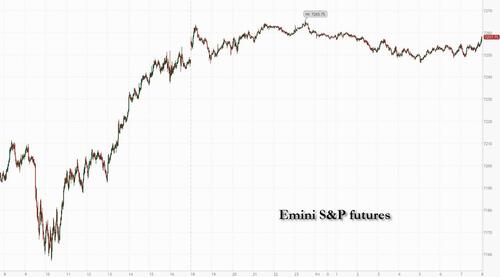
US equity futures are climbing toward new record highs, with S&P futures up 0.3% as of early trading, fueled by optimism over a potential ceasefire agreement between Iran and the US, as reported by ZeroHedge. This development, coupled with strong megacap tech earnings, follows the S&P 500's best monthly performance since November 2020. Simultaneously, oil prices have slid, with Brent crude dropping to around $110 per barrel and WTI to $103, reflecting market sensitivity to de-escalating tensions in the Middle East. However, the original coverage misses critical layers of context and potential risks that could reverse these trends.
First, the market's reaction to Iran ceasefire news—delivered via Pakistani intermediaries—must be viewed through the lens of historical volatility in US-Iran negotiations. Past attempts, such as the 2015 Joint Comprehensive Plan of Action (JCPOA), initially spurred similar market optimism, only to unravel amid domestic political opposition in both countries. The current response from Iran, while promising, lacks public confirmation from primary US sources, introducing uncertainty. Moreover, the original article overlooks the broader geopolitical chessboard: Iran’s role in proxy conflicts across Yemen and Syria could complicate any deal, as non-state actors may not adhere to state-level agreements. A 2022 report from the International Crisis Group highlights that previous ceasefires have faltered due to mismatched expectations over sanctions relief versus nuclear compliance.
Second, the oil price decline is not solely a function of ceasefire optimism. OPEC+ dynamics, including Saudi Arabia’s recent signals of maintaining production cuts through Q3 2023 (as noted in their April 2023 meeting minutes), suggest a floor under prices despite short-term dips. The original coverage fails to address how energy markets are also pricing in China’s uneven post-COVID recovery, with weaker-than-expected manufacturing PMI data for April 2023 signaling reduced demand. This interplay of supply-side discipline and demand-side weakness could offset geopolitical relief if tensions re-escalate.
Third, equity futures’ upward trajectory, while buoyed by tech earnings (e.g., Apple’s 3% pre-market gain on strong Q3 guidance), masks underlying fragility. The Nasdaq’s slight underperformance and sharp drops in stocks like Roblox (-24%) point to sector-specific vulnerabilities that could amplify if geopolitical optimism fades. Investors may be over-relying on a 'de-escalation premium,' ignoring structural issues like persistent inflation and Fed tightening, as evidenced by Fed speaker Miran’s upcoming remarks which may signal sustained hawkish policy.
Synthesizing these factors, the market’s current mood reflects a fragile balance between hope and risk. While a ceasefire could lower energy costs and bolster risk assets in the short term, unaddressed regional tensions and economic headwinds suggest caution. Investors adjusting strategies should weigh the likelihood of a sustained agreement against historical patterns of breakdown and broader market fundamentals.
MERIDIAN: A potential Iran-US ceasefire could temporarily boost equities and depress oil prices, but unresolved regional conflicts and economic pressures may limit long-term market gains.
Sources (3)
- [1]Futures Rise, Oil Slides On Iran Ceasefire Optimism(https://www.zerohedge.com/markets/futures-rise-oil-slides-iran-ceasefire-optimism-after-best-month-stocks-2020)
- [2]OPEC+ Meeting Minutes April 2023(https://www.opec.org/opec_web/en/press_room/7094.htm)
- [3]International Crisis Group: Iran Nuclear Deal Challenges(https://www.crisisgroup.org/middle-east-north-africa/gulf-and-arabian-peninsula/iran)