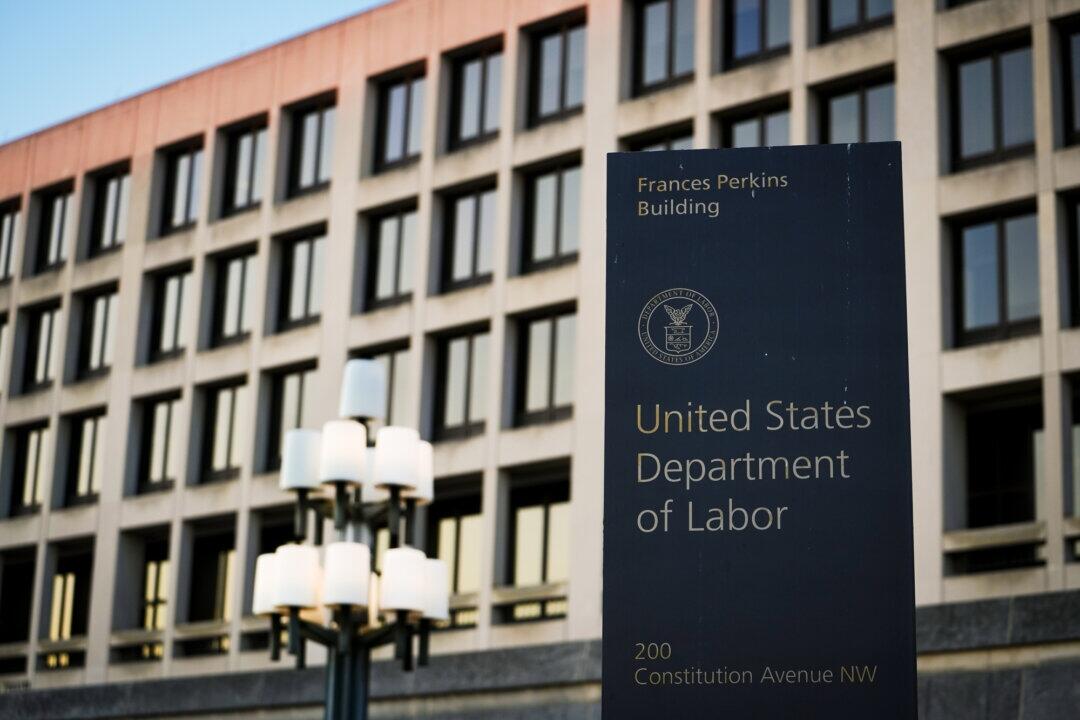
A Five-Activity Floor for Unemployment Checks, Aimed at a Spell the Benefit Often No Longer Covers
The Labor Department has proposed requiring five qualifying work-search activities a week, reported before payment, as a national floor for unemployment benefits. The rule is framed as integrity and faster reemployment, but it would govern the insured benefit window at a moment when average jobless spells already run past the 26 weeks most states pay — so it cannot, by design, shorten the long-term unemployment the latest jobs report highlights.
Documented: On November 9, 2026, the Labor Department’s Employment and Training Administration proposed a national minimum for the federal-state unemployment insurance program. Published in the Federal Register the next day (document 2026-22903, amending 20 CFR part 604), the rule would bar a state from paying a week of unemployment compensation unless the claimant completed at least five qualifying work-search activities that week, accumulated at least five points under a state points system the department is still taking comment on, or met a defined “equivalent labor force attachment” exception. Activities would have to be reported as part of certification before payment is issued. Qualifying work is not limited to contacting employers; the proposal requires states to count specific, identifiable steps such as registration and ongoing contact with placement agencies and unions, and it invites comment on weighting some activities at one to three points so that a single task cannot clear the week.
That floor would be new for most of the country. Federal law already requires a work-search rule, but states set the count. Michele Evermore of the National Employment Law Project, cited by CNBC and CBS News, said only four states currently require five activities a week. Many require two or three; some require one. The department’s stated reason, in the proposal, is to reduce inconsistencies “beyond those created by local labor markets,” hold states accountable for paying people only while they are “actively seeking work through a meaningful engagement with the labor market,” and cut work-search errors, which it says remain a primary driver of improper payments. The program’s improper-payment rate, the rule notes, is still above the 10 percent target in the Payment Integrity Information Act. The department also says the new standard could temporarily raise that rate while states and claimants adjust, and calls the risk necessary.
Claimed, and labeled as illustration rather than forecast: Secretary of Labor Keith Sonderling said the purpose of unemployment insurance is temporary support while people search for work or upskill, and that the rule would help people find work faster, use taxpayer money more efficiently, and improve integrity. In the regulatory analysis the department applies results from older work-search research to the 5.3 million people who received regular unemployment benefits in 2025 and offers an illustrative annual reduction in payments of $6.445 billion to $7.272 billion, with an explicit caution that the figure should not be read as a firm estimate. It also estimates roughly 133.5 million additional hours a year spent on search. Those dollars are treated in the analysis as amounts that would remain in state trust funds, not as a measured reemployment effect in the current market.
The market the proposal enters is not the one a low headline unemployment rate suggests. Documented by the Bureau of Labor Statistics for October 2026: the unemployment rate was 4.1 percent, about 7.1 million people were unemployed, the average duration of unemployment was 27.1 weeks, and 1.96 million people — 27.6 percent of the unemployed — had been out of work 27 weeks or more. Initial claims were low (189,000 in the week ending October 31). Continued claims, the count of people already drawing benefits, were about 1.72 million in the week ending October 24. CNBC described the setting, citing labor economists, as a “low hire, low fire” market: layoffs are contained, and finding the next job is not. Regular state benefits in most states still max out at or below 26 weeks, and in a number of states the cap is already 12 to 20. The lengthening tail of unemployment is therefore, for a large share of those 2 million people, already outside the check this rule would condition.
That is the connection the press release does not make. The rule, if finalized, would rewrite the weekly terms of the insured window — the 1.7 million people currently on continued claims, and the several million who cycle through regular benefits in a year — not the duration anomaly past the benefit cliff. What is documented is a federal floor, pre-payment reporting, and an integrity rationale tied to improper payments. What is claimed is faster reemployment. What is speculated, and not demonstrated in the proposal’s own cautious illustration, is how much of any reduction in payments would be people matched to jobs versus people denied a week for failing a five-activity test in a thin local market. Evermore’s objection, reported by CNBC and CBS, sits in that gap: she called the change devastating for claimants who may not have five real search options every week, costly for states that would have to redo forms, technology, and in many cases statutes, and poorly matched to what employers want — candidates, not box-ticks. She also called it unusual for the department to reset how states run their systems without a clear new direction from Congress. The department’s answer is consistency and labor-force attachment. Both descriptions can be sourced. Neither has been tested against this labor market, because the rule is still a proposal.
Timeline, documented versus open: comments are due 60 days after the November 10, 2026 publication, so early January 2027. Nothing in the proposal changes a check this week. Whether a final rule is issued, and whether states can rewrite law and systems, inside twelve months is not established. What is established is the population the text is written for: millions of people whose job security, after a layoff, currently depends on a state-set search rule that would become a national floor of five.
Sources (9)
- [1]U.S. Department of Labor news release: national minimum weekly work search requirement(https://www.dol.gov/newsroom/releases/eta/eta20261109)
- [2]Federal Register: Unemployment Insurance Program National Minimum Weekly Work Search Requirements (2026-22903)(https://www.federalregister.gov/documents/2026/11/10/2026-22903/unemployment-insurance-program-national-minimum-weekly-work-search-requirements)
- [3]Federal Register PDF, November 10, 2026, document 2026-22903(https://www.govinfo.gov/content/pkg/FR-2026-11-10/pdf/2026-22903.pdf)
- [4]CNBC: Labor Department proposes 5-work-search rule for unemployment benefits(https://www.cnbc.com/2026/11/09/trump-unemployment-work-search-rule.html)
- [5]CBS News: Trump administration proposes stricter work search rules to qualify for unemployment benefits(https://www.cbsnews.com/news/trump-work-search-rules-unemployment-benefits/)
- [6]Bureau of Labor Statistics: Employment Situation, October 2026(https://www.bls.gov/news.release/empsit.nr0.htm)
- [7]Bureau of Labor Statistics Table A-12: Unemployed persons by duration of unemployment(https://www.bls.gov/web/empsit/cpseea12.htm)
- [8]CNBC: Long-term unemployment in the October 2026 jobs report(https://www.cnbc.com/2026/11/06/long-term-unemployment-october-jobs-report.html)
- [9]FRED: Continued Claims (Insured Unemployment), U.S. Employment and Training Administration(https://fred.stlouisfed.org/series/CCSA)