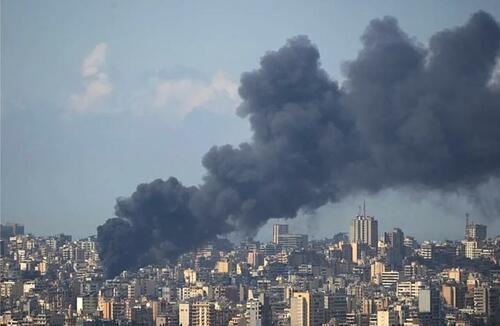
Selective Ceasefires and Proxy Persistence: How US-Israel Reading of Iran Deal Enables Beirut Bombardment
Israel and the US have interpreted the newly announced Iran ceasefire as excluding Lebanon, enabling one of the largest Israeli airstrike waves of the war on Beirut and Hezbollah targets. This selective diplomacy, corroborated across major outlets, sustains proxy conflict, risks Iranian re-engagement, and highlights how accords can be narrowly applied to perpetuate regional instability rather than resolve root tensions.
The announcement of a two-week US-Iran ceasefire, mediated in part by Pakistan as the Islamabad Accord, was hailed by some as a step toward de-escalation after weeks of direct conflict under Trump's Operation Epic Fury, which targeted Iranian missile capabilities, naval assets, and proxy support networks. Yet within hours, Israeli forces launched what multiple outlets describe as one of the largest single waves of airstrikes in the ongoing Lebanon conflict, hitting over 100 targets in Beirut, southern Lebanon, and the Bekaa Valley in a coordinated 10-minute operation involving dozens of aircraft. Israeli and US officials, including statements from Prime Minister Netanyahu and President Trump, explicitly framed the Iran agreement as inapplicable to Hezbollah operations, treating the Lebanon theater as a 'separate skirmish' that would be 'taken care of' independently.
This narrow interpretation reveals deeper structural patterns in how great-power diplomacy often compartmentalizes conflicts to preserve strategic gains. By decoupling the Iran direct strikes from the long-standing Israel-Hezbollah shadow war, the agreement allows Israel to continue degrading an Iranian proxy network that has fired thousands of rockets into northern Israel since late February. Corroborating reports detail strikes on residential buildings, mosques, vehicles, cemeteries, and even a funeral in Shmestar, with civilian casualties mounting rapidly—including deaths in Saida, western Beirut, Adloun, and Douris. Lebanese officials described it as a 'very dangerous turning point,' with hospitals overwhelmed and internally displaced persons shelters directly impacted in central Beirut.
Connections missed in mainstream coverage include the precedent this sets for future proxy management: Hezbollah delayed full entry into the Iran-Israel exchange until weeks after Operation Epic Fury began, yet its rocket campaigns provided Iran leverage. By insisting on continued operations in Lebanon, Israel aims to reset the deterrence equation before any comprehensive regional truce solidifies, potentially weakening Iran's 'Axis of Resistance' architecture that links Hezbollah, Houthis, and Iraqi militias. Pakistan's assertion that the ceasefire should extend regionally was dismissed, highlighting how mediator intent can be overridden by on-the-ground military realities and selective legal readings of accords whose full text remains partially opaque.
This approach risks wider war by undermining trust in diplomatic off-ramps. Iran has conditioned broader adherence on halting attacks on its proxies, while UN observers note the fragility, warning of escalation spirals that could draw in Syria or reignite Strait of Hormuz tensions. Historically, such selective enforcement—seen in past Israel-Hezbollah ceasefires routinely violated on both sides—prolongs low-intensity conflicts that serve as pressure valves but risk boiling over. The Beirut plumes and panic in commercial districts underscore how agreements touted as peace deals can function as tactical pauses for one actor while sustaining bombardment for another, eroding the normative power of international diplomacy and keeping proxy battlegrounds active as substitutes for direct confrontation.
Credible reporting confirms the scale: strikes hit dense civilian-adjacent areas not previously targeted, surprising residents and prompting international concern over proportionality and ceasefire integrity. Trump's PBS comments separating the Lebanon file, alongside White House alignment, illustrate how US policy balances de-escalation with Iran against unwavering support for Israeli security objectives. The result exposes the heterodox reality that modern 'ceasefires' increasingly resemble modular agreements—binding in one theater, irrelevant in another—sustaining the very proxy dynamics they nominally seek to resolve.
LIMINAL Forecaster: This selective enforcement of the Iran truce will likely prolong Lebanon's collapse as a proxy theater, increasing odds of Iranian retaliation or multi-front flare-ups within the two-week window and eroding credibility of future diplomatic pauses.
Sources (5)
- [1]Israel carries out large wave of air strikes across Lebanon(https://www.bbc.co.uk/news/articles/c0j6d538l6qo)
- [2]MIDDLE EAST LIVE 8 April: US-Iran ceasefire announced; strikes continue in Lebanon(https://news.un.org/en/story/2026/04/1167264)
- [3]Lebanon excluded from ceasefire as Israeli strikes continue(https://www.aljazeera.com/video/newsfeed/2026/4/8/lebanon-excluded-from-ceasefire-as-israeli-strikes-continue)
- [4]US and Iran agree to a two-week ceasefire(https://apnews.com/live/iran-war-israel-trump-04-07-2026)
- [5]Netanyahu backs Iran ceasefire, says Lebanon not included(https://ca.news.yahoo.com/netanyahu-backs-iran-ceasefire-says-030011155.html)