The National Security Premium: How US Efforts to Counter China's Critical Minerals Dominance Risk Inflating Costs Across Tech, EVs, and Defense
US promotion of a 'national security premium' on critical minerals via MSP and allied pricing floors aims to reduce China dependence but risks higher global prices in EVs, tech, and defense. Analysis drawing on EO 14017, USGS data, EU CRM Act and WTO precedents shows the policy could fragment markets, overlook impacts on developing nations, and accelerate innovation in recycling while provoking retaliation.
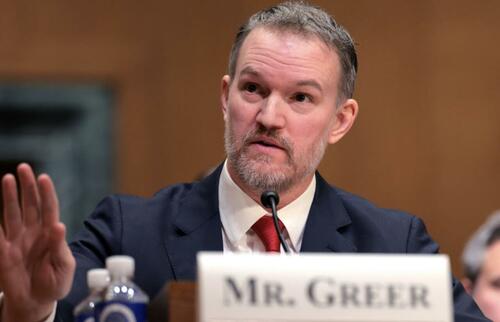
The Financial Times report relayed by ZeroHedge outlines USTR official Jamieson Greer's explicit framing of a 'national security premium' that allied nations must accept to build supply chains excluding China. Greer argues that past focus on lowest-cost sourcing created dangerous dependencies, and that minimum price floors among 'trusted partners,' backed by tariffs on non-participants, are required to make Western mining and processing economically viable.
This proposal extends far beyond the FT story's emphasis on immediate cost concerns. It continues a pattern visible in primary documents including President Biden's Executive Order 14017 (2021) on securing supply chains and the 2022 Minerals Security Partnership (MSP) joint statement signed by the US, EU, UK, Japan, Australia, Canada and others. The MSP explicitly seeks to 'catalyze investment in critical minerals production, processing, and recycling' among like-minded states. USGS Mineral Commodity Summaries 2024 documents China's dominance: 89% of rare-earth refining, 68% of lithium processing capacity, and over 70% of cobalt refining. These statistics underscore why the US views the status quo as untenable.
Original coverage missed several critical dimensions. First, the systemic fragmentation of global markets this policy could accelerate. By institutionalizing a two-tier pricing system (trusted-partner premium prices versus Chinese-origin material), the approach risks replicating the very market distortions critics attribute to China. Historical precedent is found in the 2010 China-Japan rare-earth export restrictions that triggered a WTO dispute (China — Measures Related to the Exportation of Rare Earths, Tungsten and Molybdenum, WT/DS431). Prices spiked over 500% before the panel ruled against Beijing's quotas.
Second, downstream sectoral impacts were underplayed. Lithium, nickel, cobalt and rare-earth permanent magnets are essential inputs for EV batteries (IRA tax credits notwithstanding), wind turbines, semiconductor manufacturing equipment, and defense systems (F-35 magnets, precision-guided munitions). A sustained 20-40% national security premium would transmit directly into higher consumer EV prices, increased defense procurement budgets, and reduced competitiveness for manufacturers. The EU's own Critical Raw Materials Act (Regulation 2024/1252) sets benchmarks of 10% domestic extraction and 40% processing by 2030 but contains explicit cost-mitigation language that reveals member-state anxiety over precisely these price effects.
Multiple perspectives emerge from primary sources. US and Japanese officials, referencing China's 2010 actions and 2023 gallium/germanium export controls, frame the premium as prudent risk management against economic coercion. European Commission documents and private diplomatic feedback cited in FT reporting highlight fears of deindustrialization and Chinese retaliation that could target European luxury goods or aircraft exports. Mining-dependent developing nations (DRC cobalt, Indonesia nickel, Chile lithium) are largely absent from the conversation; Chinese state-owned enterprises have invested over $15 billion in African critical minerals projects since 2018 per China Africa Research Initiative data, creating potential for those nations to be collateral damage in great-power decoupling.
The original ZeroHedge/FT coverage also understates innovation incentives. Higher input prices have historically spurred substitution and recycling. Japan's post-2010 rare-earth crisis produced magnet efficiency gains and urban mining programs that reduced net imports by over 30%. Similar dynamics may emerge in lithium recycling under the MSP framework, though scaling remains years away. Conversely, environmental NGOs note that expanding non-Chinese mining without stringent standards could simply displace ecological damage to jurisdictions with weaker oversight.
Synthesizing the MSP statement, EO 14017, the EU Critical Raw Materials Act text, and USGS data reveals an unresolved tension: the premium may achieve supply-chain resilience for a narrow set of strategic sectors while raising costs across the broader green and digital transitions that Western governments simultaneously prioritize. Whether allies will uniformly absorb these costs, or whether selective exemptions and subsidies will further distort markets, remains the central unanswered policy question. Beijing's likely response—already telegraphed in its 2021-2023 export control reforms—will test the durability of this emerging trusted-partner architecture.
MERIDIAN: The national security premium will likely raise EV battery and defense procurement costs 15-35% in the next decade, prompting selective exemptions for allies and accelerated investment in recycling, yet risks slower clean-tech adoption and fragmented global trade rules.
Sources (4)
- [1]US plan to counter China in critical minerals could drive up global prices(https://www.zerohedge.com/markets/national-security-premium-us-plan-counter-china-critical-miners-could-drive-global-prices)
- [2]Minerals Security Partnership: Joint Statement(https://www.state.gov/minerals-security-partnership-announcement/)
- [3]Executive Order 14017 on America’s Supply Chains(https://www.whitehouse.gov/briefing-room/presidential-actions/2021/02/24/executive-order-on-americas-supply-chains/)
- [4]USGS Mineral Commodity Summaries 2024(https://pubs.usgs.gov/periodicals/mcs2024/mcs2024.pdf)