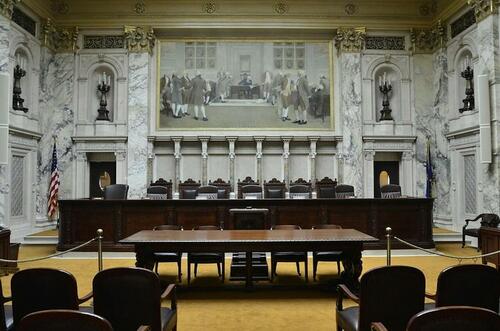
Wisconsin Supreme Court Unanimously Ends Race-Based College Grants, Reinforcing Post-SFFA Equal Protection Standard
Unanimous Wisconsin Supreme Court ruling invalidates long-standing race-based college retention grants under Equal Protection Clause, applying SFFA precedent and signaling wider judicial limits on explicit racial preferences in public programs.
On June 18, 2026, the Wisconsin Supreme Court unanimously struck down the state's Minority Undergraduate Retention Grant Program, ruling that its race-based eligibility criteria violated the Equal Protection Clause of the Fourteenth Amendment. The program, administered by the Higher Educational Aids Board since 1985, provided grants of up to $2,500 annually to students identifying as Black, Hispanic, Native American, or certain Southeast Asian backgrounds attending eligible colleges and technical schools. The decision directly applied the U.S. Supreme Court's 2023 Students for Fair Admissions v. Harvard precedent, holding that government benefits cannot be allocated solely on racial grounds without individualized consideration.
Justice Annette Ziegler authored the opinion, emphasizing that race served as the sole decisive factor rather than one element in a holistic review. Liberal justices, including Chief Justice Jill Karofsky, concurred in the outcome while expressing reservations, noting they were bound by federal precedent but critiquing the broader implications for addressing historical inequities.
This ruling emerges amid broader judicial scrutiny of race-conscious policies in education and public programs. It follows similar challenges in other states and builds on the SFFA framework, which has prompted reevaluations of DEI initiatives in higher education and beyond. Legal observers note the unanimous nature of the decision—even from a court with a liberal majority—signals a strengthening consensus against explicit racial classifications in taxpayer-funded benefits. The Wisconsin Institute for Law & Liberty, which brought the case on behalf of taxpayers, highlighted the program's $500,000 annual cost as an example of impermissible discrimination.
Connections to national trends include ongoing litigation against race-based scholarships and admissions elsewhere, with courts increasingly viewing such programs through strict scrutiny. The Wisconsin outcome underscores how SFFA's individual-focused equal protection analysis is extending from admissions to financial aid, potentially constraining similar state and institutional policies nationwide.
[LIMINAL]: This precedent accelerates scrutiny of race-explicit policies across states and institutions, framing them as systemic legal vulnerabilities rather than isolated cases.
Sources (5)
- [1]Race-based scholarship unconstitutional, Wisconsin Supreme Court rules(https://www.fox6now.com/news/wisconsin-race-scholarship-unconstitutional-court-ruling)
- [2]Wisconsin Supreme Court rules against race-based scholarships(https://www.thecentersquare.com/wisconsin/article_9f8a57e3-1b16-440b-ae2b-c6098066eaab.html)
- [3]Wisconsin high court agrees that race-based college retention grants must go(https://wisconsinexaminer.com/2026/06/18/wisconsin-high-court-agrees-that-race-based-college-retention-grants-must-go/)
- [4]Wisconsin Supreme Court strikes raced-based scholarship program(https://www.dailycardinal.com/article/2026/06/wisconsin-supreme-court-strikes-raced-based-scholarship-program)
- [5]Wisconsin high court agrees that race-based college retention grants must go(https://civicmedia.us/news/2026/06/19/wisconsin-high-court-agrees-that-race-based-college-retention-grants-must-go)