Trump administration posts 248 USAID files on disinformation work with Meta, YouTube and Google
The Trump administration posted 248 USAID records on disinformation work with Meta, YouTube and Google. The files document takedown requests, trusted-flagger contacts and a Global Disinformation Index pitch to defund, downrank and deplatform foreign outlets. Whether that amounted to an operating censorship system is not established; Democrats and Samantha Power call the release selective.
Documented: On Nov. 24–25, 2026, the Trump administration published 248 internal USAID records—emails, memos, briefings, chat logs and a small number of videos, packaged as a roughly 1.1-gigabyte archive—on the shuttered agency’s website under a page labeled USAID Files. Former DOGE staffer Edward Coristine announced the dump. The page itself states that previous administrations used USAID to advance a “radical agenda” at odds with American values and that the files are being released for transparency. Russell Vought, director of the Office of Management and Budget, said more batches would follow. Newsweek, the New York Post and Devex independently described the same cache.
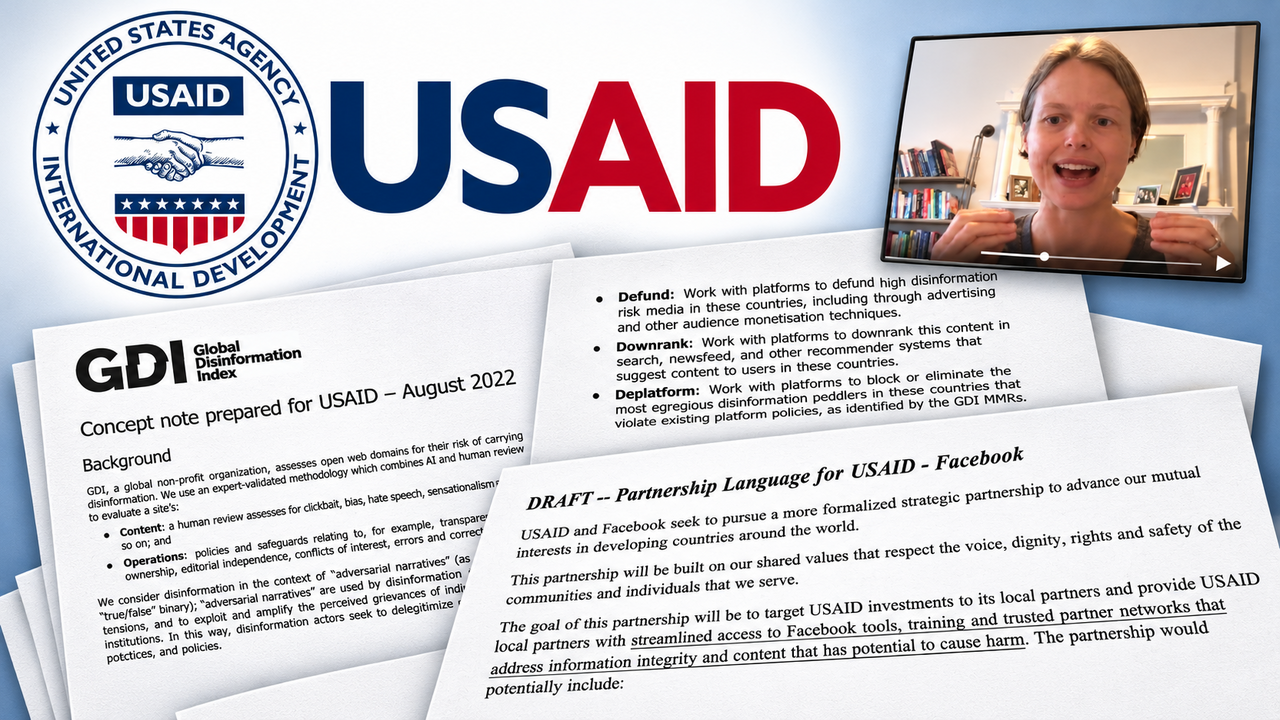
What the records show, as reviewed by those outlets, is a documented portfolio of contacts with platforms—not a single signed order to censor the world. Documented items include: an April 2022 request for a meeting between then-Administrator Samantha Power and then-YouTube CEO Susan Wojcicki on combating misinformation; a meeting request involving Meta’s Nick Clegg; emails in which USAID and partners asked Facebook to remove posts they said threatened implementing partners in Libya and Sudan; an August 17, 2022 email from an Internews executive saying USAID was likely funding staff in many countries to flag content through platforms’ trusted-partner programs, and declining to hand over a partner list; and a draft partnership note seeking streamlined access for local partners to Facebook tools, ad credits, CrowdTangle and a Trusted Partner channel. An undated “Big Tech Engagement Action Plan” proposed a private “inclusion list” of favored organizations and noted internal State Department objections on free-expression grounds.
Also documented: a June 10, 2022 introductory email from an Office of the Director of National Intelligence official connecting USAID deputy assistant administrator Johnny Walsh to the Global Disinformation Index. Weeks later USAID sent GDI a list of ten countries. GDI’s August 2022 concept note proposed market reviews in Moldova, Zambia and Armenia and named three platform interventions—defund, downrank, deplatform—while stating that USAID had indicated its ties to Alphabet and Meta offered a chance to act. The note said GDI’s exclusion list was already embedded in the systems of thirteen ad-tech companies. A January 2022 USAID-hosted session featured GDI co-founder Danny Rogers describing “adversarial narratives,” using Breitbart’s coverage of crimes by undocumented immigrants as an example of stories that could be factually accurate yet still count, in GDI’s framework, as disinformation because of the narrative they assembled. A presenter on a recording in the archive described fact-checking as a way to “debunk information in a way that aligns with the objectives of government partners,” including work done in “closed spaces.”
Claimed, and not established by the files as released: that this amounted to a confirmed, operating “global censorship machine.” Newsweek and the New York Post both note that many of the most pointed documents are proposals, drafts or talking points, and that it is not clear which were funded or carried out. The GDI pilot is in the archive as a pitch; the files do not show a signed award for that pilot. Internews’s line about monitors in about twenty countries is an implementer’s assertion in an email, not an audited roster. Agency lawyers’ later talking points, updated into 2024, framed removal requests around foreign malign influence and platform terms, citing limits in the FY2024 appropriations act—evidence that staff were writing around statutory constraints, not proof those constraints were ignored at scale.
Contested framing: Democrats treated the dump as selective politics. On Nov. 26, Senate Foreign Relations ranking member Jeanne Shaheen and House Foreign Affairs ranking member Gregory Meeks wrote Secretary of State Marco Rubio and acting USAID administrator Bill Woolf demanding the files come down, citing personally identifiable information, possible violations of federal rules, and what they called a cherry-picked effort to tarnish USAID and “sow disinformation.” Samantha Power told Devex the release was a “baffling hodge-podge” of webinars, staff chats and tech meetings that showed staff doing work Congress had directed—countering Chinese disinformation overseas and pressing platforms on viral lies, including content tied to violence against the Rohingya—not fraud or a secret censorship apparatus. She noted DOGE had access to hundreds of thousands of files and published 248.
The epistemic bracket, then: the institutional fact is real. A U.S. development agency under Biden kept a working relationship with Meta, Google and YouTube on “information integrity,” sought faster takedown channels for content it said endangered partners, entertained GDI’s advertiser-blacklist model for foreign media markets, and hosted a definition of disinformation that was not limited to falsehood. What remains speculative is the leap from that paper trail to a single machine that decided what the world could say. The files are a selected window. They document intent, contact and proposed tools. They do not, by themselves, document how often a flag became a removal, how much money moved, or whether domestic U.S. speech was in scope. GDI’s own example—treating a true crime log as disinformation because of the story it implies—is the sharpest documented clue to why the argument will not stay overseas: a method built for foreign “information disorder” does not need a separate doctrine to be aimed at domestic outlets. That is a claim about the method’s design, visible in the seminar, not a finding that USAID ran that method against American publishers.
The posted records show a U.S. aid agency asking platforms to remove posts about its partners and receiving a private proposal to cut funding and visibility for foreign news sites judged high-risk. Taxpayers and people in the countries named in those memos are the ones affected by programs whose scope the released files only partly document.
Sources (4)
- [1]Damning USAID files reveal just how Biden officials ‘weaponized’ now-shuttered agency(https://nypost.com/2026/11/25/us-news/damning-usaid-files-reveal-just-how-biden-officials-weaponized-now-shuttered-agency/)
- [2]USAID files show Biden admin involvement with social media companies(https://www.newsweek.com/usaid-files-show-biden-admin-involvement-with-social-media-companies-12766632)
- [3]Exclusive: Ex-Administrator Samantha Power responds to USAID file release(https://www.devex.com/news/exclusive-ex-administrator-samantha-power-responds-to-usaid-file-release-113982)
- [4]Shaheen, Meeks Demand Answers on Administration’s Selective Release of USAID Files(https://www.foreign.senate.gov/press/dem/release/shaheen-meeksdemand-answers-on-administrations-selective-release-of-usaid-files)