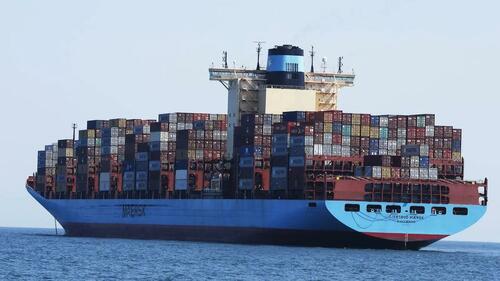
Maersk Emergency Surcharges Reveal Persistent Global Supply Chain Vulnerability to Middle East Chokepoints
Maersk's fuel surcharges show how Middle East conflicts instantly elevate global shipping costs and reinforce inflation and supply-chain disruption cycles, extending beyond the original reporting's focus on fuel prices alone.
Maersk's introduction of an Emergency Bunker Surcharge (EBS) as of 25 March 2026 underscores the rapid transmission of Middle East instability into worldwide shipping costs and inflation pressures. The primary ZeroHedge report details how conflict-related disruption at the Strait of Hormuz has tightened high-sulfur fuel oil (HSFO) supplies to Asian bunkering hubs, particularly Singapore, with Fujairah port largely offline. Maersk's official advisory, issued directly by the company, states: 'To preserve network stability, we have undertaken significant redistribution of fuels to offset shortages in the Middle East, and are securing alternative sources from different locations, suppliers, and at increased premiums.' This primary document confirms the firm is absorbing higher costs to maintain service continuity rather than simply passing them on immediately.
What the original coverage under-emphasizes is the continuity with prior patterns: the 2023-2024 Red Sea crisis prompted similar rerouting around the Cape of Good Hope, increasing voyage times by 10-14 days and fuel consumption by up to 40 percent according to UNCTAD's Review of Maritime Transport 2024. The current episode repeats the same mechanism—geopolitical risk at maritime chokepoints quickly converts into higher operational costs—yet adds a fuel-supply dimension not as prominent during the Houthi attacks.
Synthesizing Maersk's advisory with the International Energy Agency's March 2026 Oil Market Report (which notes uneven global bunker fuel distribution) and Lloyd's List intelligence on tanker avoidance premiums, a clearer picture emerges. The original article attributes the crisis primarily to an 'Iran war' halting all traffic; however, primary shipping data indicate selective avoidance driven by insurance rates and specific port attacks rather than total closure. Perspectives differ: shipping industry statements focus on logistical adaptation and the need for cost recovery, while trade economists highlight disproportionate effects on import-dependent developing economies. Energy producers emphasize that global fuel stocks remain adequate, only maldistributed. No single narrative fully captures the interplay between insurance markets, alternative routing, and just-in-time inventory systems.
These developments fit longer-term patterns of supply-chain fragility observed since the 2021 Suez blockage, feeding directly into broader inflation through elevated freight rates that ultimately appear in consumer prices for goods ranging from electronics to agricultural inputs. The episode illustrates how regional conflicts immediately elevate global shipping costs, amplifying existing inflationary pressures without requiring full-scale closure of critical straits.
MERIDIAN: Higher shipping surcharges will likely reach ordinary consumers as elevated prices on imported goods and groceries within the next two quarters, while businesses may face continued inventory uncertainty if Middle East tensions keep critical maritime routes volatile.
Sources (3)
- [1]Maersk Slaps Emergency Fuel Surcharge As War Upends Marine Supply Chains(https://www.zerohedge.com/markets/maersk-slaps-emergency-fuel-surcharge-war-upends-marine-supply-chains)
- [2]Maersk Middle East Advisory March 2026(https://www.maersk.com/news/2026/03/middle-east-advisory)
- [3]UNCTAD Review of Maritime Transport 2024(https://unctad.org/publication/review-maritime-transport-2024)