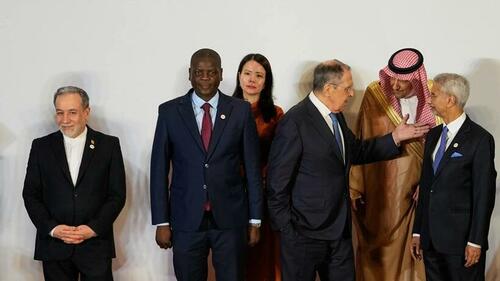
BRICS Failure on Iran Exposes Deepening Rifts in Multipolar Bloc as Middle East Escalation Threatens to Reshape Global Energy Flows and Alliances
BRICS foreign ministers failed to issue a joint communique on the Iran war due to Iran-UAE divisions, with Gulf states' Western and Israeli ties clashing against Tehran's demands. This exposes the bloc's limits in geopolitical crises, especially amid risks to global energy security and accelerating realignments.
The BRICS foreign ministers' meeting in New Delhi concluded on May 15, 2026, without a joint statement, highlighting irreconcilable differences over the US-Israeli war on Iran. Host nation India released only a chair's statement acknowledging "differing views among some members" on the West Asia situation, with particular reservations noted on Gaza, Red Sea security, and the Bab al-Mandab Strait. Iranian Foreign Minister Abbas Araghchi directly accused the UAE of blocking consensus, claiming Abu Dhabi provided airspace, territory, and bases to US and Israeli forces while failing to condemn initial strikes. Araghchi asserted "Iran is a country that cannot be divided. The era of American dominance is over," while noting the UAE's "special relationship with Israel." Reports confirm the UAE and Saudi Arabia permitted US jets to use their bases, with Israel deploying an Iron Dome system in the UAE and both Gulf states allegedly conducting their own strikes against Iranian targets. Tehran has signaled it will seek compensation from involved Arab states.
This impasse goes beyond procedural failure, exposing structural contradictions within an expanded BRICS that now includes Iran alongside Gulf heavyweights UAE, Egypt, and Ethiopia. While the bloc projects itself as a counterweight to Western dominance, members' divergent economic and security interests—particularly in energy—undermine geopolitical cohesion at a pivotal moment. Gulf states have deepened ties with Israel and the West via the Abraham Accords, prioritizing stable oil markets, foreign investment, and security partnerships over solidarity with Tehran. Major importers like India and China, meanwhile, face surging energy prices and supply risks from potential Hormuz disruptions, yet find themselves unable to forge unified pressure against escalation.
The timing amplifies the stakes: as conflict threatens to redraw Middle East alliances and global energy architecture, BRICS' inability to speak with one voice reveals its limitations as a multipolar force. Connections often missed include how this rift may accelerate hybrid realignments—bilateral Russia-Iran-China military and economic deals bypassing the full bloc—while Gulf members hedge toward Western financial systems. De-dollarization and alternative payment initiatives could lose momentum if internal trust erodes. India's balancing act as chair, emphasizing Gaza and maritime flows without strong Iran language, underscores the priority of pragmatic economic cooperation over ideological confrontation. Ultimately, the episode suggests BRICS functions more effectively on trade and development than as a unified front in active conflicts, potentially ceding influence over the very global shifts it seeks to shape. Sources include detailed reporting from Reuters on the direct Iran-UAE clashes, Washington Post coverage of the chair's statement, and Al Jazeera analysis of the meeting's broader implications for the upcoming September summit.
Liminal Analyst: These rifts indicate BRICS will likely fragment into economic cooperation tracks and security subgroups, diminishing its ability to challenge Western influence over energy chokepoints and allowing Gulf states to maintain dual alignments that preserve US leverage in a multipolar transition.
Sources (4)
- [1]BRICS ministers fail to issue a joint statement over differences on conflict in the Middle East(https://www.washingtonpost.com/business/2026/05/15/india-brics-iran-war/ad387c10-5045-11f1-97e7-22c6c29ff0d8_story.html)
- [2]Iran urges BRICS nations to condemn war, Indian-flagged...(https://www.reuters.com/world/china/india-says-emerging-nations-eye-brics-grouping-stability-2026-05-14/)
- [3]Iran war: Why the BRICS foreign ministers meeting in India matters(https://www.aljazeera.com/news/2026/5/14/iran-war-why-the-brics-foreign-ministers-meeting-in-india-matters)
- [4]BRICS Talks End Without Joint Statement, Exposing Divisions Over War in Iran(https://www.usnews.com/news/world/articles/2026-05-15/india-issues-chair-statement-after-brics-meeting-amid-differences-over-gulf-crisis)