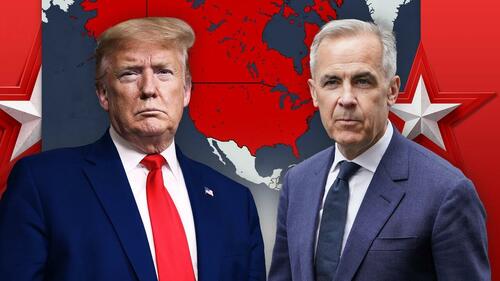
US Suspension of Decades-Old Canada Defense Board Exposes Deep Rupture in North American Security Ties
The U.S. pause of the 1940-established Permanent Joint Board on Defense with Canada, announced by Elbridge Colby, highlights serious tensions over defense spending, Carney's strategic autonomy rhetoric, and burden-sharing. While Canada reached NATO's 2% target, the move signals deeper ruptures in continental defense ties with implications for NORAD, the Arctic, and alliance credibility—extending beyond the bureaucratic framing in initial reports.
The U.S. decision to suspend participation in the Permanent Joint Board on Defense (PJBD) with Canada represents far more than the routine bureaucratic reassessment portrayed in some coverage. Established in 1940 amid World War II, the PJBD served as the foundational institutional mechanism for continental defense cooperation between the two neighbors for over eight decades. Its effective pause, announced by Under Secretary of Defense for Policy Elbridge Colby, underscores growing frustration over Canada's defense posture, Prime Minister Mark Carney's rhetoric of "strategic autonomy," and persistent gaps in NATO burden-sharing that extend beyond headline spending figures.[1][2]
Colby explicitly cited Canada's "failure to make credible progress on its defense commitments" and linked the move to Carney's January 2026 address at Davos, which emphasized Canadian independence in ways perceived as antagonistic in Washington. While Canada recently announced it had met the longstanding NATO 2% of GDP defense spending target—a milestone touted by Carney as transformative—U.S. officials continue pressing for alignment with higher ambitions, including the 3.5% core defense target referenced in summit discussions. This comes against a backdrop of earlier tensions, including Canadian reluctance to purchase certain U.S. military hardware and broader disputes over trade, Arctic sovereignty, and non-tariff barriers.[3][4]
Mainstream reporting has often framed the suspension as symbolic or tied narrowly to spending shortfalls, with experts like Philippe Lagassé noting the PJBD had already diminished in operational importance and that the board had not met recently. However, this downplays the unprecedented nature of halting the oldest formal bilateral defense forum in North America. The move fits a pattern of the current U.S. administration prioritizing tangible reciprocity over longstanding institutional habits. It follows reports of Canada exploring trade diversification with Europe and China while facing U.S. shifts toward bilateral deals with Mexico, echoing earlier post-2024 election frictions where defense free-riding was linked to wider economic imbalances.[5][6]
Deeper connections emerge in the Arctic domain, where shared geography demands robust joint capabilities against increasing Russian and Chinese activity. The PJBD historically coordinated precisely these issues. Its suspension risks complicating NORAD modernization efforts and intelligence sharing, even if immediate operational impacts appear limited. Canadian officials have responded by reaffirming commitment to rules-based cooperation on selective bases, but the episode highlights a fraying partnership where rhetoric of alliance no longer masks capability gaps. As Colby stated, "Real powers must sustain our rhetoric with shared defense and security responsibilities." This action may foreshadow further pressure points, including potential renegotiation of integrated commands or stricter procurement rules, forcing Canada toward genuine hard-power investments or greater strategic divergence.[7][8]
The episode reveals how defense policy has become intertwined with political signaling. Carney's domestic positioning and emphasis on autonomy, while resonating in Canada, collided with U.S. demands for credible contribution to continental defense. Far from routine housekeeping, this suspension serves as a public recalibration with potential ripple effects across NATO, Five Eyes cooperation, and the future of integrated North American security architecture.
LIMINAL: This suspension is an early indicator of accelerating US pressure on Canada that could cascade into NORAD reforms, Arctic resource standoffs, and a permanent shift away from automatic security interdependence toward transactional burden-sharing.
Sources (5)
- [1]U.S. suspends joint defence advisory board with Canada(https://www.theglobeandmail.com/world/us-politics/article-us-pauses-defence-advisory-board-canada/)
- [2]U.S. says it’s pausing long-standing military board with Canada(https://globalnews.ca/news/11854205/permanent-joint-board-on-defense/)
- [3]Pentagon pauses Canada joint military board, pointing to Carney remarks(https://thehill.com/policy/defense/5883148-canada-defense-cooperation-trump-carney-tensions/)
- [4]‘Failed to make credible progress’: U.S. pausing long-standing military board with Canada(https://www.ctvnews.ca/politics/article/failed-to-make-credible-progress-us-pausing-long-standing-military-board-with-canada/)
- [5]Putting the PJBD on hiatus(https://philippelagasse.substack.com/p/putting-the-pjbd-on-hiatus)