Live-Fire Exercise at CFB Wainwright Triggers Deadly Gas Explosion and Wildfire, Killing at Least Seven
A confirmed live-fire mishap at CFB Wainwright on Oct 17, 2026, caused a gas explosion and wildfire killing at least 7 and injuring dozens; official and media sources detail the event amid high winds and existing gas infrastructure, raising safety protocol concerns.
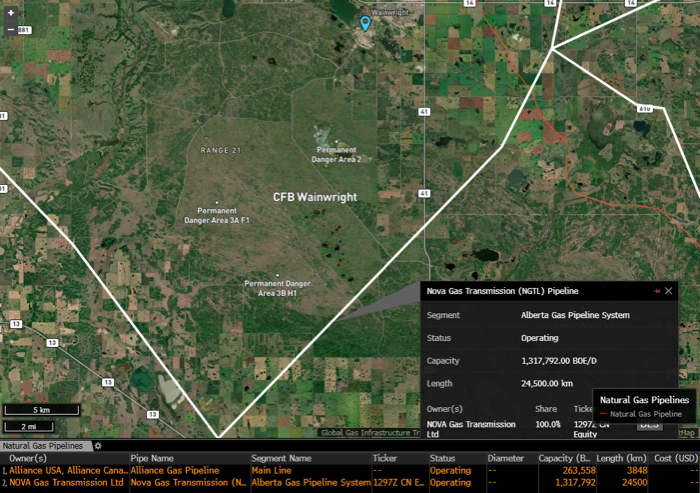
On October 17, 2026, a live-fire training exercise at Canadian Forces Base Wainwright in Alberta ignited a catastrophic chain of events when a projectile struck a gas line or well, triggering an explosion that fueled a rapidly spreading wildfire amid extreme winds. The incident, occurring in a training area known to contain active natural gas infrastructure dating back to the late 1980s, resulted in at least seven fatalities and dozens of injuries according to multiple Canadian Armed Forces sources cited by Global News. Official statements from National Defence confirm fatalities and injuries but have withheld specific numbers pending next-of-kin notifications.
High winds gusting up to 100 km/h rapidly spread the fire beyond base boundaries into the surrounding Municipal District of Wainwright, overwhelming local resources and prompting a Code Orange mass casualty protocol at Edmonton hospitals including Royal Alexandra and University of Alberta. Defence Minister David McGuinty described the event as unprecedented in recent memory, while emphasizing ongoing investigations with no indications of terrorism. The base, Canada's primary live-fire training facility, routinely hosts such exercises, but the convergence of fire-weather conditions—temperatures above 20°C, low humidity, and high winds—has raised immediate questions about risk assessment and safety protocols.
Satellite data from NASA FIRMS corroborated early fire detections in the training zone, aligning with reports of the exercise igniting the initial blaze. The presence of buried pipelines and wells within the Permanent Danger Area has long been documented, underscoring potential vulnerabilities in range management. This tragedy highlights systemic challenges in balancing realistic combat training with environmental and infrastructural hazards, prompting scrutiny of logistical planning and inter-agency coordination.
[Safety Analyst]: The incident may accelerate reviews of training range hazard mapping and weather-based exercise cancellations, potentially leading to stricter protocols for bases with embedded energy infrastructure.
Sources (5)
- [1]Several dead or injured in major fire at Canada military base(https://www.bbc.co.uk/news/articles/cr86z0w4lxdxo)
- [2]Incident at Canadian Forces Base Wainwright(https://www.canada.ca/en/department-national-defence/news/2026/10/incident-at-canadian-forces-base-wainwright.html)
- [3]At least seven killed, dozens more injured at CFB Wainwright: report(https://nationalpost.com/news/cfb-wainwright-explosion-fire-fatalities-injuries-report)
- [4]Multiple people killed, injured in 'disaster' at Alberta military base training area(https://www.cbc.ca/news/canada/edmonton/livestory/cfb-wainwright-fire-live-updates-9.7385537)
- [5]CFB Wainwright fire - Wikipedia(https://en.wikipedia.org/wiki/CFB_Wainwright_fire)