Framework Agreement Between Israel and Lebanon Signals Diplomatic Step Amid Persistent Fragility
The June 2026 Israel-Lebanon-US framework agreement represents a diplomatic milestone but rests on fragile, conditional terms that risk renewed conflict without broader buy-in from key actors like Hezbollah.
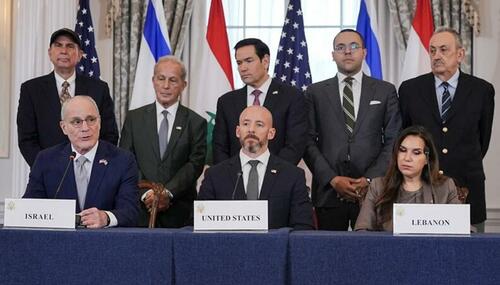
On June 26, 2026, US Secretary of State Marco Rubio announced a trilateral framework agreement between Israel, Lebanon, and the United States, following talks in Washington. Officials described it as an initial step toward lasting peace and security, with Netanyahu hailing it as a major achievement involving Israeli retention of a security zone in southern Lebanon contingent on Hezbollah's disarmament.[1][2]
The agreement calls for a ceasefire implementation, contingent on Hezbollah's complete cessation of fire and evacuation of operatives from the South Litani Sector. Hezbollah, however, was not a party to the deal, raising questions about compliance. Israel agreed to transfer control of two areas within its buffer zone to the Lebanese Armed Forces as a prelude to potential further withdrawals, while establishing pilot zones for exclusive Lebanese military control excluding non-state actors.[3]
While framed as historic by some regional media and officials, the terms underscore underlying vulnerabilities. Prior ceasefires have repeatedly devolved into sporadic exchanges before escalating, and the deal's success hinges on Hezbollah's acceptance—an uncertain prospect given its exclusion from negotiations. Netanyahu explicitly conditioned any Israeli pullback on the absence of threats from the group.[4]
This development ties into wider Middle East patterns, including recent US-Iran diplomacy and ongoing regional tensions, where diplomatic frameworks often mask unresolved power dynamics involving non-state actors like Hezbollah. Rubio noted it was 'the beginning of the beginning' with substantial work ahead, highlighting the tentative nature despite optimistic rhetoric.[5]
Documented: The signing, statements from Rubio and Netanyahu, and core conditions on Hezbollah and buffer zones. Claimed: Potential for full withdrawal and lasting peace. Speculated: Durability without Hezbollah buy-in or addressing root instabilities.
LIMINAL: The agreement may stabilize immediate border dynamics temporarily but is unlikely to resolve deeper proxy conflicts without Hezbollah integration or broader regional de-escalation, potentially setting the stage for renewed flare-ups within months.
Sources (5)
- [1]US announces framework agreement between Israel and Lebanon(https://www.aljazeera.com/news/2026/6/26/us-announces-framework-agreement-between-israel-and-lebanon)
- [2]Israel, Lebanon reach framework agreement, ceasefire(https://www.cnbc.com/2026/06/26/israel-lebanon-hezbollah-ceasefire-rubio.html)
- [3]Joint Statement of the United States of America, Republic of Lebanon, and State of Israel(https://www.state.gov/releases/office-of-the-spokesperson/2026/06/joint-statement-of-the-united-states-of-america-republic-of-lebanon-and-state-of-israel-on-the-latest-high-level-trilateral-meeting)
- [4]Israel, Lebanon sign framework peace deal after US-mediated talks(https://www.reuters.com/world/middle-east/israel-drops-leaflets-over-south-lebanon-town-ordering-residents-leave-2026-06-26/)
- [5]Netanyahu says Israeli army will remain in southern Lebanon security zone until Hezbollah disarmed(https://www.aa.com.tr/en/middle-east/netanyahu-says-israeli-army-will-remain-in-southern-lebanon-security-zone-until-hezbollah-disarmed/3979285)