Iran's Inflation Catastrophe: The Human Price of Sanctions and Economic Blockade
Iran faces 67% inflation, mass unemployment, and near-GDP reconstruction costs from recent conflict and ongoing blockade, exposing the devastating civilian impact of sanctions and economic warfare often minimized in political reporting.
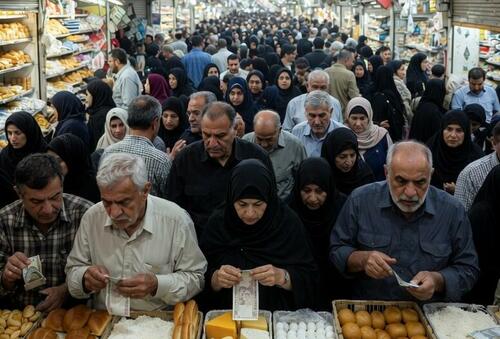
As Iran emerges from a brief but devastating military conflict with Israel and the United States, its economy stands at the brink of collapse, with year-on-year inflation hitting 67% through mid-April 2026 and the rial plummeting to record lows. Official figures and on-the-ground reporting reveal mass layoffs approaching two million workers, devastated infrastructure with reconstruction costs estimated near $270 billion—close to the nation's entire annual GDP—and a naval blockade throttling oil exports through the Strait of Hormuz. While mainstream coverage often prioritizes geopolitical maneuvers and ceasefire talks, the human reality is one of families unable to afford basic staples like cheese, rice, and meat, with prices surging weekly and wages failing to keep pace. A Tehran housewife interviewed by the Financial Times described everyday items doubling in cost almost overnight, while factory owners report operating at 150% losses, leading to widespread dismissals in steel, petrochemicals, and clothing sectors.
This crisis illuminates broader patterns of economic warfare that receive insufficient scrutiny. Sanctions and blockades, presented as precise tools against regimes, function as blunt instruments that crush civilian populations first. Iran's pre-war economy was already hobbled by years of international restrictions; the recent conflict has amplified this into a 'no war, no peace' grind, with emergency bypass routes via Turkey, Russia, and Pakistan proving inadequate against raw material shortages and destroyed facilities. Food inflation has exceeded 100% in some categories, rural areas suffer worse than urban centers, and unemployment benefits claims have surged. These metrics echo historical cases where prolonged economic pressure—rather than fostering reform—entrenches hardship, fuels black markets, and risks social instability that can spill across borders.
Deeper connections emerge when viewing this through the lens of modern hybrid conflicts: the U.S. naval blockade, while disrupting Iranian oil flows to China and beyond, also drives global energy volatility, raising costs for import-dependent nations and contributing to stagflation fears worldwide. Mainstream outlets tend to frame Iran's struggles as self-inflicted through mismanagement, downplaying how layered sanctions create feedback loops of currency collapse, import dependency on restricted sea lanes, and eroded state capacity for basic services. Reconstruction demands equivalent to a full year's output highlight the asymmetry—military actions inflict damage that economic isolation then prevents from healing. As Tehran draws on strategic reserves and activates rail corridors, the wager on endurance tests not just regime resilience but the tolerance of ordinary Iranians, whose shrinking purchasing power and job losses may breed long-term migration, radicalization, or demands for political change. This episode reveals economic warfare as a slow-motion strategy whose costs accumulate invisibly until they manifest in empty markets and shuttered factories.
Liminal Analyst: Iran's economic endurance test risks creating a failed-state dynamic in the Middle East, where civilian suffering from prolonged sanctions breeds instability, refugee flows, and hardened anti-Western sentiment that outlives any tactical ceasefire.
Sources (5)
- [1]Iranians Feel the Pain as Their Economy Descends Into a Death Spiral(https://www.wsj.com/world/middle-east/iranians-feel-the-pain-as-their-economy-descends-into-a-death-spiral-47dba669)
- [2]The Guardian view on the true cost of the Iran war: bombs kill but so does the economic fallout(https://www.theguardian.com/commentisfree/2026/apr/21/the-guardian-view-on-the-true-cost-of-the-iran-war-bombs-kill-but-so-does-the-economic-fallout)
- [3]Economic impact of the 2026 Iran war(https://en.wikipedia.org/wiki/Economic_impact_of_the_2026_Iran_war)
- [4]Iran threatens painful response if US renews attacks(https://www.reuters.com/business/energy/us-seeks-international-help-reopen-strait-hormuz-crude-prices-surge-2026-04-30/)
- [5]Tracking the shadow fleet: How Iran evaded the US naval blockade in Hormuz(https://www.aljazeera.com/economy/2026/4/30/tracking-the-shadow-fleet-how-iran-evaded-the-us-naval-blockade-in-hormuz)