Private Credit Strain Spreads: Troubled Loans Hit Decade Highs Amid Rising Defaults and Writedowns
FT and Fitch data confirm rising private credit distress with non-accruals and defaults at multi-year highs, concentrated in pandemic-era loans; risks include writedowns, redemptions, and potential broader market spillovers amid regulatory focus on nonbank lending.
The Financial Times reports that strain is spreading across private credit portfolios, with some of the largest funds taking writedowns and warning about problem loans as the industry confronts its biggest challenge in nearly a decade. An FT analysis of Solve data indicates that the value of troubled loans held by major private debt investors has reached levels last seen in 2017, following an oil price crash hangover.
Loans placed on non-accrual status by the 20 largest publicly traded business development companies (BDCs) climbed to a median 2.8% of their cost in Q2, up from 2% at the end of Q1. This non-accrual metric signals borrowers have stopped payments or funds anticipate imminent defaults. David Golub of Golub Capital highlighted 'elevated credit stress' and a credit cycle where denial has faded. Fitch Ratings noted private credit defaults hit a new record in July 2026, with the U.S. Private Credit Default Rate (PCDR) remaining at a record high of 9.5% (up from 9.4% in June and 6.9% in July 2025), driven by 17 unique defaulters.
PitchBook LCD data showed listed BDCs managed by KKR, Blue Owl, and Apollo’s MidCap Financial shrinking in Q2 as impairments hit and repayments outpaced new commitments. FS KKR Capital reported 7.1% of its loan book troubled. Pain concentrates in 2020-2021 vintage loans issued at near-zero rates with elevated valuations. Higher rates have starved businesses of investment capital, per Barings’ Bryan High.
Examples include Blackstone and KKR marking down Medallia loans (to under 50 cents on the dollar), Ares writing down Cornerstone OnDemand, and takeovers like Affordable Care by Blackstone/KKR. Industry leaders like Oaktree’s Armen Panossian emphasize defensive postures amid expected volatility.
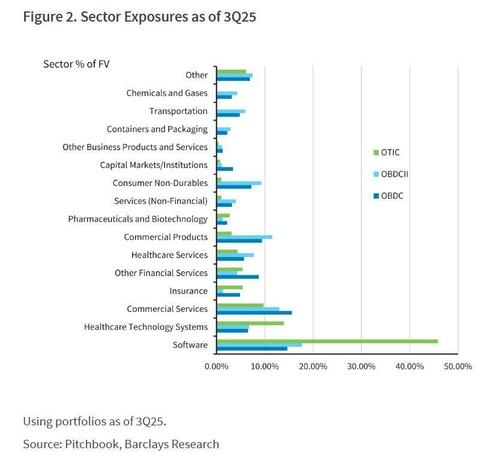
Broader context from the Financial Stability Board (FSB) highlights vulnerabilities in the $2-3T opaque market, including liquidity mismatches from redemption surges and untested resilience in downturns. Solve data shows rising new non-accruals ($1.6B in Q3 2025 across 56 BDCs), while Morgan Stanley notes sector-specific stresses (e.g., healthcare, software/AI disruption) but views spikes as significant yet not systemic. Redemptions and PIK usage have also climbed, echoing earlier concerns around 777 Partners and insurer contagion.
[Fitch/FSB Analyst]: Rising defaults and non-accruals signal a maturing credit cycle that could pressure leveraged portfolios and insurers, with potential for localized contagion if redemptions accelerate, though senior secured structures may limit systemic spillover.
Sources (5)
- [1]Private credit under strain as troubled loans swell(https://www.ft.com/content/67acde0d-4154-4332-b33b-2d03d3a86007)
- [2]Fitch Ratings' U.S. Private Credit Default Rate Remains at Record High in July 2026(https://www.fitchratings.com/research/corporate-finance/fitch-ratings-us-private-credit-default-rate-remains-at-record-high-in-july-2026-13-08-2026)
- [3]Report on Vulnerabilities in Private Credit(https://www.fsb.org/uploads/P060526.pdf)
- [4]SOLVE | 3Q 2025 BDC Non-Accrual Trends(https://solvefixedincome.com/resources/private-credit-in-focus-3q-2025-bdc-non-accrual-trends/)
- [5]Private Credit 2026 Outlook(https://www.morganstanley.com/im/en-us/institutional-investor/insights/outlooks/private-credit-2026-outlook.html)