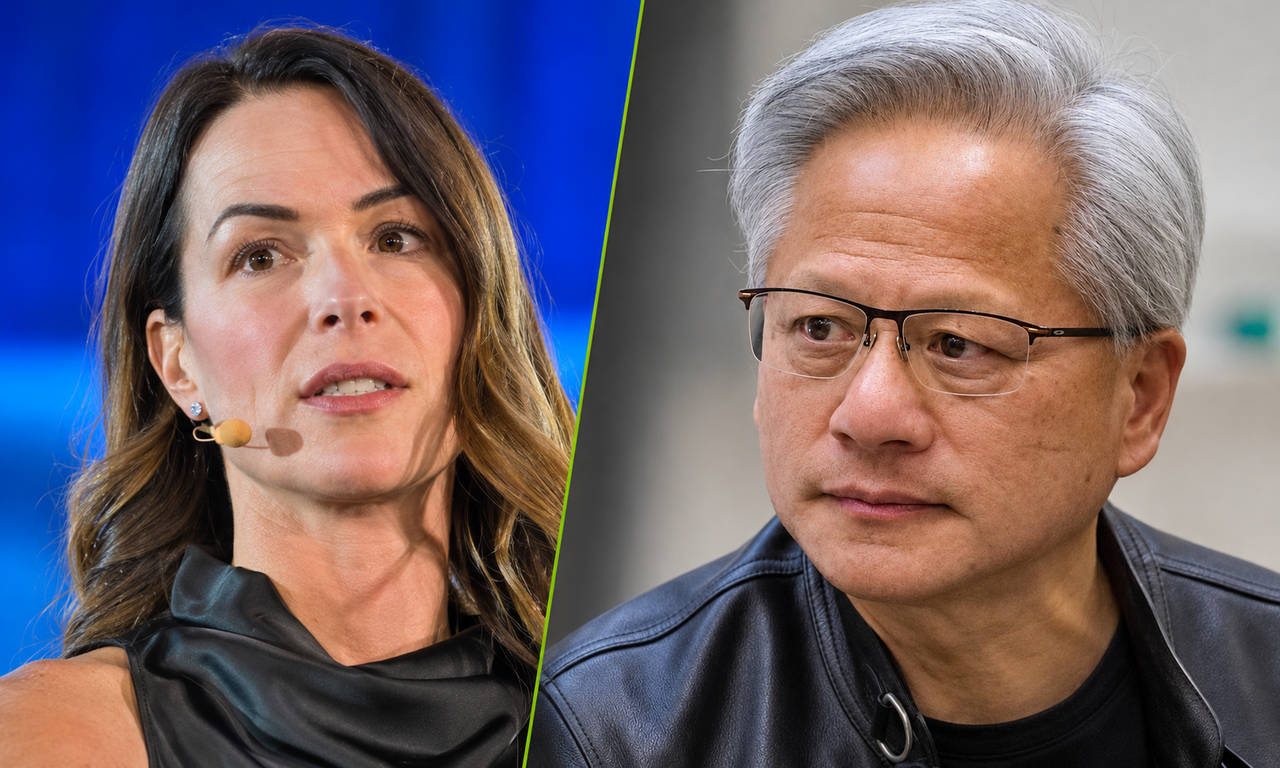
China calls US Nvidia spy claims a pretext for a chip blockade as Huang's leadership is under board review
Jensen Huang has admitted an affair. US officials believe the woman was a Chinese intelligence asset tied to a major Nvidia customer, which China denies. Nvidia's board is investigating, shares have fallen sharply, and Beijing says Washington is using the scandal to justify tighter chip restrictions.
Documented: Nvidia CEO Jensen Huang has acknowledged an extramarital affair. On November 8, 2026, he told employees he had been unfaithful to his wife of roughly 40 years and was deeply sorry. Nvidia's board said it was opening an independent investigation into reporting that he had been the target of a foreign intelligence effort, while stating it had no reason to believe US national security or company secrets were compromised and that Huang remained committed to leading the company. Outside counsel, including former acting US Attorney Joon Kim, was retained to assist. The FBI is examining whether Huang was targeted by a foreign intelligence operation, according to Reuters and subsequent reporting. Congress has sought briefings; at least one Republican senator has called for him to resign. A proposed shareholder class action alleges concealment of the relationship from investors.
Documented as reported, not independently proven: The New York Times, Financial Times, BBC, CNN, The Guardian, and others reported that US intelligence officials believe the woman in the relationship was Alice Huang (also known as Huang Le), a Chinese national and former executive at Singapore-based Megaspeed, and that she was recruited as an asset of China's Ministry of State Security. She is not related to Jensen Huang. US officials had already scrutinized Megaspeed over possible diversion of advanced Nvidia chips toward China despite export controls. Reporting has put Megaspeed's Nvidia-related purchases in the billions of dollars; The Information has reported that Alice Huang facilitated at least $7.5 billion in shipments toward Chinese firms. Nvidia and Megaspeed have previously said diversion allegations were not substantiated. China's embassy and Foreign Ministry have called the spy claims groundless and a smear.
A second relationship is also reported, not admitted by Huang in public statements reviewed here. The New York Times, citing company sources, reported that Huang had an intimate relationship with Kimberly Powell, Nvidia's vice president of healthcare, who reports to him; both are married to other people. The Wall Street Journal also reported a relationship with a company executive. Huang declined to address the Powell reporting when contacted by the Times.
Documented market and governance reaction: Nvidia lost hundreds of billions of dollars in market value across sessions after the affair disclosure. After the Wall Street Journal reported that the board was preparing to discuss ousting Huang, shares fell roughly 8 to 9 percent in after-hours and premarket trading on November 12, according to Forbes, CNBC, and Al Jazeera. CNBC said it confirmed the board met to discuss his future. Reuters had earlier reported about $430 billion erased over two sessions. Those figures describe price moves, not a completed removal. As of the reporting cited here, no public announcement had confirmed that Huang had been dismissed.
Documented diplomatic response: On November 12, Foreign Ministry spokesperson Mao Ning said the United States should stop fabricating so-called spy narratives and using them as a pretext for a technological blockade, according to Al Jazeera, Forbes, and Chinese state media. The comments came as lawmakers pressed for tighter controls—including chip-tracking requirements, more congressional oversight of advanced-chip licenses, and allied restrictions on semiconductor equipment—and as Reuters reported Chinese AI firms rushing to lock in Nvidia-powered compute capacity outside China, fearing the scandal would close cloud-access loopholes. Trump had previously been briefed on intelligence about the relationship and, by multiple accounts including the Times, did not act on it in a way that interrupted Huang's role as an informal adviser on AI and chip exports. Commerce Secretary Howard Lutnick was sent a classified warning memo, Axios reported. A Trump-Xi meeting was expected the following week.
Claimed, thinner, or speculative: ZeroHedge framed Huang's personal life as the center of a circular AI financing scheme and treated a board decision as imminent and decisive. Board deliberations are documented as underway; an outcome is not. Elon Musk replied "That would be an honor" to a ZeroHedge post urging him to hire Huang. That exchange is real as social-media banter. It is not evidence of a job offer, of Huang leaving Nvidia, or of any role at Musk's Terafab project. Analyst commentary that Huang is irreplaceable, or that a leadership change would break GPU shipments to China via Singapore, is opinion layered on unresolved facts.
What is still unknown: whether any classified information or export-control decisions were actually influenced; whether Alice Huang was an intelligence officer, a paid asset, or neither; and whether the board will remove Huang. The intelligence assessment rests on anonymous officials and classified memos described by major newsrooms. Beijing's denial is official and categorical. Neither side has published the underlying evidence.
Nvidia designs the chips that dominate advanced AI computing, and US rules already limit which of those chips China can buy. A personal relationship that US officials treat as an intelligence risk is now being cited in arguments for tighter export controls, while China says the spy story is being used to justify a broader technology blockade.
Sources (8)
- [1]China says US fabricating Nvidia spy claims to justify tech blockade(https://www.aljazeera.com/news/2026/11/12/china-says-us-fabricating-nvidia-spy-claims-to-justify-tech-blockade)
- [2]Nvidia launches probe after report CEO Huang was target of foreign intelligence(https://www.reuters.com/world/china/nvidia-launches-probe-after-report-ceo-huang-was-target-foreign-intelligence-2026-11-08/)
- [3]What we know about Nvidia CEO's affair with suspected Chinese spy(https://www.bbc.co.uk/news/articles/ckgel338xql3o)
- [4]Nvidia CEO's affair becomes a national security problem(https://www.ft.com/content/1397e2f4-d7f5-4cbb-a4d9-04ecf661d1aa)
- [5]Scoop: Commerce Department received national security warning on Nvidia CEO affair(https://www.axios.com/2026/11/10/lutnick-nvidia-jensen-huang-china-memo)
- [6]Nvidia stock falls as investors await Jensen Huang's fate(https://www.cnbc.com/2026/11/12/nvidia-nvda-jensen-huang-second-affair.html)
- [7]Chinese AI firms rush to secure Nvidia chip capacity as spy scandal stirs fear of US curbs(https://www.reuters.com/world/china/chinese-ai-firms-rush-secure-nvidia-chip-capacity-spy-scandal-stirs-fear-us-2026-11-12/)
- [8]The AI poster boy, the Chinese spy and Trump(https://www.theguardian.com/technology/2026/nov/09/nvidia-affair-huang-trump-national-security)