Markets Pricing the Unseen: How Iran Uncertainty Exposes Global Economy's Fragile Fault Lines
Financial markets are increasingly factoring in prolonged risks from Iran-related disruptions to the Strait of Hormuz and global oil flows, exposing an economically fatigued world with limited policy buffers. This signals a larger, under-reported transition toward higher baseline energy costs and deglobalizing pressures.
While mainstream coverage frames the Iran conflict as a contained geopolitical flare-up with hopeful ceasefires and negotiations, financial markets are signaling a deeper, under-discussed shift: the end of the era of reliable, low-cost energy flows through critical chokepoints like the Strait of Hormuz. This is not merely about oil prices spiking above $95 or even $100 per barrel. It represents a structural repricing of risk in a global system built on assumptions of perpetual stability that no longer hold.
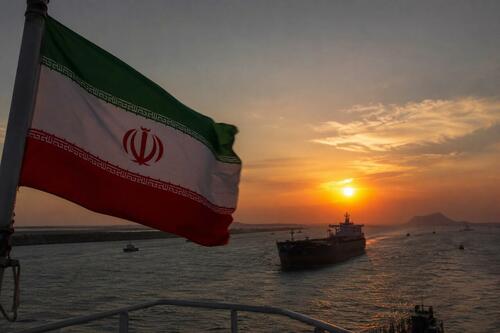
Recent events have seen U.S. and Israeli strikes on Iran trigger Iranian responses that severely disrupted traffic through the Strait, through which roughly one-fifth of global oil and LNG historically flowed. Oil prices surged dramatically in March 2026, with Brent crude exceeding $100 and peaking near $126 amid the largest monthly increase in history. Even as diplomatic efforts aim for 60-day extensions and reopening the waterway, persistent uncertainty has kept volatility elevated. A senior Vitol executive warned that the market may be underpricing risks, noting cumulative losses approaching a billion barrels with potential recessionary demand destruction if disruptions linger.
What most coverage misses is how this connects to larger unseen patterns of systemic fatigue. Governments entered this crisis with debt loads far higher than in previous shocks, limiting their ability to deploy massive fiscal or monetary backstops as in 2008 or 2020. The IMF has highlighted that an adverse scenario with sharper energy price spikes could slash global growth to 2.5% while pushing inflation to 5.4%, hitting debt-vulnerable developing nations hardest through bond spread shocks and 2026 debt maturities. OECD forecasts similarly point to growth slowing to 2.6% under sustained energy pressures.
This episode reveals the exhaustion of just-in-time globalized supply chains optimized for cheap, uninterrupted energy. Preparatory behaviors—hoarding inventories, rerouting shipping, rising insurance—create self-reinforcing damage even without total closure. History shows such uncertainty can persist far beyond headlines, forcing refiners and industries to confront physical shortages months later. Deeper still, it accelerates a multipolar transition: energy producers gain leverage, alliances realign around resource security, and the limits of central bank tools in a high-debt world become impossible to ignore. Markets are pricing this paradigm shift; mainstream narratives have yet to catch up.
LIMINAL: This market disconnect foreshadows a sustained era of elevated energy risk premiums that will compound sovereign debt crises, accelerate supply chain regionalization, and erode the foundations of dollar-centric globalization faster than policymakers anticipate.
Sources (6)
- [1]Oil prices: U.S. strikes in Iran revive fear over Strait of Hormuz(https://www.cnbc.com/2026/05/28/oil-prices-us-strikes-in-iran-revive-strait-of-hormuz-turmoil-fears.html)
- [2]Iran Conflict and the Strait of Hormuz: Impacts on Oil, Gas ...(https://www.congress.gov/crs-product/R45281)
- [3]U.S. and Iran work toward deal to extend ceasefire and reopen Strait of Hormuz(https://www.washingtonpost.com/world/2026/05/24/us-iran-near-deal-extend-ceasefire-reopen-hormuz/)
- [4]Oil market has lost a billion barrels due to Iran war, Vitol boss warns(https://www.ft.com/content/68c80b3e-b645-46a5-b748-0d2ebb3f56e7)
- [5]War Darkens Global Economic Outlook and Reshapes Policy Priorities(https://www.imf.org/en/blogs/articles/2026/04/14/war-darkens-global-economic-outlook-and-reshapes-policy-priorities)
- [6]2026 Iran war | Explained(https://www.britannica.com/event/2026-Iran-war)