Netanyahu's Intensified Lebanon Campaign: Degrading Iran's Primary Proxy and Risks of Regional Contagion
Netanyahu has ordered escalated IDF strikes hitting 70+ Hezbollah sites across Lebanon, backed by the US, amid drone attacks. This widens the Lebanon front as part of a strategy to dismantle Iran's most capable proxy within its 'axis of resistance,' risking multi-proxy spillover and complicating US-Iran diplomacy.
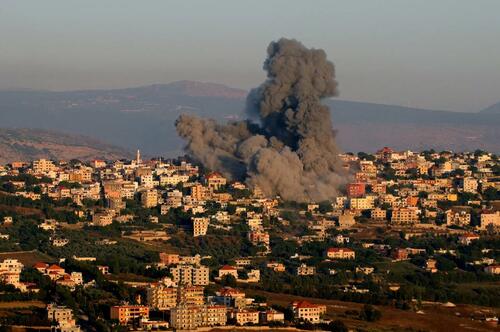
Israeli Prime Minister Benjamin Netanyahu has explicitly ordered the IDF to escalate operations against Hezbollah, stating in a video address that forces must 'press the pedal even harder' following a surge in drone attacks on northern Israel. In the past 24 hours, the Israeli military conducted strikes on more than 70 Hezbollah infrastructure sites, including approximately 10 headquarters and weapons depots in the Tyre area, as well as targets in the Bekaa Valley. Evacuation orders were issued for parts of southern Beirut suburbs, underscoring the expanding scope of the campaign despite a US-mediated ceasefire framework with the Lebanese government.[1][2]
This escalation occurs against a backdrop of over 3,000 Lebanese deaths since early 2026, according to health officials, with the conflict framed by Israel as a distinct front from its tensions with Iran. A senior US official told Axios that the Trump administration backs Israel's actions, noting Hezbollah has ignored repeated demands to halt fire, including ultimatums, and emphasizing that 'this is not the Biden Administration.' Washington views sustained Hezbollah attacks—over 1,000 drones and 700 rockets since mid-April—as untenable violations.[3]
Deeper analysis reveals this as part of a consistent pattern in Iran's proxy network strategy. Hezbollah functions as Tehran's most sophisticated and heavily armed forward asset, equipped with precision drones, extensive rocket arsenals, and cross-border tunneling capabilities developed over years of Iranian support. By intensifying strikes now, Netanyahu appears intent on systematically degrading these capabilities to prevent Hezbollah from serving as an effective deterrent or retaliatory force should Israel or the US target Iranian nuclear infrastructure directly. This connects to longstanding Israeli concerns that any broader US-Iran deal might fall short of complete dismantlement of Iran's enrichment program.[4]
The 2026 Lebanon war, as documented in contemporaneous reporting, has already seen Israel expand ground buffers, conduct massive airstrikes on command centers across Beirut suburbs, southern Lebanon, and the Bekaa, and issue sweeping evacuation orders for dozens of villages. Hezbollah's retaliatory drone and rocket barrages represent a calibrated response within the 'axis of resistance'—a network including Hamas, Houthis, and Iraqi militias designed to stretch Israeli defenses across multiple theaters. Missing from most surface coverage is how this Lebanon intensification may be synchronized with efforts to neutralize proxy depth before potential diplomatic windows with Tehran close. Iranian officials have repeatedly tied any nuclear negotiations to de-escalation in Lebanon, a linkage Tel Aviv rejects.[5]
Potential spillover effects are significant. Further degradation of Hezbollah could prompt Iran to activate secondary proxies more aggressively—Houthi disruptions in the Red Sea or militia activations in Syria and Iraq—risking escalation ladders that draw in US forces. Regional stability hangs in balance: prolonged conflict risks massive additional displacement (already over a million affected), infrastructure collapse in Lebanon, and volatility in energy markets. While Israel reports eliminating hundreds of Hezbollah operatives in recent weeks, the blurring of combatant and civilian casualties complicates long-term political outcomes. Critics argue the timing seeks to foreclose diplomatic off-ramps, yet Israeli officials maintain that only decisive military pressure can restore deterrence and secure borders.[6]
This episode highlights the structural reality of Iran's forward defense doctrine: proxies like Hezbollah are not independent actors but integrated components of a deterrence architecture. Netanyahu's 'crush Hezbollah' directive signals Jerusalem's determination to break this architecture on the Lebanese front, even at the cost of fraying ceasefires and inviting wider confrontation.
Regional Stability Analyst: Intensifying the Lebanon front now aims to neutralize Hezbollah's advanced drone and missile threat before any US-Iran deal, but it risks coordinated activation of Iran's other proxies, potentially triggering a multi-front regional war with global energy and security consequences.
Sources (5)
- [1]Netanyahu says Israel will intensify strikes against Hezbollah(https://www.bbc.com/news/articles/cewppdk1187o)
- [2]Israel escalates strikes in Lebanon as Netanyahu vows to 'crush' Hezbollah(https://www.theguardian.com/world/2026/may/26/israel-escalates-strikes-in-lebanon-as-netanyahu-vows-to-crush-hezbollah)
- [3]Netanyahu Says Israel Plans to Intensify Attacks on Hezbollah(https://www.nytimes.com/2026/05/25/world/middleeast/netanyahu-israel-hezbollah-lebanon.html)
- [4]Senior US official hints Washington backs Israeli escalation in Lebanon(https://www.naharnet.com/stories/en/320333-senior-us-official-hints-washington-backs-israeli-escalation-in-lebanon)
- [5]IDF says over 70 Hezbollah targets struck across Lebanon in past day(https://www.timesofisrael.com/liveblog_entry/idf-says-over-70-hezbollah-targets-struck-across-lebanon-in-past-day/)