Ukraine's Sub-Million-Dollar Interceptor: Reshaping High-Intensity Conflict Economics and Forcing Global Defense Reassessment
Fire Point's low-cost ballistic interceptor program, paired with its own strike missiles, could solve the sustainability crisis in high-intensity air defense. Beyond the original reporting's focus on price, this effort synthesizes battlefield lessons with European sensor tech, risks proliferation to new markets, and challenges Western reliance on multi-million-dollar systems like Patriot, potentially shifting global defense priorities toward attritable, scalable solutions.
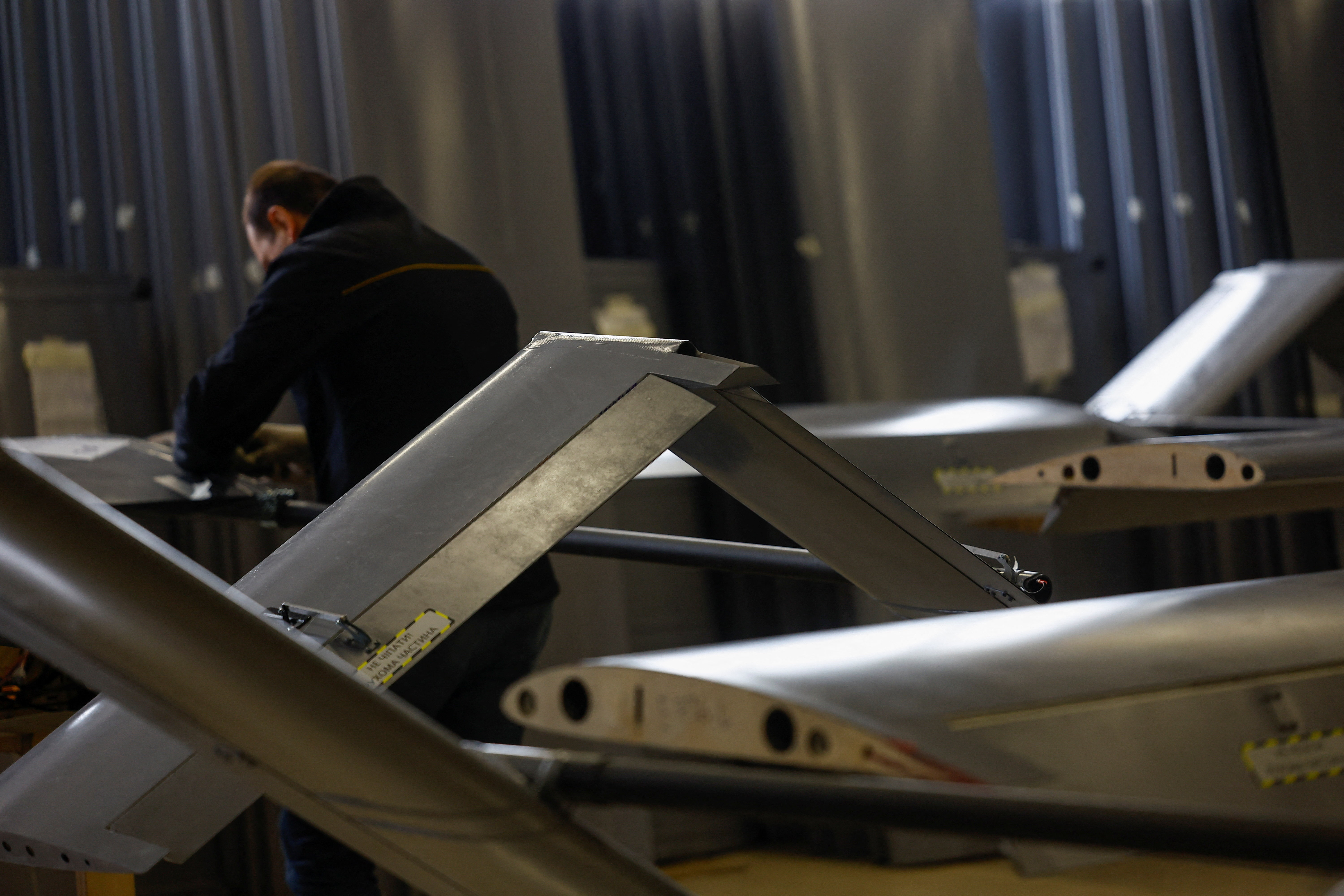
Fire Point's announcement that it aims to field a ballistic-missile interceptor costing less than $1 million by the end of 2027 represents far more than another Ukrainian innovation story. While the Defense News/Reuters coverage accurately captures the immediate commercial pitch — a low-cost alternative to the Patriot PAC-3 amid depleted Western inventories — it misses the deeper strategic synthesis underway. This is not merely cost reduction; it is an attempt to solve the sustainability problem that has plagued both Ukraine and its Western backers in protracted, high-intensity warfare.
The original reporting underplays two critical connections. First, Fire Point is simultaneously maturing the FP-7 and FP-9 ballistic missiles. Developing both affordable strike and affordable defense systems creates a closed-loop capability that allows Ukraine to conduct deep strikes while maintaining a credible shield without bankrupting its partners. This mirrors Israel's Iron Dome logic but scaled to theater ballistic threats and built under active combat conditions. Second, the piece fails to situate this within the broader pattern of Ukrainian asymmetric innovation: from naval drones that neutralized much of Russia's Black Sea Fleet to AI-enabled loitering munitions. Each iteration demonstrates a repeatable methodology — rapid iteration on the battlefield, acceptance of higher risk tolerances, and deliberate pursuit of attritable systems over exquisite ones.
Synthesizing external analysis strengthens this picture. A 2024 RUSI report on 'The Ukrainian Air Defence Experience' documented how Ukraine's layered approach already achieved 70-80% intercept rates against cruise missiles using a mix of Soviet legacy systems, Western donations, and indigenous improvisation, yet warned that ballistic missile defense remained prohibitively expensive. Similarly, the CSIS Missile Threat Center's 2025 update on global inventories highlighted that combined U.S. and European production of PAC-3 and Aster missiles cannot sustain two simultaneous major conflicts without severe depletion within months. Fire Point's approach directly targets this mismatch.
The geopolitical implications extend beyond the battlefield. A validated sub-$1M interceptor would likely accelerate proliferation to Global South states seeking alternatives to expensive Western systems, particularly after Iran's 2024-2025 saturation attacks exposed vulnerabilities in even advanced Gulf defenses. The reported $2.5 billion valuation and pending Middle Eastern investment suggest Fire Point is positioning itself as both a Ukrainian national champion and an emerging export player — a development that could erode aspects of U.S. export dominance while creating new technology-sharing risks.
What the coverage also glosses over are the formidable technical hurdles. Effective ballistic missile defense requires sophisticated radar discrimination, high-speed seekers, and robust command-and-control — precisely the areas where Fire Point admits it needs European partners (Weibel, Hensoldt, Thales, SAAB). Success by 2027 would require unprecedented integration speed between Ukrainian kinetic expertise and Western sensor/comms technology. Historical patterns suggest schedule slips are likely; however, even partial success would validate a new model: modular, lower-cost interceptors that prioritize numbers and sustainability over single-shot kill probability.
For NATO, this should trigger urgent reevaluation of procurement priorities. The current emphasis on high-end systems optimized for great-power conflict has created brittle defenses against massed, lower-cost threats. Ukraine's pursuit, born of necessity, may demonstrate that future deterrence lies in economically sustainable magazines rather than prestige platforms. Should the system materialize, it will not only alter dynamics along the Russian front — enabling deeper strikes on Moscow's rear while protecting Ukrainian cities — but could influence everything from Taiwan Strait planning to European air defense architecture. The true game changer is not any single missile but the proof that defense economics can be fundamentally rewritten under fire.
SENTINEL: Ukraine's sub-$1M interceptor, if realized by 2027, will prove sustainable magazine depth matters more than individual system prestige, forcing Russia to expend limited high-end SAMs against cheaper Ukrainian ballistic threats while pushing NATO toward procurement reform and accelerating proliferation risks across contested regions.
Sources (3)
- [1]Ukraine missile maker targets ‘game changer’ air defense system by 2027(https://www.defensenews.com/industry/techwatch/2026/04/06/ukraine-missile-maker-targets-game-changer-air-defense-system-by-2027/)
- [2]The Ukrainian Air Defence Experience(https://rusi.org/explore-our-research/publications/commentary/ukrainian-air-defence-lessons)
- [3]Missile Threat and Proliferation - 2025 Assessment(https://missilethreat.csis.org/)