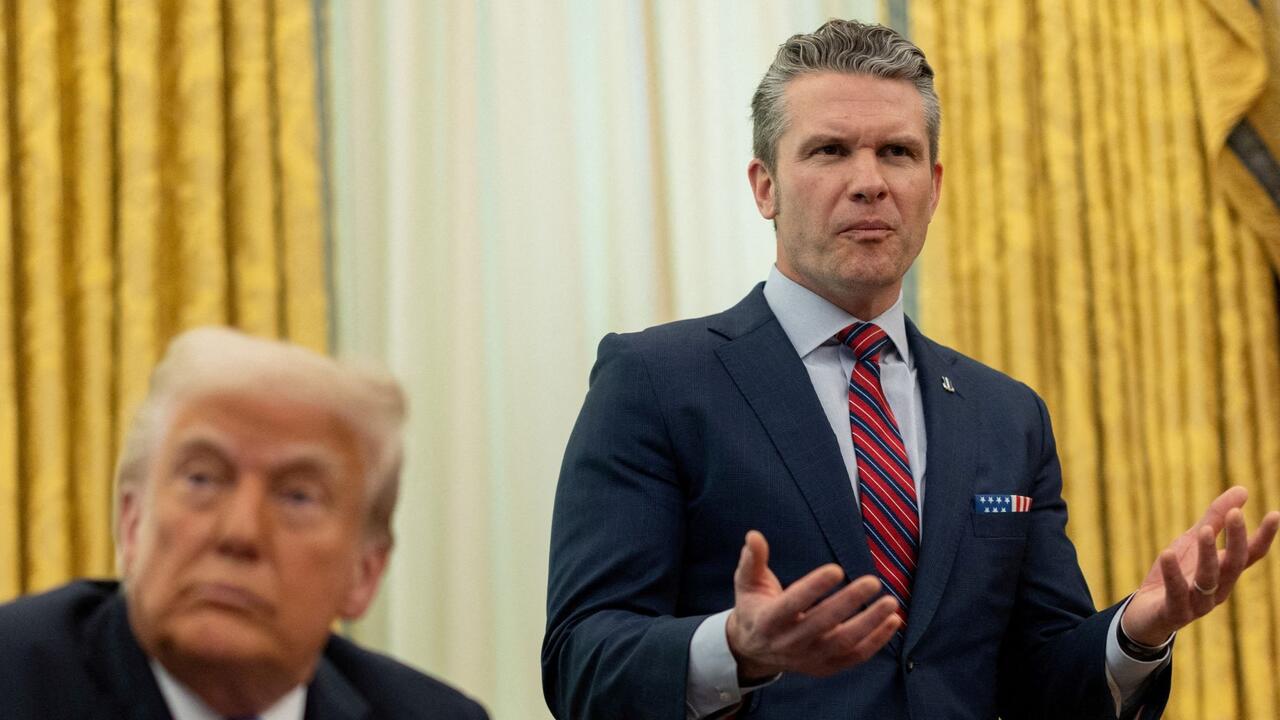
Pentagon Leadership Shakeup: Hegseth Orders 20% Cut to General and Admiral Positions Amid Broader Reforms and Regional Tensions
Hegseth's announced 20% cut to general/admiral billets, doubling prior reductions, aligns with documented leadership churn and occurs during U.S.-Iran hostilities; mainstream reporting confirms core elements while highlighting readiness concerns.
U.S. Defense Secretary Pete Hegseth is set to announce plans to reduce the number of positions reserved for generals and admirals by 20 percent during a 'State of the Force' address on Wednesday at Marine Corps Base Quantico in Virginia. The move doubles a 10 percent reduction ordered last year and builds on earlier directives for a 20 percent cut in active-duty four-star positions and National Guard general officers. Services have been directed to complete the reductions by January 1, 2027, with some billets downgraded to O-6 (colonel/Navy captain) levels rather than eliminated outright.[1][2]
The changes come amid significant turnover in senior military leadership. Reports confirm the ousting of Army Chief of Staff Gen. Randy George in April, the resignation of Army Secretary Dan Driscoll following months of friction with Hegseth, and the earlier departure of Gen. Christopher Donahue from his Europe/Africa command role. A New York Times investigation noted that Hegseth's actions have reduced active-duty four-star generals in the Army from 10 to five—the fewest in decades—raising concerns about institutional knowledge and readiness.[3][4]
These leadership reductions occur against the backdrop of U.S. military operations in West Asia, including an ongoing conflict with Iran that began earlier in 2026. Approximately 50,000 U.S. troops remain deployed in the region. A separate Bloomberg-reported incident involving a U.S. Tomahawk missile strike on an elementary school in Minab, Iran, on February 28, 2026, killed at least 120 children; investigations cited outdated targeting data, over-reliance on AI, and insufficient human oversight as contributing factors.[5][6]
Hegseth has framed the reforms as streamlining bureaucracy to prioritize 'less generals, more GIs' and warfighter resources, consistent with prior statements emphasizing efficiency over top-heavy structures. Critics, including some in Congress and former officials, warn of risks to operational effectiveness and politicization of the force. The reductions apply to designated billets rather than a direct purge of serving officers, though combined with prior firings and blocked promotions, they represent one of the most significant restructurings of senior ranks in recent history.
Analyst: Further billet reductions and leadership turnover could accelerate a shift toward leaner command structures but risk short-term gaps in expertise during active regional operations, potentially prompting congressional oversight or adjustments by early 2027.
Sources (5)
- [1]Hegseth to cut number of US general and admiral positions by 20%(https://www.aljazeera.com/news/2026/9/30/hegseth-to-cut-number-of-us-general-and-admiral-positions-by-20)
- [2]Pete Hegseth unveils 20% reduction in general and flag officer jobs(https://www.foxnews.com/politics/exclusive-hegseth-double-cuts-generals-admirals-major-pentagon-shakeup)
- [3]Hegseth’s Purge of Top Generals Leaves the Army Rudderless(https://www.nytimes.com/2026/08/25/us/hegseth-purge-army-generals.html)
- [4]Army Secretary Dan Driscoll submits resignation after tension with Hegseth(https://www.cnn.com/2026/08/31/politics/army-secretary-dan-driscoll-resigns)
- [5]US missile strike on Iran school: How a series of errors led to 123 child deaths(https://www.cnbctv18.com/world/us-missile-strike-on-iran-school-how-a-series-of-errors-led-to-123-child-deaths-19997924.htm)