US Tanker Boarding and Iran's 'New War Beyond Region' Warning Reveal Escalation Risks Mainstream Coverage Downplays Amid Fragile Trump Talks
US boarding of Iranian tanker in Gulf of Oman coincides with Iranian warnings of 'new war' spreading beyond region and Trump's mixed signals on 'final stages' of talks, highlighting downplayed escalation dangers in the 2026 Iran conflict amid ongoing blockade enforcement and diplomatic exchanges.
In a development that underscores the volatile disconnect between diplomatic signaling and military reality, US Marines boarded an Iranian-flagged tanker in the Gulf of Oman on May 20, 2026, as part of ongoing enforcement of a naval blockade. According to CENTCOM statements referenced across reporting, the vessel M/T Celestial Sea was intercepted for suspected violation of the blockade before being searched, redirected, and released. This action fits a pattern of direct US naval interventions against Iranian shipping that have intensified since early 2026, including firings on multiple tankers in the first week of May.[1][2]
Simultaneously, Iran's parliament speaker and chief negotiator Mohammad Bagher Ghalibaf issued stark warnings that the United States is maneuvering to 'start a new war,' accusing Washington of maintaining military objectives despite economic pressure and ongoing message exchanges. Ghalibaf and IRGC statements emphasized that any renewed aggression could see the conflict spread 'beyond the region,' a clear signal of potential asymmetric escalation involving Iranian proxies or other theaters. Tehran has repeatedly demanded an end to what it calls 'piracy' against its vessels while insisting any ceasefire must address its 14-point resolution.[3][4]
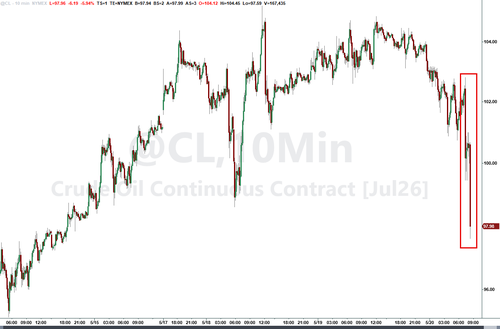
President Trump, meanwhile, has alternated between touting the 'final stages' of talks facilitated partly through Pakistani channels and issuing fresh ultimatums with short deadlines. Comments from the White House about 'seeing what happens' with Iran coincided with further oil price declines, continuing a pattern where optimistic headlines appear to serve market-calming functions even as naval clashes persist. Iran's Foreign Ministry has acknowledged continued message exchanges but expressed suspicion, rejecting talk of ultimatums as 'ridiculous' while demanding proof of US goodwill.[5][6]
What much mainstream coverage frames as routine 'talks theater' or isolated incidents misses the deeper connection: these boardings occur against the backdrop of the 2026 US military buildup and Iran war that began with strikes in February-March. The Strait of Hormuz—through which a significant portion of global oil transits—has seen disrupted traffic, IRGC-coordinated vessel movements, and competing claims of control. Iran's explicit threat to expand any 'new war' beyond the Middle East suggests preparation for broader disruption, potentially activating networks that could affect shipping lanes far from the Gulf or energy infrastructure elsewhere. This creates an escalation ladder that diplomatic optimism obscures, where each boarding tests red lines and every Iranian warning recalibrates deterrence.[7][8]
The heterodox lens reveals this as potential 'controlled tension' management: Trump team statements project strength and deal-making while maintaining blockade pressure, allowing oil volatility to be spun as temporary. Yet the pattern of repeated tanker interceptions, Ghalibaf's hardening rhetoric, and IRGC assertions of regional dominance indicate that the ceasefire is thinner than portrayed. If history of such shadow conflicts is any guide, the risk of miscalculation leading to kinetic breakout remains elevated, with global energy markets and third-party actors like Pakistan caught in the crosscurrents.
LIMINAL: Despite 'final stages' rhetoric calming oil markets, repeated tanker boardings combined with explicit Iranian threats of extra-regional war signal a precarious ceasefire likely to fracture into renewed escalation within weeks, with global energy chokepoints as the primary flashpoint.
Sources (5)
- [1]The U.S. fires on 2 Iranian tankers trying to evade its blockade in Gulf of Oman(https://www.wyomingpublicmedia.org/2026-05-08/the-u-s-fires-on-2-iranian-tankers-trying-to-evade-its-blockade-in-gulf-of-oman)
- [2]Iran Says US Wants To 'Start New War' After Trump Threat(https://www.barrons.com/news/iran-guards-warn-of-war-beyond-mideast-as-trump-repeats-threats-23d55bd7)
- [3]Trump gives Iran days to end power struggle, return to talks(https://www.axios.com/2026/04/22/trump-iran-war-power-struggle-ceasefire)
- [4]Iran war updates: Trump says US to block Hormuz(https://www.aljazeera.com/news/liveblog/2026/4/12/iran-war-live-historic-face-to-face-talks-with-us-continue-in-islamabad)
- [5]2026 United States military buildup in the Middle East(https://en.wikipedia.org/wiki/2026_United_States_military_buildup_in_the_Middle_East)