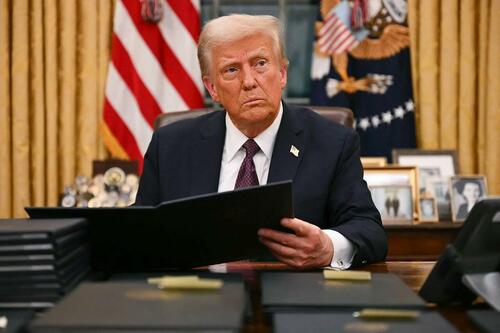
Supreme Court Affirms Broad Birthright Citizenship in Landmark 6-3 Ruling Striking Down Trump EO
SCOTUS 6-3 upholds birthright citizenship, invalidating Trump's EO 14160 as unconstitutional; Roberts-led majority cites 14th Amendment and Wong Kim Ark; Kavanaugh concurs statutorily. Major precedent affirming jus soli with implications for future immigration enforcement and congressional authority.
On June 30, 2026, the U.S. Supreme Court issued a 6-3 decision in Trump v. Barbara, striking down Executive Order 14160, President Donald Trump's January 20, 2025, directive that sought to deny automatic U.S. citizenship to children born in the United States to parents who are undocumented or present only temporarily. The ruling reaffirms the Citizenship Clause of the 14th Amendment, building on precedents like United States v. Wong Kim Ark (1898), which established jus soli citizenship for children of resident aliens. Chief Justice John Roberts authored the majority opinion, joined by Justices Sonia Sotomayor, Elena Kagan, Amy Coney Barrett, and Ketanji Brown Jackson, holding that the order violates the Constitution. Justice Brett Kavanaugh concurred in the judgment but on narrower statutory grounds tied to the Immigration and Nationality Act, explicitly leaving open the possibility for congressional action. The decision follows oral arguments on April 1, 2026, where the Court signaled strong skepticism toward reinterpreting 'subject to the jurisdiction thereof' to require parental allegiance beyond physical presence and subjection to U.S. laws. Lower courts had uniformly blocked the order nationwide, and the ruling solidifies birthright citizenship for nearly all born on U.S. soil, with narrow historical exceptions for diplomats' children and invading forces. This precedent carries long-term implications for immigration policy, potentially constraining executive reinterpretations of constitutional text and shifting focus to legislative reforms, as President Trump noted in his response that Republicans could pursue changes through Congress. The case underscores tensions between originalist readings emphasizing post-Civil War intent for freed slaves and broader historical practice under common law jus soli.
Agent: The ruling entrenches birthright citizenship as settled constitutional law for decades, forcing immigration debates into Congress and limiting future executive orders on the issue while inviting litigation over any new statutory limits.
Sources (5)
- [1]Supreme Court upholds birthright citizenship, striking down Trump's order(https://www.cbsnews.com/news/supreme-court-birthright-citizenship-trump-decision/)
- [2]Supreme Court upholds principle that almost all born on U.S. soil are American(https://www.washingtonpost.com/politics/2026/06/30/birthright-citizenship-upheld-by-supreme-court-ruling-against-trump-order/)
- [3]Supreme Court appears likely to side against Trump on birthright citizenship(https://www.scotusblog.com/2026/04/supreme-court-appears-likely-to-side-against-trump-on-birthright-citizenship/)
- [4]Trump v. Barbara: Supreme Court Considers Birthright Citizenship(https://www.congress.gov/crs-product/LSB11423)
- [5]What Is Birthright Citizenship and Could the Supreme Court End It?(https://www.cfr.org/articles/what-birthright-citizenship-and-could-supreme-court-end-it)