Saudi Arabia's $1 Trillion Wealth Fund Expands to Shanghai: A Pivot to China Amid Shifting Global Energy and Investment Dynamics
Saudi Arabia’s Public Investment Fund opening a Shanghai office marks a deepening of economic ties with China, reflecting Vision 2030’s diversification goals and a cautious pivot toward yuan-based trade. Amid US-China tensions, this move signals potential shifts in global investment and energy markets, though Saudi Arabia balances its Western alliances. Overlooked geopolitical drivers and currency dynamics reveal a broader Gulf strategy to navigate a multipolar world.
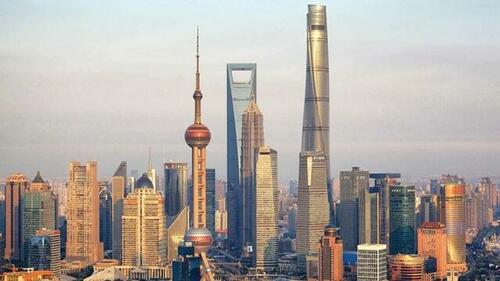
Saudi Arabia’s Public Investment Fund (PIF), managing over $1 trillion in assets, has opened a new office in Shanghai, signaling a strategic deepening of economic ties with China at a time of heightened US-China tensions and evolving global energy markets. This move, registered in 2023 under the oversight of the existing Beijing branch, aims to bolster outbound dealmaking in China while attracting Chinese investment into the Kingdom. Led by Lily Cong, formerly of Fidelity International, the Shanghai office extends PIF’s global footprint—already spanning New York, London, Hong Kong, and Paris—and underscores Riyadh’s intent to diversify its economic partnerships beyond traditional Western allies.
While the original coverage by ZeroHedge highlights the office opening as a marker of growing Saudi-China financial links, it misses critical geopolitical and economic undercurrents driving this shift. First, the expansion aligns with Saudi Arabia’s Vision 2030, a plan to diversify its oil-dependent economy through foreign investment and non-energy sectors. China, as the world’s largest importer of Saudi oil, represents not just a market but a partner in infrastructure and technology—key pillars of Vision 2030. Data from the Saudi General Authority for Statistics shows China accounted for 18% of Saudi exports in 2022, surpassing the US at 15%. This economic gravity, as noted by analysts, tilts toward Beijing, even as the US remains a significant security and investment partner.
Second, the timing of this move coincides with broader Gulf state efforts to hedge against regional instability and US policy uncertainty. The ZeroHedge report references disruptions in the Strait of Hormuz and the fragility of the 'petrodollar order' but overlooks how these factors intersect with Saudi Arabia’s currency diversification. A 2023 currency swap agreement worth $7 billion between Saudi Arabia and China, alongside Riyadh’s participation in the mBridge blockchain-based payment platform, reflects a cautious but deliberate pivot toward yuan-denominated trade. While Saudi Arabia has not formally abandoned dollar-based oil pricing, as Fortune reported in 2024, the absence of a renewed commitment signals flexibility—an omission the original story underplays. This is less a rejection of the dollar and more a pragmatic response to China’s role as a top oil buyer and a counterweight to US influence.
Third, the Shanghai office must be contextualized within a pattern of Gulf-China convergence. Abu Dhabi’s consideration of a new entity for Chinese assets, as noted in the original piece, mirrors Qatar’s increasing yuan-based transactions. These moves collectively challenge the narrative of Gulf states as unwavering US allies, a nuance missing from much coverage. Historical parallels, such as the 1970s oil shocks when OPEC flexed its economic muscle against Western policies, suggest that Gulf states are again leveraging energy dominance to reshape global financial alignments—only now, China is the pivot point.
What’s at stake extends beyond bilateral ties. The PIF’s Shanghai outpost could influence global investment flows, redirecting capital from Western markets to Asia at a time when US sanctions and export controls on China intensify. It also raises questions about energy market stability: if yuan-based oil trade gains traction, as hinted by Saudi central bank moves, the dollar’s dominance in energy pricing could erode, impacting US leverage over global finance. Yet, this is not inevitable—Saudi Arabia’s balancing act between Beijing and Washington, evidenced by continued US arms deals and security pacts, suggests a multipolar strategy rather than a full pivot.
Drawing on primary and related sources, the broader implications are clear. The Saudi Ministry of Economy and Planning’s 2023 annual report emphasizes foreign direct investment as a Vision 2030 cornerstone, with China explicitly named as a priority partner. Meanwhile, a 2024 People’s Bank of China statement on mBridge highlights Saudi participation as a step toward de-dollarization in cross-border trade. These documents, more than secondary analyses, reveal a calculated economic realignment—one that ZeroHedge’s coverage only scratches the surface of by focusing on the office opening without dissecting its systemic impact.
In sum, the Shanghai office is not just a branch; it’s a microcosm of a shifting world order where energy, investment, and geopolitics intersect. Saudi Arabia is playing a long game, balancing East and West while testing the limits of a dollar-centric system. The question remains whether this will catalyze a broader Gulf pivot to China or remain a symbolic diversification. The answer hinges on how US policy evolves and whether Beijing can sustain its economic allure amid domestic challenges.
MERIDIAN: Saudi Arabia’s Shanghai office could accelerate yuan-based oil trade if US-China tensions escalate, potentially weakening the dollar’s energy market dominance. However, Riyadh’s ties with Washington may temper a full pivot.
Sources (3)
- [1]Saudi Ministry of Economy and Planning Annual Report 2023(https://www.mep.gov.sa/en/knowledge-center/reports/annual-report-2023)
- [2]People’s Bank of China Statement on mBridge Platform 2024(https://www.pbc.gov.cn/en/3688110/3688172/2024/index.html)
- [3]Fortune Report on Saudi Oil Pricing and Currency Shifts(https://fortune.com/2024/06/15/saudi-arabia-petrodollar-yuan-china-oil-trade/)