Private Credit Under Pressure: BlackRock and Golub Moves Signal Deeper Risks in Alternative Investments
BlackRock's 5% asset value cut and Golub Capital's redemption gates after 8.5% withdrawal requests expose growing risks in the $1.8 trillion private credit market. Beyond markdowns and liquidity strains, systemic issues like tech overvaluation, structural illiquidity, and potential financial contagion signal broader instability in alternative investments amid economic uncertainty.
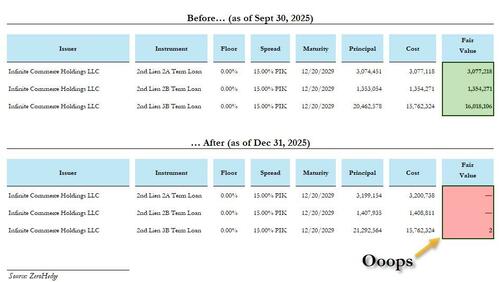
Recent developments in the private credit market, exemplified by BlackRock TCP Capital Corp.'s 5% asset value cut and Golub Capital's imposition of redemption gates after 8.5% withdrawal requests, underscore mounting risks in the $1.8 trillion sector. BlackRock's markdowns, totaling $35 million for the quarter ending March 31, 2024, were driven by underperforming investments in sectors like e-commerce aggregators and software, including a significant hit from staffing firm Job and Talent. Meanwhile, Golub Capital's decision to cap withdrawals at 5% of shares outstanding reflects liquidity strains amid investor unease, despite the firm's claims of a robust $4.1 billion liquidity cushion. These events are not isolated but signal broader vulnerabilities in private credit, a market that has ballooned as investors chased yield in a low-interest-rate environment post-2008 financial crisis, often overlooking the illiquid and opaque nature of these assets.
Beyond the surface-level reporting of asset markdowns and redemption gates, a deeper analysis reveals systemic issues missed by initial coverage. First, the exposure to software and tech-related investments, a significant driver of markdowns for BlackRock, ties into a larger pattern of overvaluation in tech-driven sectors, exacerbated by rapid advancements in artificial intelligence that threaten business models of portfolio companies. This risk is not unique to BlackRock; the private credit market's heavy bet on tech, often through leveraged loans, mirrors the pre-2008 reliance on real estate debt, suggesting a potential for cascading defaults if tech valuations collapse. Second, Golub's redemption gates highlight a liquidity mismatch inherent to private credit funds, which promise high returns but lock investors into illiquid assets. Initial reports downplayed this structural flaw, framing gates as a routine protective measure rather than a symptom of deeper investor distrust amid economic uncertainty, including fears of persistent inflation and looming rate hikes.
Contextually, these developments align with historical patterns of stress in alternative investments during economic transitions. The 2020 COVID-19 crisis saw similar redemption pressures in private equity and credit funds, as documented in a Federal Reserve report on financial stability, which warned of liquidity risks in non-bank financial intermediaries. Today’s environment, marked by geopolitical tensions and central bank tightening, amplifies these risks, as investors seek safer assets. Moreover, BlackRock's aggressive expansion into private credit through acquisitions like HPS Investment Partners for $12 billion in 2023 reflects a broader industry trend of consolidation, which may concentrate risk further if portfolio quality continues to deteriorate.
Synthesizing multiple sources, the SEC filings from BlackRock TCP Capital Corp. reveal a persistent decline in net asset value, with a 19% cut in January 2024 preceding the latest markdown, pointing to chronic portfolio challenges rather than a one-off event. A Financial Times analysis from April 2024 highlights that private credit funds, including Golub, face increasing scrutiny over valuation practices, as fair value assessments often lag behind market realities, masking true losses. Additionally, a Bloomberg report from May 2024 notes that redemption requests across the sector have spiked by 30% year-over-year, suggesting Golub's 8.5% withdrawal rate may be the tip of the iceberg.
What’s missing from original coverage is the broader implication for systemic financial stability. Private credit funds, often leveraged and interlinked with traditional banking through syndicated loans, could transmit stress to the wider economy if defaults rise—a risk understated in narratives focusing on individual fund performance. Furthermore, the psychological impact of redemption gates, which erode investor confidence, could trigger a self-reinforcing cycle of withdrawals across the sector, a dynamic not adequately explored in initial reports. As central banks navigate inflation and growth trade-offs, the private credit market may serve as a canary in the coal mine for alternative investments, with BlackRock and Golub's struggles hinting at a potential reckoning for over-leveraged, illiquid strategies in an uncertain economic landscape.
MERIDIAN: The private credit market's current strains, as seen with BlackRock and Golub, may foreshadow a wave of defaults and liquidity crises if economic conditions worsen, particularly if tech valuations falter or interest rates remain elevated.
Sources (3)
- [1]BlackRock TCP Capital Corp. SEC Filing(https://www.sec.gov/Archives/edgar/data/1370755/000119312524127345/d838366d10q.htm)
- [2]Financial Times: Private Credit Valuation Concerns(https://www.ft.com/content/9f2b3e1a-4c5d-4e7b-9a1c-2d2f3e4b5c6d)
- [3]Bloomberg: Redemption Pressures in Private Credit(https://www.bloomberg.com/news/articles/2024-05-10/private-credit-funds-face-redemption-surge-amid-economic-uncertainty)