Waymo-Waze Pothole Pilot Masks Broader Rollout of Alphabet-Owned Civic Sensor Networks
The Waymo-Waze partnership uses AV sensor data for pothole detection shared with cities, but reveals autonomous fleets as scalable civic sensor networks merging Big Tech data capabilities with municipal operations in under-discussed ways.
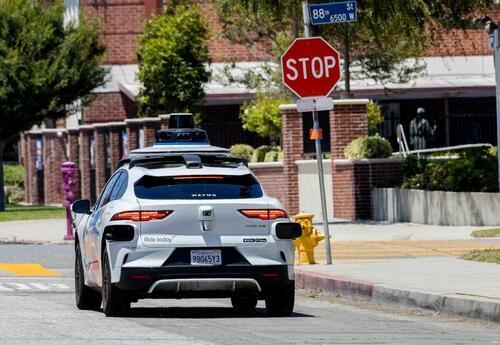
On April 9, 2026, Waymo and Waze announced a pilot program using Waymo's autonomous vehicle fleet—equipped with extensive camera, lidar, and perception systems—to detect potholes across five metro areas: San Francisco Bay Area, Los Angeles, Phoenix, Austin, and Atlanta. The data feeds directly into Waze for Cities, a platform already used by municipalities, supplementing resident reports and enabling faster infrastructure repairs. Waymo stated it has already identified around 500 potholes, with plans to expand to more cities including those facing harsh weather. Arielle Fleisher of Waymo framed it as building on safety benefits and becoming a 'trusted partner' to cities, while San Jose Mayor Matt Mahan praised the innovation for quicker response times. This aligns with mainstream coverage portraying the initiative as straightforward public-private cooperation for better roads.
Viewed through a heterodox lens, however, the partnership illustrates autonomous fleets being repurposed as persistent, always-on civic sensor networks. Waymo vehicles don't just transport passengers; their sensors continuously map urban environments at scale, generating infrastructure intelligence as a byproduct of operations. Both companies fall under Alphabet's umbrella (Waze acquired by Google in 2013), raising questions about data synergies across the tech giant's ecosystem. Official announcements note the program will evolve based on city feedback to provide 'more actionable data,' hinting at mission creep beyond potholes to broader road condition monitoring, traffic patterns, and potentially pedestrian or environmental sensing.
This fits larger patterns in smart cities research where AVs and connected infrastructure enable sensor fusion—combining vehicle-mounted sensors with roadside units for real-time urban intelligence. Academic analyses describe how such systems integrate with municipal governance, turning private fleets into de facto extensions of city sensing capabilities. While framed as efficiency gains, it accelerates the integration of Big Tech's pervasive data collection with public authority. Cities like San Jose already deploy object detection on their own vehicles; partnering with Waymo amplifies this, but shifts control and data flows toward Alphabet's proprietary systems. Mainstream outlets emphasize helpful innovation, yet the quiet normalization of corporate sensor networks embedded in daily urban mobility represents a deeper merger of surveillance infrastructure with governance—one that few mainstream reports interrogate beyond surface-level benefits. As fleets expand to Dallas, Houston, Miami, and planned cities like Chicago, the foundation solidifies for always-available civic data streams controlled by private entities.
Liminal Analyst: Private AV fleets will quietly become the primary always-on eyes of municipal governance, supplying cities with rich sensor datasets while centralizing urban intelligence power in the hands of a few Alphabet-scale tech firms.
Sources (5)
- [1]Partnering with Waze to help cities patch their potholes(https://waymo.com/blog/2026/04/partnering-with-waze-to-help-cities-patch-their-potholes)
- [2]How Waymo and Waze are pitching in to help solve LA's pothole problem(https://www.latimes.com/business/story/2026-04-14/how-waymo-waze-are-pitching-in-to-help-solve-l-a-s-pothole-problem)
- [3]Waymo launches pothole data-sharing program in Austin, partnering with Waze for test markets(https://www.cbsnews.com/texas/news/waymo-waze-pothole-data-sharing-4-13-2026/)
- [4]Autonomous Cars Transform Smart Cities with Cutting-edge Tech(https://sustainable-climate.ieee.org/news/autonomous-cars/)
- [5]Smart Infrastructure for Autonomous Driving in Urban Areas(https://www.nae.edu/290948/Smart-Infrastructure-for-Autonomous-Driving-in-Urban-Areas)