US Banks Act as Geopolitical Gatekeepers: Blocking Chinese Capital from SpaceX's Record IPO
Bloomberg and Reuters confirm that Goldman Sachs, JPMorgan, and other underwriters have blocked China and Hong Kong investors from SpaceX's massive IPO over critical technology export controls, demonstrating private banks' proactive role in US geopolitical decoupling from China in strategic tech sectors.
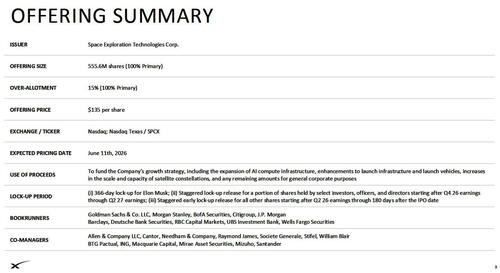
Major Wall Street banks including Goldman Sachs and JPMorgan are excluding investors from China and Hong Kong from SpaceX's anticipated $75 billion IPO, citing US regulatory restrictions on critical technology exports and associated compliance risks. According to Bloomberg, the lead underwriters explicitly instructed syndicate members not to accept orders from customers in these regions, including private banking clients, as the company prepares what could be the largest public listing in history. This aligns with Reuters reporting that SpaceX's official website and IPO marketing documents were inaccessible in both mainland China and Hong Kong on June 5, 2026, displaying error messages that limit potential participation.
The offering involves selling approximately 555 million shares at a fixed price of $135, targeting a roughly $1.8 trillion valuation for the Elon Musk-led firm active in space launch, Starlink satellite networks, AI, and US defense contracts. JPMorgan CEO Jamie Dimon personally hosted roadshow events for ultra-wealthy US clients, underscoring the intense domestic interest. However, the China firewall highlights how private financial institutions are operationalizing national security priorities that extend beyond explicit government mandates.
This development reveals deeper private-sector alignment with US-China strategic rivalry. SpaceX's dual-use technologies fall under heightened export control scrutiny, mirroring broader trends in CFIUS reviews and investment restrictions targeting sensitive sectors. While Musk maintains Tesla manufacturing in China, SpaceX faces distinct barriers due to its national security role, illustrating selective decoupling. Mainstream policy discussions often emphasize state actions like entity lists or tariffs, yet rarely detail how banks proactively de-risk by closing access to elite tech IPOs—effectively acting as enforcers of geopolitical boundaries in capital allocation.
The move could dampen global demand while reinforcing market fragmentation. It sets a precedent for other AI, defense, and space-related listings, where compliance teams treat Chinese and Hong Kong capital as inherently high-risk. As US strategic competition intensifies, this episode exposes the quiet ways private finance is helping bifurcate the global economy along security lines rather than pure market logic.
LIMINAL: Banks proactively enforcing China exclusions in flagship US tech IPOs like SpaceX will accelerate capital market bifurcation, making national security a standard filter that reduces Chinese access to American innovation upside and deepens global financial silos in dual-use industries.
Sources (3)
- [1]China, HK Investors Banned From SpaceX IPO on Security Grounds(https://news.bloomberglaw.com/private-equity/chinese-hk-investors-banned-from-spacex-ipo-on-security-grounds)
- [2]China and Hong Kong users unable to access SpaceX website, IPO documents(https://www.reuters.com/legal/transactional/china-hong-kong-users-unable-access-spacex-website-ipo-documents-2026-06-05/)
- [3]SpaceX picks Goldman Sachs for lead left position on IPO(https://www.cnbc.com/2026/05/19/spacex-picks-goldman-sachs-to-lead-record-breaking-ipo-sources-say.html)