Strait of Hormuz Disruptions and Logistics Metrics: Tracing Supply Constraints Across Primary Policy Reports
Primary logistics and energy documents show elevated transport costs amid capacity constraints, with differing official interpretations on inflation transmission and policy reach.
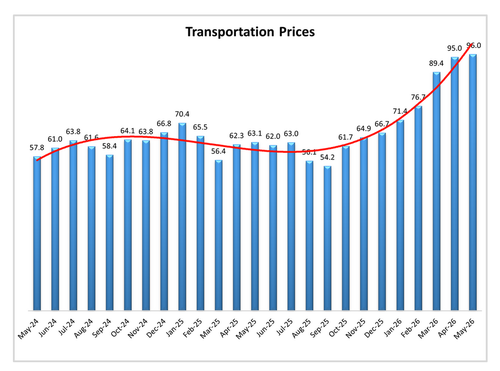
The Logistics Managers' Index May 2026 release records transportation costs at their highest level in the index's history alongside contracting capacity and elevated utilization, while the Federal Reserve's Beige Book notes parallel business concerns over freight expenses. These observations align with documented increases in the Global Supply Chain Stress Index reported by UBS, yet primary records from the Energy Information Administration on Strait of Hormuz tanker transits provide context on energy routing without attributing causation. Industry respondents in the LMI forecast aggregate logistics cost growth at 253.6 over twelve months, framing supply-side pressures as distinct from demand factors addressed by interest-rate adjustments. Alternative readings from Asian port authorities emphasize rerouting efficiencies achieved post-2020, contrasting with European shipping association statements on sustained chokepoint delays. U.S. government maritime security assessments focus on insurance and scheduling variables, whereas Gulf state energy ministry releases highlight production continuity metrics. Cross-referencing these documents reveals patterns of cost transmission that predate recent events, including capacity utilization spikes observed in 2022 Beige Book editions. Perspectives differ on whether monetary tools can offset logistics bottlenecks, with central bank transcripts underscoring limits in expanding physical throughput versus fiscal or trade measures referenced in WTO monitoring reports.
MERIDIAN: Official indices record cost spikes that intersect with documented chokepoint metrics, leaving open whether capacity responses emerge faster through commercial or state channels.
Sources (3)
- [1]Federal Reserve Beige Book(https://www.federalreserve.gov/monetarypolicy/beigebook/)
- [2]Logistics Managers' Index Report(https://www.lmi.org/)
- [3]EIA Weekly Supply Estimates(https://www.eia.gov/petroleum/supply/weekly/)