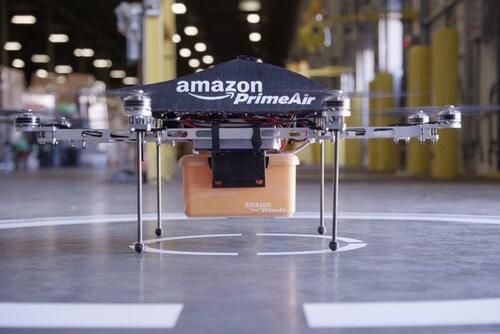
Amazon Prime Air Scales to 500 Cities: How Drone Deliveries Could Reshape Suburban Logistics and Daily Routines
Amazon's Prime Air drone expansion to ~500 cities by end-2026 is backed by official announcements and major outlets, promising faster suburban deliveries amid regulatory progress and safety scrutiny; it signals a hybrid logistics future impacting routines, competition, and oversight.
Amazon announced plans to expand its Prime Air drone delivery service to nearly 500 U.S. cities and towns by the end of 2026, a roughly sixfold increase from its current 11 sites across seven states. This builds on the FAA's 2024 BVLOS waiver enabling beyond-visual-line-of-sight operations with the MK30 drone, which has already completed hundreds of thousands of deliveries. The rollout targets suburban areas in metros like Chicago, Atlanta, Cleveland, Syracuse, and Boise, promising 30-minute deliveries for eligible Prime orders.[1][2]
Beyond the headline numbers, this expansion highlights a strategic pivot: drones as a complement rather than replacement for ground fleets, intensifying competition with Walmart in the race for ultrafast last-mile fulfillment. While drones handle lightweight packages in low-density zones, their one-at-a-time capacity limits cost savings, focusing instead on customer retention through speed. Regulatory tailwinds, including proposed FAA Part 108 rules for standardized BVLOS operations, could accelerate scaling, but ongoing NTSB and FAA probes into incidents—like the October 2025 Tolleson, Arizona crane collisions and the November 2025 Waco, Texas cable severance—underscore persistent safety and infrastructure risks.[3][4]
Deeper connections emerge in how this intersects with daily life: suburban residents may see reduced truck traffic and noise comparable to a low window fan, yet face questions around privacy (onboard cameras without live feeds), airspace integration near homes, and equity as urban cores with skyscrapers or airports are sidelined. The service's fee structure—free for qualifying Prime orders, $2.99–$4.99 otherwise—could further entrench Amazon's ecosystem while pressuring competitors. Analysts note it's still in "test and learn" mode, with environmental assessments underway for new sites like Chicago, signaling broader systemic shifts in autonomous logistics.[5]
[Logistics Analyst]: Drone networks will normalize 30-minute suburban deliveries within 2-3 years, shifting consumer expectations and pressuring regulators to finalize BVLOS standards while exposing gaps in urban integration and incident response.
Sources (5)
- [1]Amazon plots sixfold drone delivery expansion(https://www.foxbusiness.com/fox-news-tech/amazon-prime-air-drone-delivery-expansion)
- [2]Amazon plans drone delivery expansion to 500 U.S. cities by 2026(https://finance.yahoo.com/technology/articles/amazon-plans-drone-delivery-expansion-120654654.html)
- [3]Amazon Prime Air gets FAA approval for extended BVLOS(https://www.therobotreport.com/amazon-prime-air-gets-faa-approval-extended-bvlos-drone-deliveries/)
- [4]Amazon Kept Flying After Arizona, Waco, Richardson(https://www.techtimes.com/articles/322273/20260730/amazon-kept-flying-after-arizona-waco-richardson-darlington-uk-regulators-call.htm)
- [5]Public Involvement and Environmental Review for Drone Operations(https://www.faa.gov/uas/advanced_operations/nepa_and_drones)