Gun-Free Military Bases Exposed: Decades of Institutional Incompetence Leave Troops as Soft Targets
Recent policy reversal by Pete Hegseth ends decades-old Clinton-era restrictions that turned U.S. military bases into gun-free zones, a vulnerability exploited in multiple mass attacks killing dozens. This shift highlights overlooked institutional failures, deployment successes with armed troops, and contradictions in mainstream gun control narratives that ignore how disarming trained personnel creates soft targets.
For years, U.S. military bases operated under policies that effectively disarmed the very personnel trained to the highest standards, creating predictable vulnerabilities exploited in repeated attacks. A 1992 directive under President George H.W. Bush began reshaping bases into "professional, business-like" environments, with President Clinton's 1993 implementation of Army Regulation 190-14 making it nearly impossible for most soldiers to carry personal firearms. As detailed in contemporary analysis, only military police could routinely be armed, leaving the majority of bases as de facto gun-free zones despite the obvious risks.[1][2]
This policy persisted through multiple tragedies. The 2009 Fort Hood shooting by Nidal Hasan killed 13 and wounded 32; the 2014 Fort Hood attack left three dead and 12 wounded. The 2013 Washington Navy Yard shooting claimed 12 lives. Additional incidents at Chattanooga (2015), Naval Air Station Pensacola (2019), Fort Stewart (2025), and Holloman Air Force Base (2026) brought the toll to at least 24 murdered and 38 wounded across these events. In each case, responders took minutes to arrive—described by then-Gen. Mark Milley as "adequate"—while unarmed service members hid or fought bare-handed. Attackers faced no immediate armed resistance from the very professionals equipped to provide it.[3][4]
Contrast this with deployments to Iraq and Afghanistan, where troops carried weapons constantly on base with no notable increase in internal violence. The policy worked abroad but was abandoned at home. Mainstream gun control narratives rarely confront this contradiction: if highly trained military personnel cannot be trusted with firearms on base, why advocate further restrictions on civilians? The rules deterred law-abiding soldiers—facing demotion, discharge, or imprisonment—far more than determined attackers who already anticipated death or life sentences. Military police, like civilian officers, cannot be omnipresent on sprawling installations that function as small cities. Research consistently shows armed civilians and permit holders often neutralize threats faster than arriving police, who themselves face elevated risks.[5]
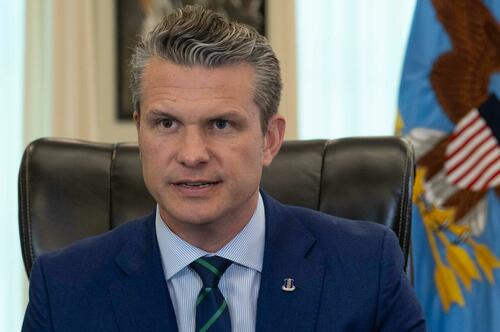
The recent reversal under Secretary of Defense Pete Hegseth marks a long-overdue correction. In April 2026, Hegseth signed a memo directing installation commanders to approve requests for personal firearms for self-defense with a presumption of necessity, explicitly ending the gun-free paradigm for those aligned with state laws. This acknowledges what deployment experience and repeated domestic failures demonstrated: disarming warriors does not enhance safety; it signals weakness.[6][7][8]
Deeper connections reveal patterns of institutional incompetence. Warnings were missed at Fort Hood. Bureaucratic inertia preserved Clinton-era rules despite congressional proposals like the 2015 Military Base Self-Defense Act to repeal them outright. The preference for optics—treating bases like corporate campuses rather than potential battlegrounds—overrode evidence. This fits broader failures where ideology trumps pragmatism: gun-free designations create attractive targets, yet policymakers double down until political shifts intervene. Hegseth's change, rooted in Second Amendment principles and troop training standards, challenges the assumption that restricting guns universally equals security. Without it, preventable tragedies were guaranteed to continue. Service members who survived prior attacks have noted that immediate access to weapons might have altered outcomes, underscoring the human cost of delayed reform.[9]
LIMINAL: Ending gun-free bases removes a self-imposed vulnerability that enabled repeated attacks, exposing how ideological inertia in defense policy created preventable failures while mainstream debates ignored the evidence from both combat deployments and domestic incidents.
Sources (6)
- [1]EDITORIAL: End Clinton-era military base gun ban(https://www.washingtontimes.com/news/2009/nov/11/end-clinton-era-military-base-gun-ban/)
- [2]New Hegseth Order Lets Troops Carry Personal Firearms on Base(https://www.military.com/daily-news/headlines/2026/04/02/new-order-lets-troops-carry-personal-guns-base.html)
- [3]Hegseth says he will let troops take personal firearms onto military bases(https://www.cbsnews.com/news/hegeseth-troops-personal-firearms-military-bases/)
- [4]It's Past Time for Concealed Carry on Base(https://www.usni.org/magazines/proceedings/2019/december/its-past-time-concealed-carry-base)
- [5]Fort Hood shooting survivor, former Army leader respond to new personal weapons policy(https://www.kwtx.com/2026/04/03/fort-hood-shooting-survivor-former-army-leader-respond-new-personal-weapons-policy-military-installations/)
- [6]Pete Hegseth allows troops to carry personal firearms on military bases(https://www.theguardian.com/us-news/2026/apr/02/hegeseth-military-service-members-firearms)