Indonesia's Markets Face Historic Rout as MSCI Proposes Standalone Downgrade, Echoing 1998 Crisis Fears
MSCI's surprise October 2026 proposal to downgrade Indonesia directly to standalone market status has triggered the JCI's worst two-day rout since 1998, with steep losses, foreign outflows, and spillover to FX and bonds; authorities scramble with reforms and enforcement while consultation extends to 2027.
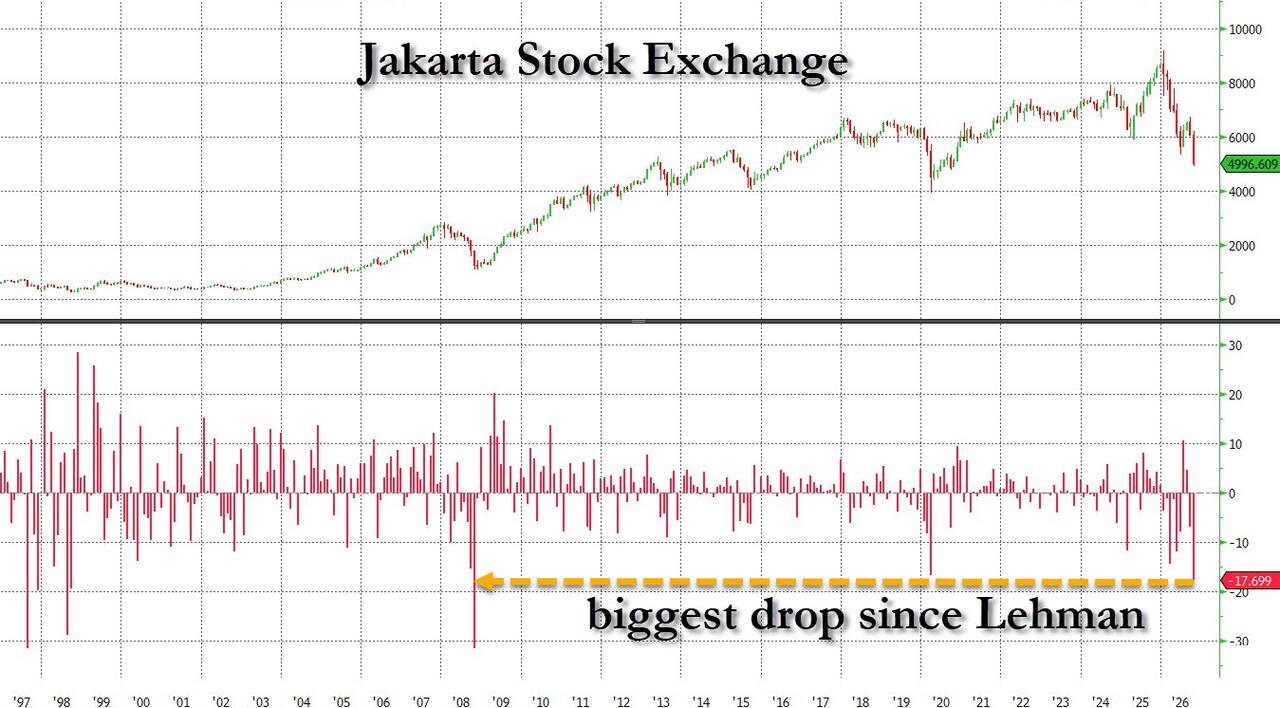
Indonesian equities have endured their sharpest selloff since the 1998 Asian financial crisis following MSCI's October 2026 announcement proposing a direct reclassification from emerging market to standalone status, bypassing frontier market entirely. The Jakarta Composite Index (JCI) plunged 11.6% on October 16, triggering trading halts and wiping out approximately $65 billion in market value that day alone, with further losses of around 3.6% on October 19 pushing the index to six-year lows near 5,000 points. Year-to-date declines exceed 40%, marking the worst performance among major global indexes and erasing roughly $350 billion in value since January.[1][2]
MSCI cited persistent issues including opaque shareholding structures, suspected coordinated trading undermining price formation, and insufficient enforcement of reforms despite Jakarta's efforts since an earlier January warning—such as raising minimum free float requirements and enhancing disclosures. Investor feedback indicated that even a frontier downgrade would understate the market's dysfunction. The consultation period runs until April 30, 2027, with a decision expected by June 2027; removal from MSCI indexes could trigger $4-6 billion in passive outflows plus additional active fund exits.[3][4]
The rout has spilled into bonds and the rupiah, with 10-year yields rising and the currency weakening toward record lows amid foreign investor outflows exceeding $4.8-5.1 billion year-to-date. Indonesian authorities responded with fines totaling 2.1 trillion rupiah for alleged manipulation, police investigations, tighter daily trading limits (reduced to 7% from 15%), and scheduled meetings with MSCI. This episode underscores vulnerabilities in emerging market accessibility, with Indonesia potentially joining standalone peers like Argentina and Lebanon—raising broader questions about capital flight risks and regulatory credibility in Southeast Asia's largest economy.[5][6]
[Portfolio Manager]: Expect sustained pressure on Indonesian assets and regional EM sentiment through mid-2027 unless Jakarta delivers verifiable enforcement and transparency gains; passive flows could accelerate exits while active managers reassess allocation models.
Sources (5)
- [1]Explainer: MSCI's case against Indonesian stocks and the $65 billion fallout(https://www.reuters.com/world/asia-pacific/mscis-case-against-indonesian-stocks-65-billion-fallout-2026-10-19/)
- [2]Indonesian Stocks Plunge as MSCI Threatens to Drop Market from Indexes(https://www.nytimes.com/2026/10/16/business/indonesia-stocks-economy.html)
- [3]Indonesian Stock Exchange Plunges After Fresh MSCI Downgrade Threat(https://thediplomat.com/2026/10/indonesian-stock-exchange-plunges-after-fresh-msci-downgrade-threat/)
- [4]Frail Indonesian markets reel after MSCI shock warning(https://www.reuters.com/world/asia-pacific/frail-indonesian-markets-reel-after-msci-shock-warning-2026-10-19/)
- [5]Indonesia’s selloff deepens across stocks, bonds on MSCI risk(https://www.moneycontrol.com/world/indonesia-s-selloff-deepens-across-stocks-bonds-on-msci-risk-article-14055044.html)