Norway's Social Media Ban: Reframing Youth Protection as Digital National Security Against Algorithmic Exploitation
SENTINEL analysis frames Norway’s proposed under-16 social media ban as a national-security response to platform-driven mental health collapse and foreign influence risks, correcting mainstream coverage’s omission of DSA alignment, intelligence reporting on algorithmic manipulation, and the link between anxiety epidemics and reduced societal resilience.
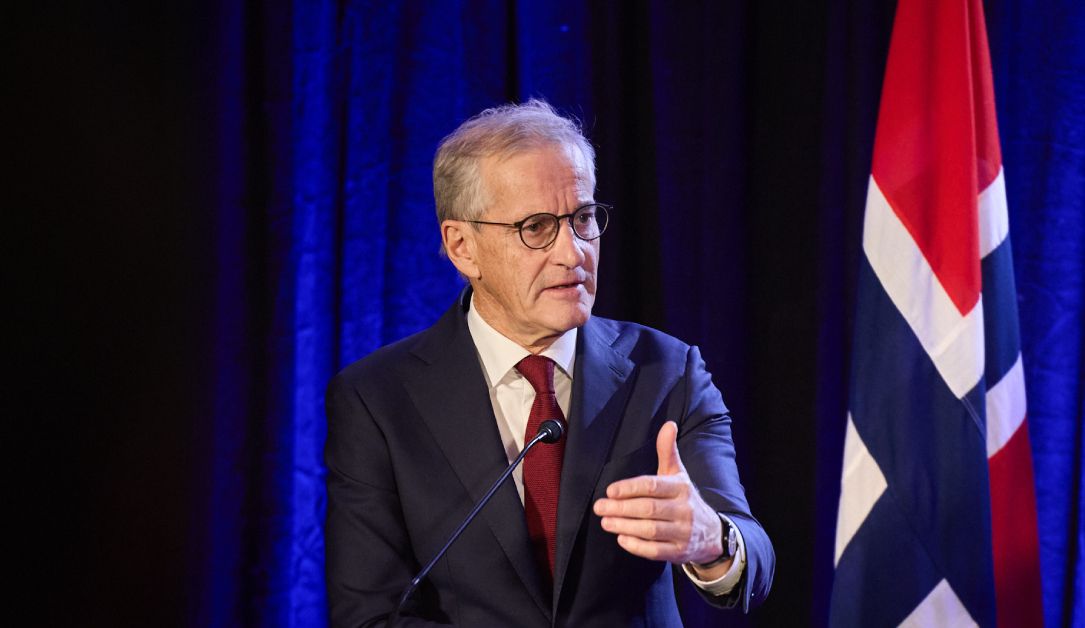
Prime Minister Jonas Gahr Støre’s proposal to legislatively bar children under 16 from social media by year’s end, with mandatory age-verification obligations on platforms, is framed in The Record as preserving childhood from algorithms and screens. That narrative is true but incomplete. The deeper driver is mounting evidence that platform design constitutes a systemic risk to cognitive development, emotional regulation, and societal resilience—issues that intelligence and security communities increasingly view through a national-security lens rather than purely public-health one.
Original coverage correctly notes parallel moves in France (Senate vote for under-15 ban), Spain, the Netherlands, and UK pilot programs, yet it treats these as disconnected cultural initiatives. What it misses is coordination within the broader European techlash architecture. Norway, via the EEA, aligns with the EU Digital Services Act (DSA), which already classifies very large online platforms as bearing systemic risk duties toward minors. Støre’s bill escalates this by imposing outright prohibition rather than mitigation, effectively daring platforms to build verifiable age gates or face liability. This mirrors France’s approach and Macron’s explicit language about emotions being ‘for sale’ by American platforms and Chinese algorithms—language that reveals the geopolitical subtext.
Synthesizing three sources clarifies the pattern. The U.S. Surgeon General’s 2023 Advisory on Social Media and Youth Mental Health documented a 50-100% rise in anxiety and depression diagnoses among U.S. teens after 2010, directly tracking smartphone and social-feed adoption. Jonathan Haidt’s 2024 book 'The Anxious Generation' extends this with cross-national data showing identical inflection points in the UK, Canada, Australia, and Nordic countries—precisely where Norway sits. A third vector comes from UK intelligence assessments and Five Eyes reporting on TikTok’s recommendation systems, which have been flagged for amplifying self-harm, eating-disorder, and ideological content to 13-17-year-olds at scale. Chinese ownership raises the additional specter of state-influenced algorithmic steering, turning platforms into vectors for long-term influence operations on the next generation of voters, recruits, and leaders.
Mainstream reporting has underplayed these exploitation risks. Grooming networks, CSAM marketplaces, and state-linked actors (both ideological extremists and foreign intelligence services) treat adolescent users as soft targets precisely because platforms optimize for engagement over safety. The mental-health epidemic is not collateral damage; it is the precondition that lowers barriers to radicalization and reduces societal immune response to disinformation. Norway’s legislation therefore functions as cognitive defense—protecting human capital in the same way countries protect critical infrastructure.
Challenges remain. Age verification at population scale collides with privacy rights, and determined teens will use VPNs or borrowed devices. Minority government status in Oslo adds political risk. Yet the signal is more important than immediate passage. It normalizes treating the attention economy as a contested domain. If Norway succeeds, expect accelerated pressure on Meta, TikTok, and Snapchat to adopt interoperable age-assurance standards across the EEA, UK, and potentially Australia—countries already aligned on Online Safety legislation.
This is not mere regulation. It is an early move in the emerging contest over digital sovereignty and the architecture of future human development. Western democracies are belatedly asserting that unchecked platform growth has created strategic vulnerabilities that authoritarian competitors are happy to exploit. The real test will be whether governments follow through with enforcement budgets and whether allied intelligence communities begin treating youth-platform interaction data with the same rigor once reserved for critical infrastructure telemetry.
SENTINEL: Norway’s ban accelerates Europe’s pivot toward treating social media as critical infrastructure requiring age gates and liability. Expect this to ripple into Five Eyes partners and force platforms into standardized age verification, fracturing the global digital commons further along regulatory and security lines.
Sources (3)
- [1]Norway's prime minister proposes ban on social media access for young teens(https://therecord.media/norway-prime-minister-proposes-social-media-ban-for-young-teens)
- [2]U.S. Surgeon General Advisory on Social Media and Youth Mental Health(https://www.hhs.gov/surgeongeneral/priorities/youth-mental-health/social-media/index.html)
- [3]The Anxious Generation: How the Great Rewiring of Childhood Is Causing an Epidemic of Mental Illness(https://www.penguinrandomhouse.com/books/673393/the-anxious-generation-by-jonathan-haidt/)